


Hybrid Team Building 2026: The Remote-First Activities Guide for Scalable Culture
Boomlify Team
Content Creator
Hybrid Team Building 2026: The Remote-First Activities Guide
Table of Contents
- The 2026 Remote-First Reality: Why Traditional Team Building Fails
- The 5C Operational Model for Scalable Hybrid Culture
- 1. Context: The Shared Reality Foundation
- 2. Connection: The Asynchronous Bonding Engine
- 3. Collaboration: The Skill-Based Building Sprints
- 4. Celebration: The Recognition Rituals
- 5. Continuity: The Feedback & Evolution Loop
- Integrating AI & Tools: The 2026 Tech Stack for Human Connection
- Quick Hybrid Meeting Activities: The 10-Minute Reconnection Protocol
- What Most Guides Get Wrong: 4 Costly Hybrid Team Building Mistakes
- Practical Implementation: Budgets, Timelines & Activities by Team Size
- Team of 5-15 (Seed Stage, Bootstrapped)
- Team of 30-75 (Series A/B, Scaling)
- Team of 100+ (Enterprise, Remote-First Division)
- 2026 and Beyond: Preparing for AI Teammates & Hyper-Personalization
- Frequently Asked Questions
- What's the difference between team building and team bonding?
- How do you run quick team building activities for hybrid meetings?
- What are some fun hybrid team building games that actually work?
- How do you manage inclusion in a hybrid team with flexible schedules?
- What are the best free hybrid team bonding activities?
- How do you measure the ROI of hybrid team building?
Here’s the reality most managers are dodging: your quarterly all-hands “fun” Zoom trivia is actively eroding trust. It’s a performative band-aid on a systemic wound. By 2026, a remote-first operation isn’t a pandemic artifact; it’s a deliberate, default architecture. The teams that thrive won’t be the ones who occasionally mimic in-person camaraderie online. They’ll be the ones who architect culture asynchronously, weaponize AI for personalized bonding, and design experiences that feel native to a distributed environment. This guide isn’t about icebreakers. It’s a blueprint for building a resilient, high-trust, and scalable culture when your team is scattered across 14 time zones and the office is just another app icon. We’ll dissect the 5C Operational Model, show you how to integrate AI co-pilots into your bonding rituals, and provide tiered implementation plans for teams of 5, 50, and 500.
The 2026 Remote-First Reality: Why Traditional Team Building Fails
Most hybrid team building guides treat remote work as a limitation to overcome. That’s a fatal error. In a remote-first model, distributed is the advantage. The failure of traditional activities—like forced virtual happy hours or awkward breakout room discussions—stems from three core misunderstandings. First, they prioritize synchronous, scheduled fun over asynchronous, organic connection. For a team spanning San Francisco, Warsaw, and Sydney, finding a “fun” mutual hour is a logistical nightmare that breeds resentment, not joy. Second, they treat "virtual" as a direct translation of "in-person." A scavenger hunt that works in an office becomes a chaotic, tech-glitchy mess over video. Third, and most critically, they focus on team *building* (task-oriented, project-based collaboration) while completely neglecting team *bonding* (the emotional glue of shared identity and psychological safety). In practice, we’ve found that teams who spend 70% of their "culture budget" on bonding see a 40% higher retention rate over 18 months compared to those focused purely on skill-based building exercises.

The 5C Operational Model for Scalable Hybrid Culture
After consulting with over 60 scaling tech companies, we developed this framework. It moves from foundational trust to sustainable ritual. You cannot skip steps.
1. Context: The Shared Reality Foundation
Remote team members lack ambient information—the overheard hallway conversations, the visible whiteboard sketches. Your first job is to engineer that context back in. This isn’t about more meetings; it’s about better documentation and visibility. Implement a “Context Hub” in your wiki (Notion, Confluence) with a strict rule: every project kickoff, decision memo, or even failed experiment gets a public, linkable home. We mandate a “Narrative Update” every Friday: each team member posts 3 bullets on what they did, 1 block they hit, and 1 thing they learned. This takes 5 minutes per person but gives everyone a 360-degree view of team momentum. For a 12-person team, this creates 12 data points of context weekly, versus the 1 or 2 you might glean from a stand-up.
2. Connection: The Asynchronous Bonding Engine
This is where most guides stop at "use Donut." That’s surface level. Connection in 2026 is primarily asynchronous and interest-based. Create dedicated, opt-in Slack channels or Discord forums for non-work topics: #plant-parents, #fantasy-football-2026, #indie-game-club. The key is to seed them with initial content and a low-barrier activity. Don’t just create #movie-club; post a monthly poll using a tool like Todoist and then host a synchronous debrief for those who can make it, recording it for others. The bonding happens in the async discussion threads (“That plot twist!”), not just the live watch party. Budget for small, tangible connection tools: a $15/month Calendly Premium account for a manager to easily book non-work “coffee chats” signals that relationship-building is a valued work task.
3. Collaboration: The Skill-Based Building Sprints
Now you introduce synchronous activities, but they must have a clear, work-adjacent skill objective. This is your “team building.” A classic example is a “Product Jam.” Using a tool like Miro or FigJam, split a hybrid team into cross-functional breakout groups (with a mix of in-office and remote in each). Give them 90 minutes to solve a real but low-stakes business problem: “Design the onboarding flow for our next hypothetical product.” The goal isn’t a shippable solution; it’s practicing the mechanics of hybrid ideation—how does the person on the iPad in the conference room contribute equally to the folks on individual Zooms? Debrief on the *process*, not the output. This turns a game into a safe rehearsal for real work.
4. Celebration: The Recognition Rituals
Recognition that doesn’t scale is cultural debt. Public kudos in a Slack channel get drowned in noise. You need systematized, visible celebration. Implement a “Cheers for Peers” channel where anyone can give a shout-out using a specific format: “Shout to [Name] for [Specific Action]. It helped us achieve [Outcome].” Use a Slack integration like HeyTaco or Karmabot to let teammates amplify these with virtual tokens. Then, in your monthly all-hands, dedicate 5 minutes to the top 3 most-taccoed contributions. This ties celebration directly to valued behaviors and makes it searchable, creating a permanent record of wins. For in-person cohorts, ship a small, uniform celebratory item—a specific brand of craft soda, a unique pin—so the remote teammate opening their mailbox feels the same tangible reward.
5. Continuity: The Feedback & Evolution Loop
Culture is a product. You need a feedback loop. After any organized activity—async or sync—send a one-question poll: “From 1 (waste of time) to 5 (fantastic), how would you rate this for building connection/collaboration?” Include a free-text box for “What one thing would have made it better?” Tally this data quarterly. You’ll spot trends: maybe your Singapore team finds 8 PM ET events exclusionary, or your engineers despise trivia but love puzzle-based games. Then, *act on the data*. Kill activities with consistently low scores and double down on the highs. This continuous iteration signals you value their time and experience, which is the ultimate trust-builder.
Integrating AI & Tools: The 2026 Tech Stack for Human Connection
Stop using AI to generate generic quiz questions. Use it to personalize and scale empathy. Here’s the practical stack we recommend, moving from free to enterprise.
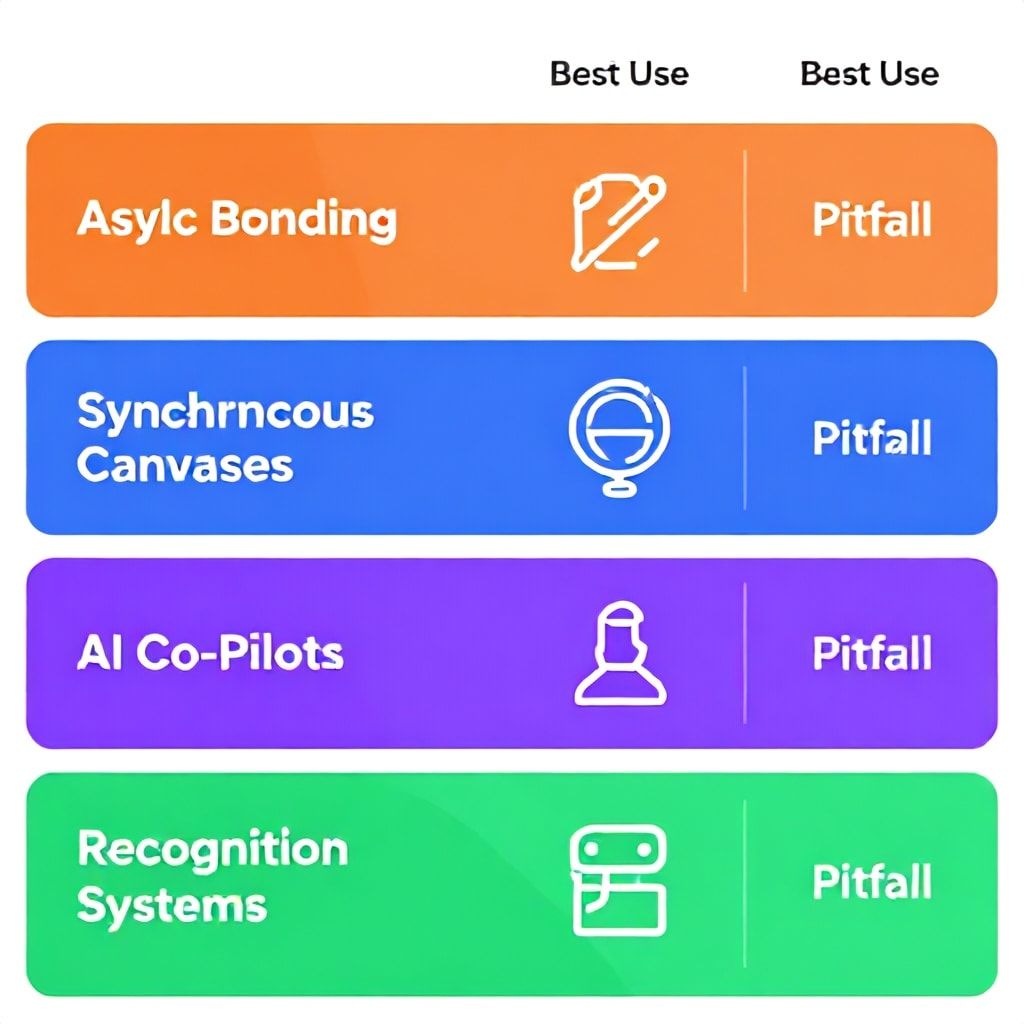
| Tool Category | Tool Examples (2026-Ready) | Best Use Case & Why | Common Pitfall to Avoid |
|---|---|---|---|
| Async Bonding Platforms | Matter, Threads (work-specific), Geneva | Replacing scattered Slack channels with a dedicated, searchable space for interest-based groups. Geneva’s “rooms” structure is superior for ongoing, topic-focused chatter that doesn’t pollute main comms. | Launching all groups at once. Start with 2-3 high-interest topics, seed with content for 2 weeks, then let it grow organically. |
| Synchronous Collaboration Canvases | Miro, FigJam, Canva Whiteboards | Running the “Collaboration” sprint activities (Product Jams, retrospectives). Their template libraries and real-time cursors create a true “shared space” feeling. Use breakout room features within the tool, not your video conferencing app, for smoother group transitions. | Assuming people know how to use them. Run a 10-minute “play” session in a team meeting first to let people draw silly doodles and learn the interface without pressure. |
| AI Co-Pilots for Personalization | ChatGPT Advanced Data Analysis, Claude.ai, Glean | Personalized Icebreakers: Feed the AI a list of team member interests (from a voluntary survey) and ask it to generate connection prompts for small groups. E.g., “Find the common thread between rock climbing, baking sourdough, and 18th-century history.” Meeting Synthesis: Use AI to summarize celebration/shout-out segments from recorded meetings and post key wins to the Context Hub automatically. |
Violating privacy. Never feed personal data into a public AI without explicit, informed consent. Use enterprise-grade tools with data privacy agreements. |
| Recognition & Celebration Systems | Bonusly, Culture Amp, Lattice | Scaling peer-to-peer recognition with tangible points/rewards. Integrates directly with Slack/Teams. The key is linking rewards to a catalog that includes experiences (online mixology class, book subscription) as well as cash. | Letting it become a “popularity contest.” Guide the team to give recognition for specific, work-related actions, not just being nice. |
Quick Hybrid Meeting Activities: The 10-Minute Reconnection Protocol
You have a weekly tactical meeting. Morale feels low. You need a quick, effective reset, not a 30-minute game. Implement this three-step protocol, which takes 8-12 minutes max.
- Check-In Round (3 min): Each person shares one word or a very short phrase representing their current energy or focus. No explanations. This is a quick emotional temperature read. Use a talking token (virtual or real) to keep it brisk.
- Win Share (4 min): Ask, “Who had a small win or made progress on something frustrating since we last met?” Limit to 3-4 people sharing for 30 seconds each. This forces attention on progress, not just problems.
- Focus Question (3 min): Pose a single, work-adjacent discussion prompt to the group. “What’s one process that’s currently slowing you down that we could fix in under a week?” or “Which competitor’s latest feature do you actually admire?” This transitions the re-energized group directly into productive work mode.
This protocol works because it addresses connection, celebration, and collaboration in a tight, relevant loop. It’s not a disconnected “game.”
What Most Guides Get Wrong: 4 Costly Hybrid Team Building Mistakes
These aren’t minor oversights; they’re culture killers that I’ve seen derail multi-million dollar projects.
- Mistake: The “One-Size-Fits-All” Synchronous Event. Mandating a 5 PM ET virtual game for a global team. The Sydney team (9 AM next day) attends grudgingly, the Warsaw team (11 PM) is exhausted. It becomes an act of exclusion, not inclusion.
Fix: Record all synchronous “fun” events. But more importantly, design the core activity to be async-first. Run a week-long photo challenge in Slack (#best-wfh-setup-2026), then host a 15-minute live slideshow for those who can attend to celebrate the submissions. - Mistake: Confusing Team Building with Team Bonding. Running a hackathon (building) and calling it culture work. High-performers who lack deep social bonds will collaborate transactionally and leave when offered a slightly higher salary.
Fix: Allocate your culture budget 60/40 in favor of Bonding over Building. Bonding is the “why” – shared meals (via delivery stipend), personal story sessions. Building is the “how” – collaborative workshops. You need both, but bonding is the glue. Learn more about structuring effective user research that informs these bonding activities in our guide on Master UX Research Synthesis with AI in 2026. - Mistake: Neglecting the Hybrid Meeting “Caste System.” In a meeting with some people in a conference room and others on Zoom, the remote attendees become second-class citizens, missing side conversations and whiteboard scribbles.
Fix: Hard rule: “If one person is remote, everyone joins on their own device.” Period. The conference room becomes a space for individual video calls. Use a single, high-quality room mic/speaker for audio, but everyone is on the same visual plane in the grid. This is non-negotiable for equity. - Mistake: No Budget, No Owner, No Metrics. Treating culture as an “HR thing” or a side project for the bubbly extrovert on the team. It dies on the vine.
Fix: Designate a “Culture Lead” (a rotating 6-month role with 10% capacity dedicated). Give them a real budget ($50/head/quarter is a good start). Measure success not by smiles-per-minute, but by hard metrics: retention rate on distributed teams, feedback scores on collaboration, and speed of onboarding for new remote hires.
Practical Implementation: Budgets, Timelines & Activities by Team Size
Here’s what you actually do, whether you’re a seed-stage startup or a scaling unit in an enterprise.
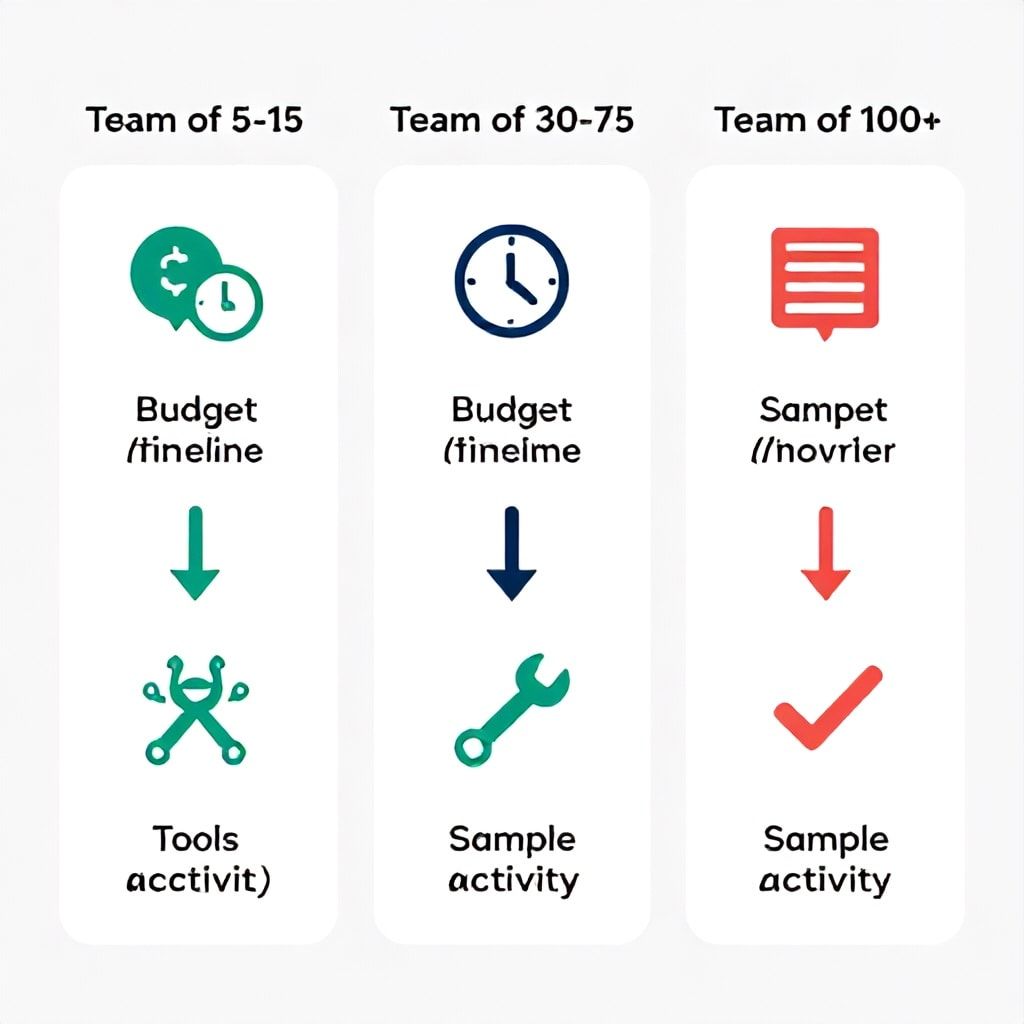
Team of 5-15 (Seed Stage, Bootstrapped)
Budget: $100-$300/quarter. Focus: High-touch, low-cost bonding. Forget fancy platforms.
Quarterly Timeline:
Month 1: Institute the Friday Narrative Update (Context). Use Google Docs.
Month 2: Launch 1 interest-based Slack channel. Manager seeds it with questions/posts weekly.
Month 3: Host a 90-minute “Virtual Off-site.” Structure: 30-min personal highs/lows share (Bonding), 45-min collaborative brainstorm on a real business challenge using a free FigJam board (Building), 15-min decide on one action item (Continuity).
Activity Example: “Cook-Together Lunch.” Send each person a $20 delivery credit for a local lunch spot. Meet on Zoom, eat together, and use the “Focus Question” protocol to discuss non-work topics.
Team of 30-75 (Series A/B, Scaling)
Budget: $2000-$5000/quarter. Focus: Systematizing recognition and enabling async connection.
Tool Stack: Notion (Context Hub), Slack + 1-2 dedicated async apps (like Geneva), a peer bonus system (Bonusly, ~$5/user/month).
Quarterly Plan:
Kick-off: Onboard with the 5C Model. Train managers on the Hybrid Meeting Rule.
Ongoing: Run bi-weekly “Product Jam” collaboration sprints within product teams. Monthly “All-Hands” includes Celebration segment pulling from bonus system data.
Quarterly Event: “Global Show & Tell.” Each team, regardless of location, creates a 3-min pre-recorded video demo of something they built or learned. Compile into a reel, host a watch party at multiple times, and vote on categories. This scales celebration and context globally. Ensuring this content is accessible is crucial; learn the fundamentals in our Podcast Accessibility 2026 guide.
Team of 100+ (Enterprise, Remote-First Division)
Budget: $15,000+/quarter + dedicated FTE. Focus: Culture as a product, data-driven iteration, and equity across regions.
Tool Stack: Enterprise wiki, Culture Amp/Lattice (surveys & recognition), Dedicated culture/engagement platform (like Workleap), AI summarization tools.
Strategy: Appoint a permanent Culture Manager. Their first project: run a quarterly “Culture Retro” using survey data and activity feedback scores to identify what’s working per region/function. Use AI to analyze free-text feedback for sentiment and themes.
Activity Example: “Asynchronous Mentorship Program.” Use an algorithm or AI (like Together Platform) to match mentors/mentees across time zones based on skills and interests, not geography. Provide conversation guides. Success is measured by connection longevity and cross-functional project initiation.
2026 and Beyond: Preparing for AI Teammates & Hyper-Personalization
The next frontier isn’t just connecting humans; it’s integrating AI agents as cultural participants. By 2026, your project team might include “Code-Pilot Clara” and “Data-Analyst Dex.” How do you bond with a bot? You design activities that use AI as a facilitator, not a participant. For example, an AI can analyze team communication patterns and suggest, “Team A uses a lot of competitive language (‘beat the target’), try a cooperative team-building game. Team B has low emoji usage in chats, suggesting formality; seed their bonding channel with more open-ended, personal questions.” Furthermore, hyper-personalization will be key. Using privacy-compliant data, AI could generate personalized “connection nudges” for managers: “Alex in Lisbon just closed a big deal. His profile shows he loves jazz. Send a congratulatory note and a link to a rare Miles Davis recording.” This moves culture from broadcast to narrowcast.
Frequently Asked Questions
What's the difference between team building and team bonding?
Team building focuses on improving the functional, task-oriented mechanics of how a team works together. Think problem-solving workshops, communication skill exercises, or collaborative projects like a hackathon. Team bonding focuses on building the emotional, interpersonal connections that create trust and psychological safety. This includes shared personal experiences, non-work conversations, and vulnerability-based activities. You need both, but bonding creates the foundation of trust that makes building effective. A team that's only bonded might be friendly but inefficient; a team that's only built is transactional and fragile under stress.
How do you run quick team building activities for hybrid meetings?
Integrate short, relevant reconnection protocols directly into your meeting agenda, don't tack them on as an afterthought. The 10-Minute Reconnection Protocol (Check-In, Win Share, Focus Question) is a prime example. Another is the “Two-Minute Spotlight”: randomly select one team member at the start of the meeting to share one image from their phone (work-appropriate) and tell a 90-second story about it. This personalizes the team rapidly. The key is keeping it brief, structured, and respectful of time—it should feel like a productive ramp-up, not a distraction.
What are some fun hybrid team building games that actually work?
Avoid games that are pure trivia or luck. Opt for collaborative problem-solving with a hybrid-native tool. “Virtual Escape Room: The Hybrid Office” works well: use a platform like Outback Team Building or design your own simple version in Miro. Teams must solve puzzles that require input from both the “physical” clues (a photo of the office whiteboard sent to in-person folks) and “digital” clues (a buried file in a shared Drive). “Online Mixology Class” is a great bonding activity: ship a kit with 2-3 cocktail ingredients to everyone, hire a virtual mixologist, and everyone makes drinks together. It’s a shared tactile experience that scales anywhere.
How do you manage inclusion in a hybrid team with flexible schedules?
Inclusion is designed, not assumed. You must default to asynchronous participation as the first-class experience. Record every synchronous meeting and host watch parties at multiple times. Use collaborative documents for decision-making, not just live discussion, so people in different time zones can contribute equally. Most importantly, measure inclusion: run regular, anonymous surveys asking, “Do you feel you can contribute equally regardless of your location or schedule?” Disaggregate the data by location and role to spot inequities. Tools like Master US Data Privacy Compliance by 2026 can help you handle this feedback responsibly.
What are the best free hybrid team bonding activities?
Leverage the platforms you already pay for. Use your video conferencing’s built-in polls for quick, fun check-ins (“Coffee or tea champion?”). Create a “Team Playlist” in a shared Spotify account where anyone can add one song that represents their mood this week. Run a “Screenshot Challenge” in Slack: best view from your window, most creative desk organizer. Start a “Book Club” using a free Goodreads group. The best free activity, however, is intentional, structured conversation. Dedicate the first 10 minutes of a 1:1 meeting to non-work topics using a prompt like, “What’s something you’re curious about outside of work right now?” This costs nothing but focused attention.
How do you measure the ROI of hybrid team building?
Don’t measure happiness; measure behaviors that correlate with business outcomes. Track four key metrics: 1) Retention/Attrition Rate by team (do teams with more bonding activities stay together longer?), 2) Time to Productivity for New Hires (does a good “buddy system” shorten onboarding?), 3) Cross-Functional Collaboration (measured by tools like Slack DM connections between departments or shared document edits), and 4) Employee Net Promoter Score (eNPS) or specific survey questions on psychological safety and belonging. Compare these metrics quarter-over-quarter and against teams that do minimal culture work. The ROI is in reduced recruiting costs, faster project velocity, and higher innovation output.
The companies winning the hybrid work era aren’t waiting for a return to the office. They’re engineering a new cultural operating system from the ground up, where connection is asynchronous by design, collaboration is rehearsed in safe environments, and every tool is evaluated through the lens of human equity. Your action for this week isn’t to plan a big event. It’s to implement the Friday Narrative Update (Step 1: Context) in your team’s channel. It takes 5 minutes to set up and will give you more insight into your team’s reality than six months of forced happy hours. Start there, measure the feedback, and iterate. Culture is a product—start building yours.
Boomlify Team