

YouTube Podcast SEO Mastery: 2026 Tactics
Boomlify Team
Content Creator
YouTube Podcast SEO Mastery: 2026 Tactics
Table of Contents
- Why Podcast SEO on YouTube Is a Different Beast (And What the Algorithm Wants in 2026)
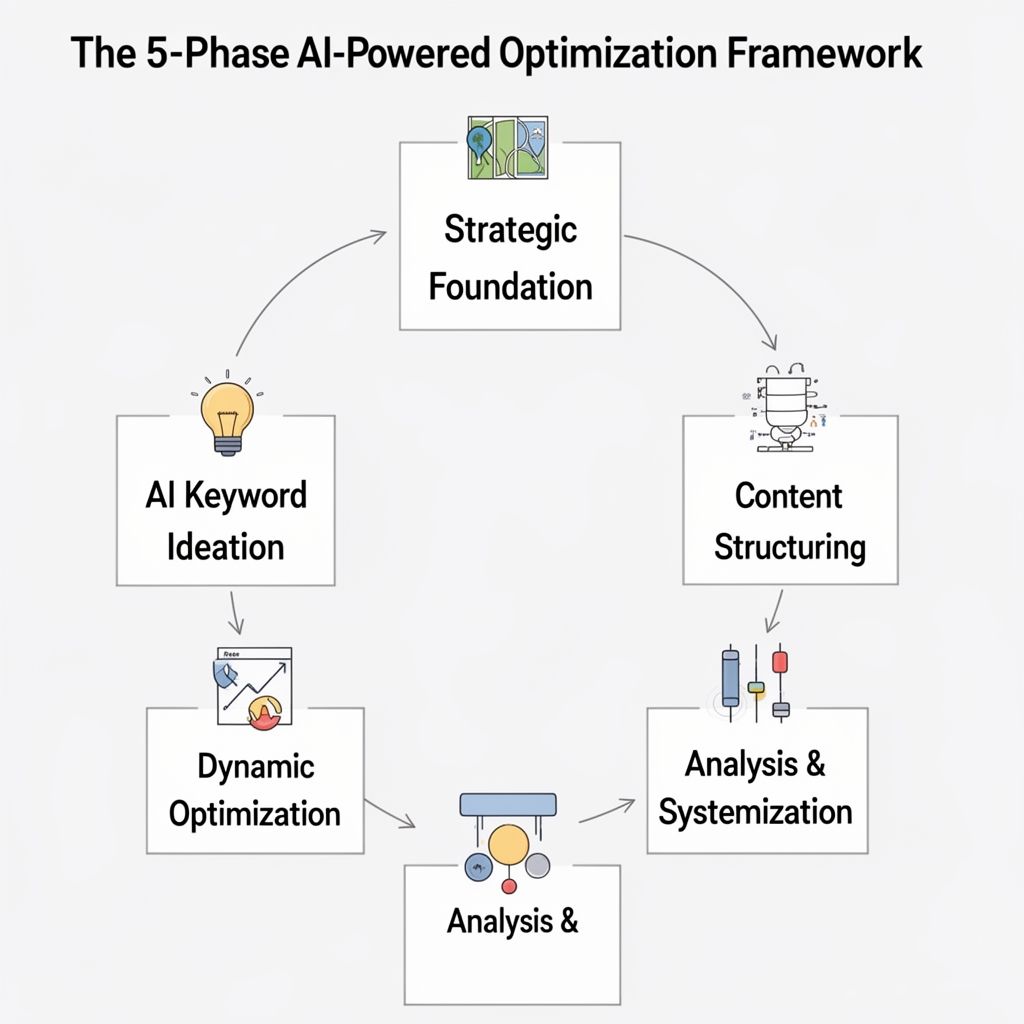
- The 5-Phase AI-Powered Optimization Framework for 2026
- Phase 1: Strategic Foundation & Topic Clustering
- Phase 2: AI-Assisted Keyword & Title Ideation
- Phase 3: Content Structuring for Algorithmic “Readability”
- Phase 4: Dynamic Description & Tag Optimization
- Phase 5: Post-Publish Analysis & Systematization
- What Most Podcasters Get Wrong (And How to Fix It)
- Practical Implementation: Budgets, Tools, and Timelines for 2026
- Tier 1: The Solopreneur (Bootstrapped, < $100/month)
- Tier 2: The Small Team (Growing, $300-$800/month)
- Tier 3: The Established Studio or Network ($2000+/month)
- The 2026 Episode Launch Checklist
- Pre-Publish:
- At Publish:
- Post-Publish (First 48 hrs & Week 2):
- Frequently Asked Questions
- Should I create a separate YouTube channel for my podcast?
- How long should my YouTube podcast title be for optimal SEO?
- What’s the ideal number of tags to use?
- Can I use AI to write my entire title and description?
- How important are timestamps (chapters) really?
- What is the single most important metric to track after publishing?
- My podcast is audio-only. Is it even worth putting on YouTube?
- How often should I be posting podcast episodes to YouTube?
You uploaded your podcast to YouTube. You wrote a title, added some tags, and hit publish. A month later, you have 47 views—and 42 of them are probably you checking the analytics. If this sounds familiar, you’re not alone. The problem isn't your content; it’s that you’re treating YouTube like a passive hosting platform instead of the world’s second-largest search engine and most potent discovery algorithm. In 2026, YouTube’s systems have evolved beyond checking for keyword matches in your description. They’re now predicting user intent, evaluating content depth through multimodal AI, and ranking based on “session quality”—how well your video keeps a viewer on YouTube. This isn’t about gaming the system; it’s about architecting your content to be perfectly legible to an AI that’s looking for the best answer. This guide provides the playbook we use with our clients, blending deep podcast strategy with bleeding-edge, AI-informed YouTube SEO to turn your audio show into a dominant video channel.
Why Podcast SEO on YouTube Is a Different Beast (And What the Algorithm Wants in 2026)
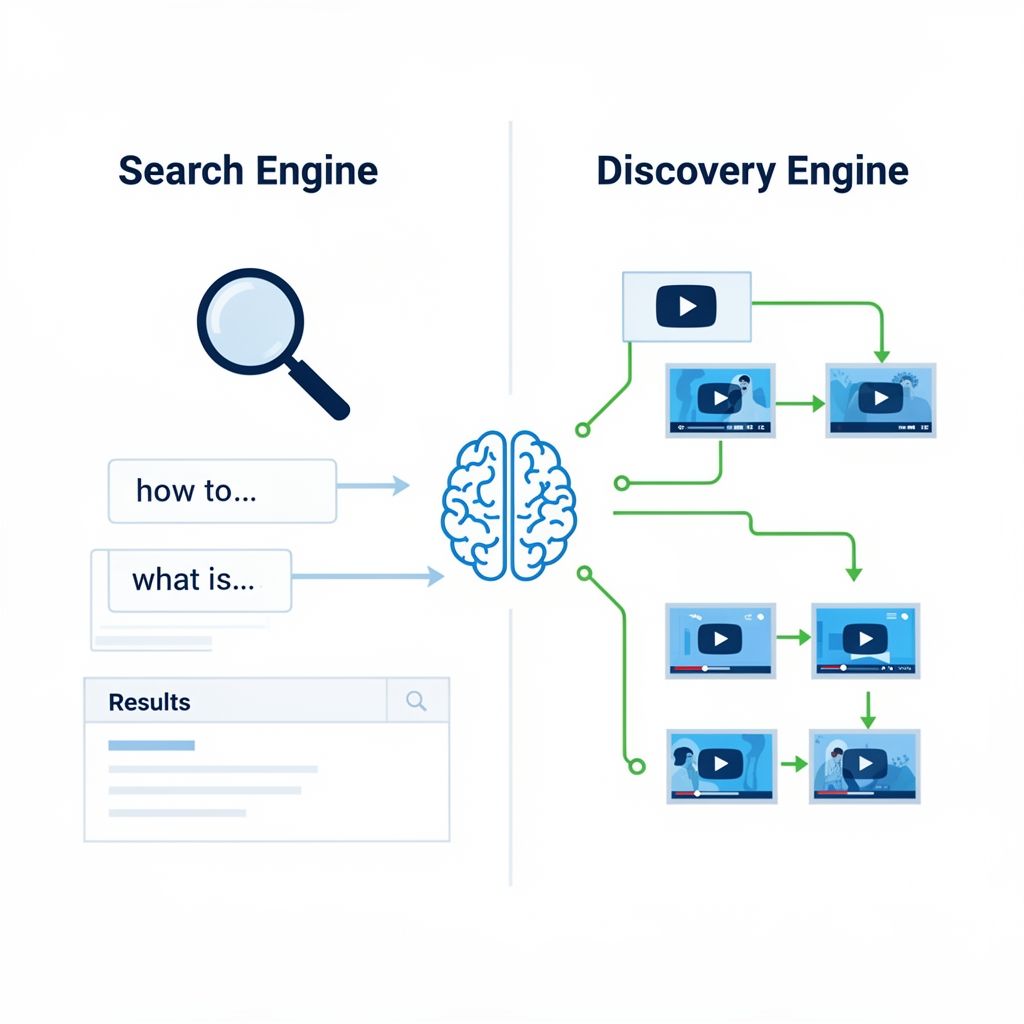
Most podcasters fail on YouTube because they apply generic “video SEO” advice. YouTube isn't just a video site; it’s a dual-purpose platform: a search engine for “how-to” and informational queries, and a discovery engine for entertainment and deep-dive content, powered by a recommendation algorithm that has become frighteningly good at predicting what you’ll watch next. Your podcast needs to perform in both arenas. For search, you're competing with dedicated tutorial creators. For discovery, you're up against every piece of engaging video on the platform. The 2026 nuance is YouTube’s increasing use of multimodal AI models (like Gemini) that analyze the actual content of your audio and video. It’s not just transcribing your speech for closed captions; it’s understanding topics, sentiment, and complexity, then matching that to a user’s perceived “watch mission.” A user searching for “blockchain basics” might get a short explainer. But if the AI detects they’ve watched several beginner videos and are now searching for “proof of stake vs. work deep dive,” your 45-minute expert podcast episode becomes the perfect candidate. Your SEO job is to make that match unmistakably clear.
The 5-Phase AI-Powered Optimization Framework for 2026
This isn't a checklist; it's a cyclical process. You'll move through these phases for each episode, using data from past episodes to inform the next.
Phase 1: Strategic Foundation & Topic Clustering
Before you record a word, you need a map. Start with your core podcast topic—say, “sustainable gardening.” Your goal is to build a “topic cluster” on your channel, where a central, pillar piece of content (a comprehensive beginner’s guide) links semantically to numerous subtopic episodes (composting, rainwater harvesting, pest companion planting). In 2026, YouTube's AI understands these contextual relationships. Use a tool like Ahrefs or Semrush not just for search volume, but to analyze the “People also ask” and “Related searches” for your main topic. Build your content calendar around these clusters. This does two things: it signals authority to YouTube, and it creates a self-reinforcing ecosystem on your channel where viewers naturally binge your content.
Phase 2: AI-Assisted Keyword & Title Ideation
Forget guessing keywords. You need to predict search intent. Here’s our concrete workflow: First, use an LLM like ChatGPT or Claude (with a detailed prompt) to brainstorm 50-100 question-based titles around your episode topic. Prompt: “Act as a YouTube SEO expert. For a podcast episode interviewing a cybersecurity expert about phishing, generate 20 specific, long-tail YouTube title ideas that target beginner, intermediate, and advanced search intent. Format as questions.” This taps into how people actually search. Second, feed these ideas into a specialized AI tool like TubeBuddy’s Keyword Scout or vidIQ’s AI Title Generator. These tools cross-reference your ideas with live YouTube data—search volume, competition, and, critically, CTR (Click-Through Rate) potential. The winning title in 2026 often blends a high-potential keyword with a curiosity gap. Example: Instead of “Phishing Attacks Explained,” you get “How a Fake Netflix Email Hacked Our Company (A Cybersecurity Story).”
| Tool | Best For | Key 2026 Advantage | Pitfall to Avoid |
|---|---|---|---|
| ChatGPT/Claude | Idea generation, intent mapping, description drafts | Unlocks latent search queries humans miss; excellent for generating Q&A formats. | Can hallucinate search volume; must be validated with real data. |
| TubeBuddy/vidIQ | Data validation, competition scoring, trend spotting | Direct API integration with YouTube provides real-time CTR and ranking difficulty scores. | Can lead to overly formulaic titles if used without creative input. |
| Jasper.ai | Rapid, brand-consistent copy generation at scale | Excellent for maintaining a consistent voice across titles, descriptions, and social posts. | Higher cost; requires careful training on your brand tone. |
Phase 3: Content Structuring for Algorithmic “Readability”
This is where the rubber meets the road. YouTube’s AI scans your video’s structure. You must design your episode for this. The first 60 seconds are non-negotiable: state the core problem, hint at the value, and verbally mention your target keyword. “If you’ve ever wondered how to actually optimize a podcast for YouTube search, today’s deep dive with SEO expert [Name] is for you. We’re cracking the code on YouTube’s 2026 algorithm.” This helps with speech recognition matching. Next, use clear, verbal signposting. “Let’s move to the three biggest mistakes…” or “The second tactic is…” This creates natural chapters. Finally, you must add manual timestamps in your description (00:00, 01:30, etc.) with keyword-rich chapter titles. This isn't just user convenience; it gives the AI a literal table of contents for your video, boosting its understanding of your content’s depth and relevance.
Phase 4: Dynamic Description & Tag Optimization
The description is your primary sales letter to the algorithm. The first 150 characters appear in search results—make them compelling. The next 2-3 sentences should expand on the title, naturally including your primary keyword and 1-2 secondary ones. Then, provide a detailed, value-packed summary of the episode. Use bullet points with emojis for scannability. Include links to resources, your podcast subscription links, and a clear call-to-action. For tags, the old “stuff every relevant keyword” method is dead. In 2026, use a tiered approach: 1-2 broad category tags (e.g., “Podcast”), 3-5 specific topic tags (e.g., “YouTube SEO 2026”), and 1-2 long-tail, exact-match tags (e.g., “optimize podcast for youtube search”). This creates a semantic fingerprint that’s precise, not spammy.
Phase 5: Post-Publish Analysis & Systematization
Your work begins at publish. Monitor YouTube Analytics not just for views, but for Impressions Click-Through Rate (CTR) and Average View Duration (AVD). If you have high impressions but low CTR (<4%), your thumbnail/title combo is failing. AVD below 50%? Your intro might be too slow, or the content isn't matching the promise. After 7-14 days, you can make strategic updates. Yes, you can and should change your title, thumbnail, and description if performance is poor. We’ve seen title tweaks increase a video’s traffic by 200%+ weeks after publishing. Create a standard operating procedure (SOP) document with your proven title formulas, description template, and tag structure to make this process repeatable for every episode.
What Most Podcasters Get Wrong (And How to Fix It)
After auditing hundreds of podcast YouTube channels, these are the consistent, costly errors we see.
- Treating YouTube as an Afterthought: Uploading the raw audio with a static waveform image. Fix: YouTube is a primary distribution channel. Invest in basic, engaging video—even a static image with kinetic text highlights of key quotes works better than a bare waveform.
- Using Generic SEO Tools: Relying solely on Google Keyword Planner. Fix: YouTube search intent is different. Use YouTube-specific tools (like the ones mentioned above) or at least filter Google’s keyword tool for “YouTube Search” network.
- Ignoring the Power of Playlists: Publishing standalone videos. Fix: Create playlists for each topic cluster (e.g., “YouTube SEO Mastery,” “Podcast Growth Fundamentals”). Playlists keep viewers on your channel longer and can rank in search themselves.
- Tag Spamming: Using irrelevant tags like “MrBeast” or “Joe Rogan” in hopes of riding coattails. Fix: This can get your video demoted. Stick to the tiered, relevant tag strategy. YouTube’s AI is too smart for this now.
- Neglecting the “Audio” SEO: Forgetting that YouTube’s AI listens. Poor audio quality, excessive ums and ahs, or long off-topic rambles hurt “content density” scoring. Fix: Use a tool like Descript or Adobe Enhance Speech to clean up audio, and edit for pacing. Consider an AI-driven editing tool like which we discuss in our guide to ethical AI voice use, to tighten your content without losing authenticity.
- Setting and Forgetting Metadata: Publishing once and never looking back. Fix: Schedule a 30-minute review for each episode 2 weeks after publish to analyze performance and make data-driven tweaks.
Practical Implementation: Budgets, Tools, and Timelines for 2026
Your approach depends entirely on your resources. Here’s how to scale.
Tier 1: The Solopreneur (Bootstrapped, < $100/month)
Budget: $50-100/month for tools.
Core Tools: Canva (Thumbnails), Descript (Audio/Video editing & transcription), TubeBuddy Free Plan (for basic keyword research). Use ChatGPT for ideation.
Time Investment: 2-3 hours per episode post-recording for editing, optimization, and publishing.
Strategy: Focus on consistency and nailing one element at a time. Month 1: master thumbnails. Month 2: perfect your description template. Your competitive edge is deep niche expertise; let your title and description reflect that specificity.
Tier 2: The Small Team (Growing, $300-$800/month)
Budget: $300-$800/month.
Core Tools: Riverside or Squadcast (HQ recording), Descript Pro, vidIQ Pro or TubeBuddy Pro, a graphic designer on retainer for thumbnails (or use an AI service like Midjourney via a managed AI tool stack).
Time Investment: 4-6 hours per episode (including planning, recording, editing, and optimization).
Strategy: Systematize everything. Build your SOPs. Invest in high-quality audiovisual recording. Begin A/B testing thumbnails using YouTube’s own thumbnail tester. Start analyzing competitors not just in podcasting, but in your niche’s top YouTube educators.
Tier 3: The Established Studio or Network ($2000+/month)
Budget: $2000+ monthly, part of a larger content budget.
Core Tools: Enterprise-grade editing (Adobe Suite), dedicated SEO software like Ahrefs or Semrush, custom analytics dashboards (Looker Studio), potentially an AI content optimization platform like Jigsaw.
Time Investment: A dedicated YouTube Manager (15-20 hours/week) overseeing a producer and editor.
Strategy: Data-driven content clusters. Commission original video-first series that complement audio podcasts. Run paid promotion to seed new series into the algorithm. Deep dive into advanced analytics and security for your content stack to protect your channel assets. Your goal is to own topic authority on YouTube.
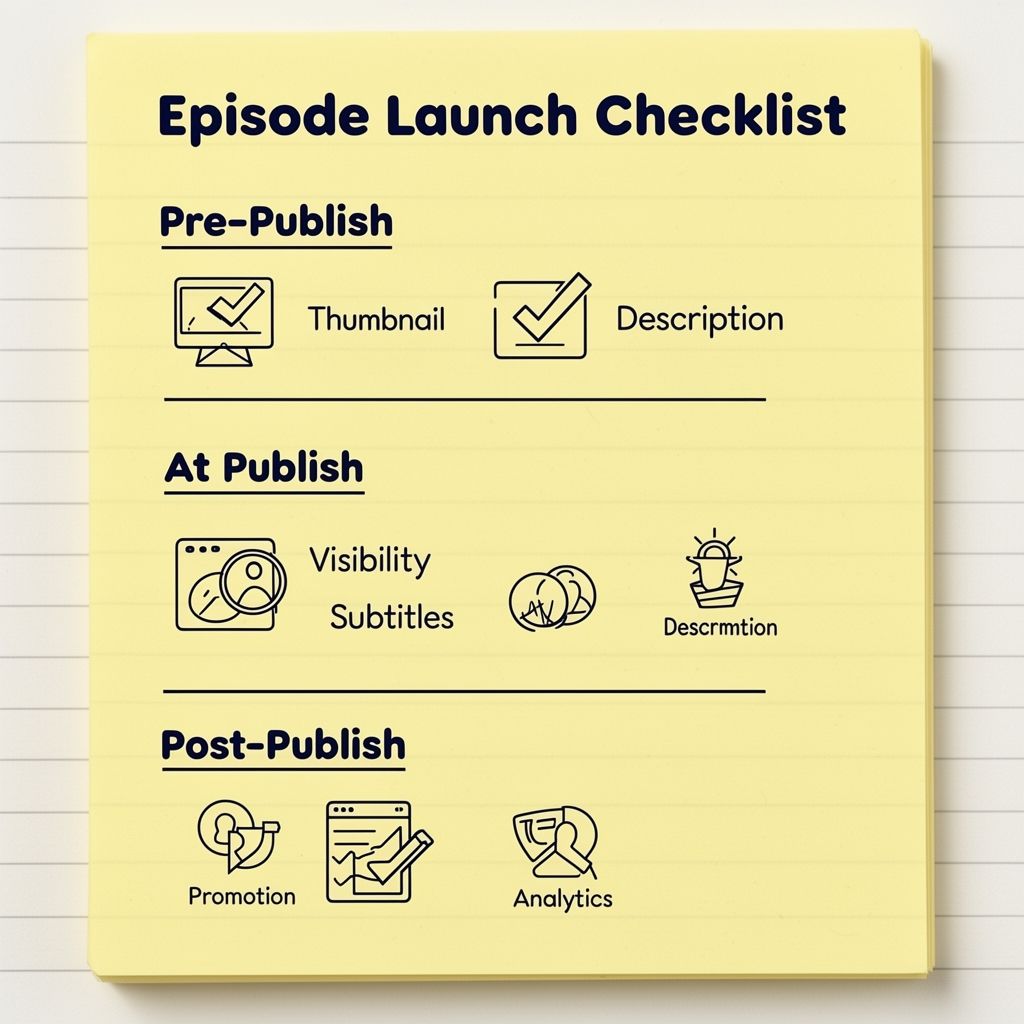
The 2026 Episode Launch Checklist
Copy this. Use it for every episode.
Pre-Publish:
- [ ] Title: Finalized using AI ideation + data validation (Target: >5% projected CTR).
- [ ] Thumbnail: Created with high contrast, readable text, a human face (if possible), and a clear focal point. A/B test option ready.
- [ ] Description: Drafted with keyword-rich first 150 chars, detailed summary, bullet points, relevant links, and a clear CTA.
- [ ] Tags: 8-12 tags applied using the tiered strategy (Broad + Specific + Long-tail).
- [ ] Timestamps/Chapters: Manual timestamps added to description with descriptive, keyword-inclusive titles.
- [ ] Playlist: Episode added to relevant, existing playlist(s).
- [ ] Cards & End Screen: Configured to link to another relevant video on your channel and your subscription page.
At Publish:
- [ ] Visibility: Set to Public (not Unlisted).
- [ ] Upload .srt file: If your editor provides a highly accurate transcript, upload it as a subtitle file for better accessibility and AI comprehension.
- [ ] Category: Set to “Education” or “Howto & Style” unless clearly entertainment.
Post-Publish (First 48 hrs & Week 2):
- [ ] Initial Promotion: Shared on socials, in newsletter, with any guests.
- [ ] Engage with Comments: Respond to first comments quickly to boost early engagement signals.
- [ ] Week-2 Review: Check CTR and AVD in Analytics. Be prepared to swap the thumbnail or tweak the title if performance is subpar.
Frequently Asked Questions
Should I create a separate YouTube channel for my podcast?
Generally, no—unless your podcast topic is radically different from your main channel's brand. Consolidating all your authority and subscriber base into one channel is almost always more powerful. A dedicated podcast playlist or channel section is sufficient. The algorithmic benefit of a single, strong, active channel outweighs the niche clarity of a separate one, especially when starting.
How long should my YouTube podcast title be for optimal SEO?
Aim for 50-70 characters to ensure it displays fully in search results on all devices. Front-load the most important keywords and compelling words. The classic “This Is How We…” or “The Truth About…” structures still work, but in 2026, question-based titles (“Why Is Everyone Wrong About X?”) and story-driven hooks (“How I Lost $10k With This SEO Mistake”) are outperforming dry, keyword-stuffed titles because they promise a specific journey and boost CTR.
What’s the ideal number of tags to use?
Use all the tags YouTube allows, which is typically 400-500 characters. This usually translates to 8-15 tags. Focus on relevance over quantity. Filling all available tag slots with highly relevant terms gives the algorithm a more complete semantic picture of your video than using just 3-4 tags, but stuffing with irrelevant tags is harmful.
Can I use AI to write my entire title and description?
You can, and for ideation it’s excellent. But you must heavily edit and fact-check the output. Pure AI-generated copy often lacks the unique human perspective, subtle humor, or specific anecdote that makes your podcast yours. Use AI as a collaborative brainstorm partner and first-draft writer, not the final authority. Always add a layer of your own voice and specific references from the episode.
How important are timestamps (chapters) really?
Critically important in 2026. They are a direct ranking and user experience signal. Videos with chapters have higher average view duration because users can navigate to the parts they care about. For the AI, chapters act as a structured data markup, clearly delineating the video’s content segments. It’s one of the highest-ROI, lowest-effort optimizations you can do.
What is the single most important metric to track after publishing?
For the first 72 hours, watch Impressions Click-Through Rate (CTR). This tells you if your packaging (thumb + title) is working. After that, shift focus to Average View Duration (AVD) and Watch Time. YouTube ultimately rewards videos that keep people on the platform. A high CTR with a low AVD tells YouTube your video is clickbait. A decent CTR with a high AVD (50%+) is the golden ticket that tells the algorithm to push your video to more people.
My podcast is audio-only. Is it even worth putting on YouTube?
Absolutely, but you must adapt. A static image won’t cut it. Use a tool like Headliner,Descript, or Adobe Premiere Pro to create a dynamic video with waveform animations, full-screen text highlights of key quotes, and relevant stock footage or B-roll. This “audiogram” style content can still perform very well, especially for search-driven, informational content. The discoverability on YouTube is too vast to ignore.
How often should I be posting podcast episodes to YouTube?
Consistency beats frequency, but a weekly upload schedule is the sweet spot for training the algorithm and building audience expectation. If you have a backlog, you can launch with 2-3 episodes and then settle into a weekly rhythm. The key is reliable predictability, not burning out with daily posts. A consistent, quality weekly show will outperform an erratic daily one in the long-term algorithmic favor.
The landscape of YouTube podcast SEO in 2026 is defined by AI collaboration—using intelligent tools to predict intent and optimize for systems that understand content, not just keywords. The winners will be those who stop thinking of themselves as “podcasters on YouTube” and start thinking like “YouTube educators and storytellers who use the podcast format.” The tactics here are your technical foundation, but your unique insight is your ultimate advantage. Start by treating your next episode not as an audio file to upload, but as a primary video content asset. Go to your channel right now, pick your most recent episode, and run it through the checklist in this guide. You’ll likely find 3-5 quick wins waiting to be implemented in under an hour. Do that today, and you’ve taken the first concrete step out of the 47-view trap and into a strategy built for what’s next.
Boomlify Team