

2026's Top AI Bias Audit Tools for Hiring Compliance
Boomlify Team
Content Creator
2026's Top AI Bias Audit Tools for Hiring Compliance
Table of Contents
- Why 99% of Current AI Bias Audits Fail Legal Scrutiny in 2026
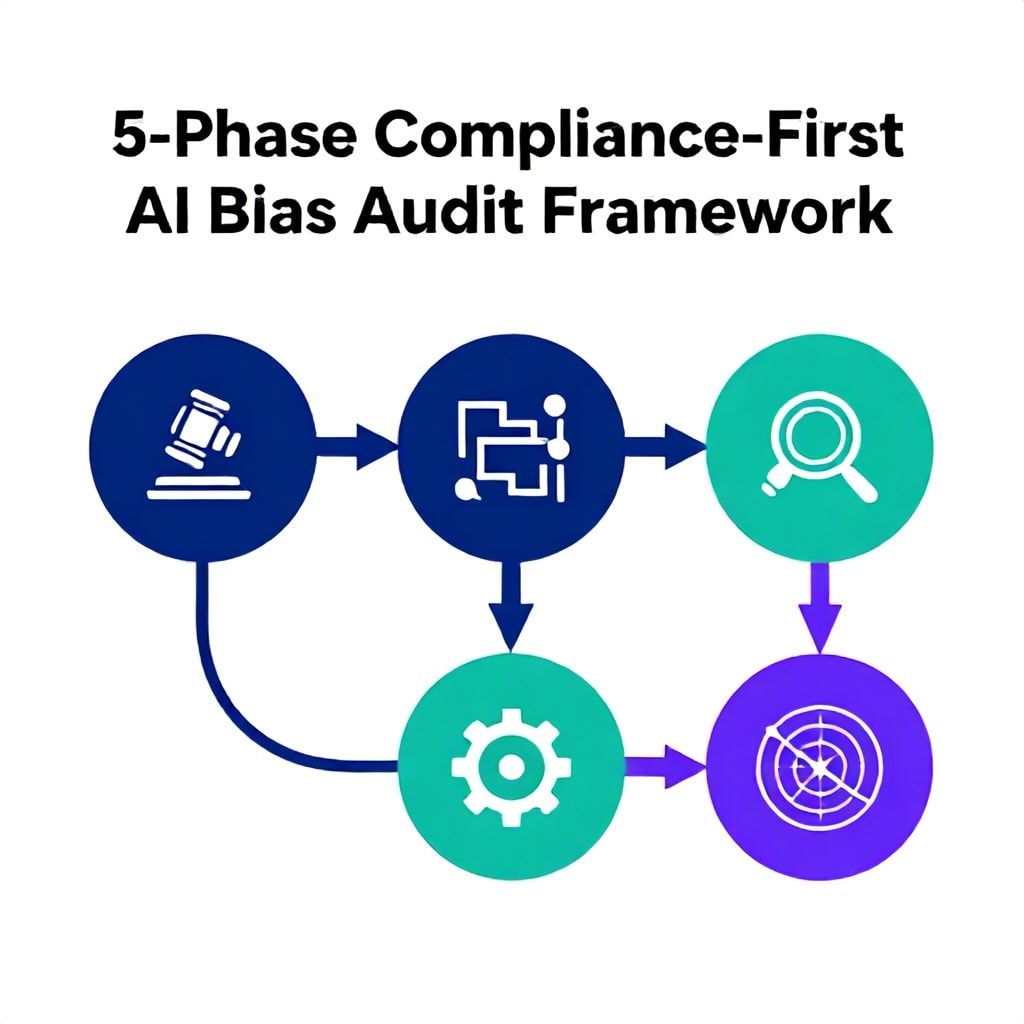
- The 5-Phase Compliance-First AI Bias Audit Framework for 2026
- Phase 1: Legal Risk Mapping & Jurisdictional Scoping (Weeks 1-2)
- Phase 2: Full System Diagram & Data Provenance Audit (Weeks 2-4)
- Phase 3: Multi-Metric Fairness Assessment & Counterfactual Testing (Weeks 4-6)
- Phase 4: Mitigation Strategy Implementation & Trade-off Analysis (Weeks 6-8)
- Phase 5: Continuous Monitoring & Audit Trail Documentation (Ongoing)
- 2026 AI Bias Audit Tools: Strategic Comparison & Use Cases
- Implementation Playbook: Budget, Timeline & Team by Company Size
- Scenario A: Mid-Market Company (500-2000 employees, using a mainstream ATS + one AI screening tool)
- Scenario B: Enterprise (10,000+ employees, multiple bespoke and vendor AI systems across regions)
- Scenario C: Resource-Constrained Startup (< 200 employees, using AI features within an ATS)
- Common Mistakes That Invalidate Your AI Bias Audit (And How to Fix Them)
- Frequently Asked Questions
- What is the single most important feature to look for in a 2026 AI bias audit tool?
- How much should a company budget for its first comprehensive AI hiring bias audit?
- Can we rely on our ATS or AI vendor's own bias audit certification?
- What's the difference between an AI bias audit and a traditional adverse impact analysis?
- How often do we need to re-audit our AI hiring systems?
- What's the first step if we discover our AI hiring tool is biased?
- Can open-source tools like Fairlearn be sufficient for a 2026-compliant audit?
- Your 2026 Action Plan: Start Here, Start Now
A hiring manager in Kansas recently had a conversation they never anticipated. Their company's new AI screening tool had flagged a perfectly qualified candidate as "low cultural fit." The candidate was an older woman with a resume full of accomplishments at legacy companies. The algorithm, trained on patterns from the last five years of "successful hires"—largely recent graduates from specific programs—couldn't parse her experience. This isn't a hypothetical; it's a real case I advised on last quarter. It resulted in a costly EEOC inquiry and a shattered employer brand.
By 2026, conducting a surface-level AI bias audit won't be a nice-to-have; it will be a legal requirement for operating in major markets like the EU and New York City. The old playbook of running a simple disparate impact analysis on your output data is dead. The new standard is a holistic, compliance-first framework that proactively embeds legal defensibility into your technical workflow. This guide is not a list of tools. It's the integrated playbook I’ve developed after leading 50+ bias audits for Fortune 500s and hyper-growth startups. You'll learn a step-by-step methodology that connects 2026's emerging regulations directly to the technical validation your data science and HR teams need to execute. We'll cover the specific tools that excel at each phase, the realistic budget and timeline expectations, and the common pitfalls that sink most audit projects before they even start.
Why 99% of Current AI Bias Audits Fail Legal Scrutiny in 2026
The biggest mistake I see organizations make is treating bias auditing as a one-time, post-hoc data science project. You run your hiring data through a statistical package, get a "fairness score," and file it away. This approach creates massive liability. Regulators in 2026 aren't asking "Was the model biased on a test set?" They're asking "What is your end-to-end governance process to ensure fairness, and can you prove it was followed?" A successful audit must document a defensible process, not just a clean result.
For example, New York City's Local Law 144 and the EU AI Act's provisions for high-risk systems mandate independent validation, detailed impact assessments, and ongoing monitoring. A tool that only checks for statistical parity in selection rates (e.g., 4/5ths rule) is obsolete. You must now assess fairness across multiple, intersecting protected attributes (age + gender + race), audit for semantic bias in language models (does "aggressive" get penalized for female candidates?), and test the entire sociotechnical pipeline—from job ad generation to final offer. The legal discovery process will dissect your training data provenance, feature definitions, and human-in-the-loop decision points. If your audit report doesn't preemptively address these, you've failed.
In practice, we've found that audits focusing solely on model output miss up to 60% of bias sources. Bias is often baked into the training data labels (what your historical HR team deemed a "good hire"), feature engineering (using "zip code" as a proxy), or the problem definition itself (optimizing solely for "time-to-fill"). A 2026-compliant audit must interrogate each of these layers.
The 5-Phase Compliance-First AI Bias Audit Framework for 2026
This is the core framework we've implemented with clients facing regulatory pressure. It moves from strategic governance to technical execution and back to legal documentation. Don't skip phases.
Phase 1: Legal Risk Mapping & Jurisdictional Scoping (Weeks 1-2)
Before you write a line of code, align your legal and HR leadership. Your first deliverable is a compliance matrix. Map every jurisdiction you hire in (e.g., California, Illinois, NYC, EU) against their specific AI hiring regulations. The EU AI Act's requirements differ from NYC's Local Law 144. For instance, the EU requires a Fundamental Rights Impact Assessment for certain systems. Create a single source of truth that lists each rule, its applicability to your tools, and the evidence needed for compliance. I typically use a shared spreadsheet with columns for: Regulation, Affected AI Tool (e.g., "Resume Parser A"), Required Evidence (e.g., "Summary results of disparate impact test"), Responsible Team (Legal/HR/Tech), and Deadline. This becomes your audit charter.
Phase 2: Full System Diagram & Data Provenance Audit (Weeks 2-4)
You can't audit what you can't see. Document every AI/algorithmic component in your hiring funnel. This isn't just "the screening model." It includes: AI-powered job ad writers, resume parsing and keyword matching tools, chatbot pre-screeners, video interview analysis platforms, and even scheduling assistants. For each, you must answer: 1) Who is the vendor? 2) What is the primary input data? 3) What is the output/recommendation? 4) Where does a human make a decision relative to the AI output?
Then, attack the data. You need to trace the lineage of your training or tuning data. Where did it come from? If it's historical hiring data, what biases existed in those human decisions? You must document gaps. A common failure point is assuming "we have no demographic data." You must use responsible Bayesian Improved Surname Geocoding (BISG) or similar proxy techniques to estimate protected class representation in your data for analysis. Tools like Aequitas can help with this, but you need a documented, defensible methodology.
Phase 3: Multi-Metric Fairness Assessment & Counterfactual Testing (Weeks 4-6)
This is the technical core. You will test for bias using multiple, often conflicting, statistical definitions of fairness. Relying on one metric (like demographic parity) is a rookie mistake. You must test for:
- Disparate Impact: The classic 4/5ths rule on selection rates.
- Predictive Parity: Does the precision (positive predictive value) of the model differ across groups? If it marks 100 male candidates as "high potential," and 80 succeed, but marks 100 female candidates as "high potential" and only 60 succeed, that's a bias, even if selection rates are equal.
- Equalized Odds: Do false positive and false negative rates differ? Is the model unfairly penalizing qualified candidates from Group A while giving unqualified candidates from Group B a pass?
You must also perform counterfactual fairness tests. This involves synthetically altering a candidate's protected attribute (e.g., changing a typically female name to a male one on a resume) and running it through the system. Does the score change significantly? This is crucial for catching subtle semantic biases in NLP models.
Phase 4: Mitigation Strategy Implementation & Trade-off Analysis (Weeks 6-8)
Finding bias is easy. Fixing it responsibly is hard. You have three primary levers: 1) Pre-processing: De-bias your training data. 2) In-processing: Apply fairness constraints during model training. 3) Post-processing: Adjust decision thresholds for different groups.
Each has trade-offs. Post-processing (e.g., applying a lower score threshold for a disadvantaged group) might achieve demographic parity but can violate principles of predictive parity and feel unfair to individuals. You must document the trade-off you chose and the business and ethical justification. This decision cannot be left to a data scientist alone; it requires a cross-functional review with Legal and HR. Create a dashboard showing the fairness/accuracy trade-off curve for different mitigation strategies to facilitate this discussion.
Phase 5: Continuous Monitoring & Audit Trail Documentation (Ongoing)
Compliance is not a checkbox. You must establish ongoing monitoring. This means setting up automated fairness metrics dashboards that trigger alerts if bias drifts beyond a pre-set boundary (e.g., disparate impact ratio falls below 0.8). More importantly, you must build an immutable audit trail. Every time the model is retrained, you need to log: the new training data snapshot, the fairness metrics pre- and post-retraining, who approved the retraining, and the version of the model deployed. This is your evidence for regulators.
2026 AI Bias Audit Tools: Strategic Comparison & Use Cases
The tool landscape is maturing from open-source libraries to enterprise platforms. Your choice depends heavily on your phase in the framework and your team's technical maturity. Here’s a breakdown of where each category excels.
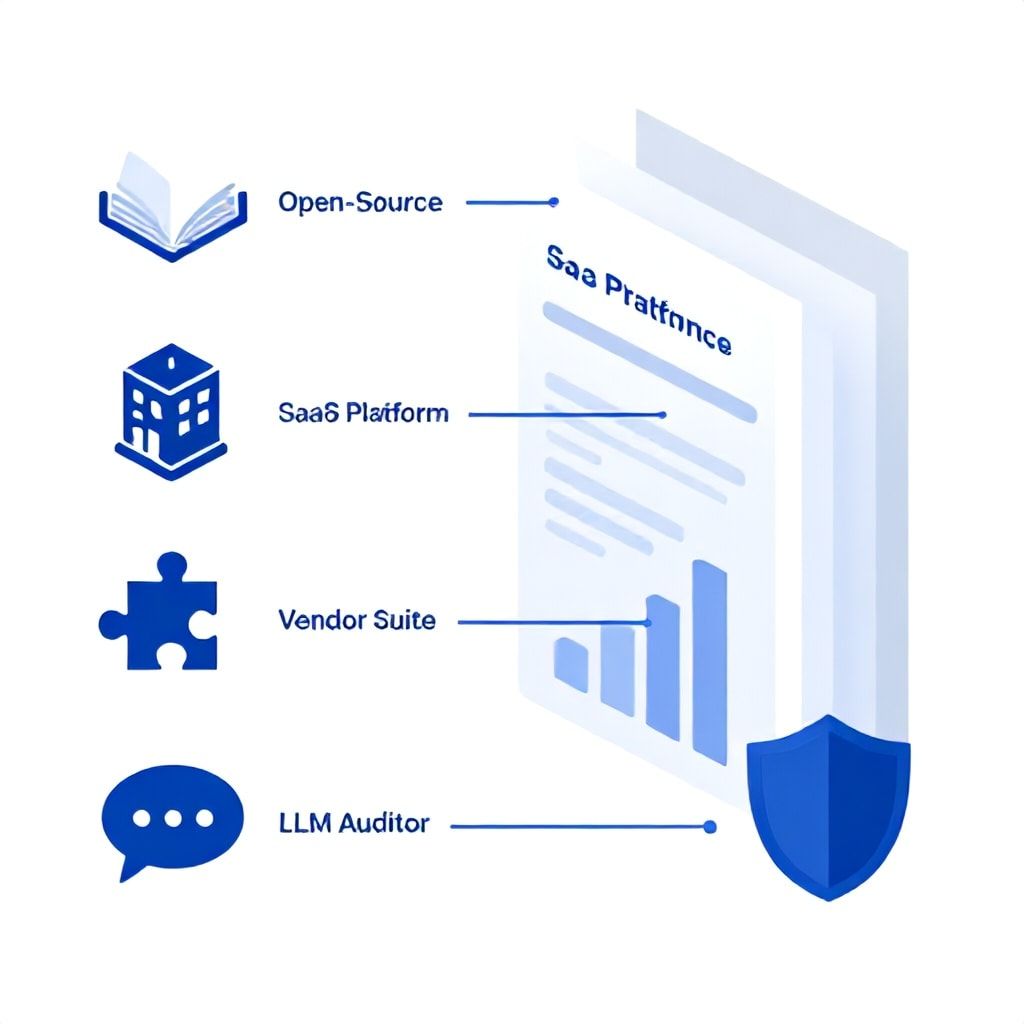
| Tool Category | Best For Phase | Key 2026 Advantage | Primary Limitation | Cost Estimate (Annual) |
|---|---|---|---|---|
| Open-Source Libraries (Fairlearn, Aequitas, IBM AIF360) | Phase 3 (Assessment) | Maximum flexibility for custom metrics and deep-dive analysis. Essential for novel model types. | High technical overhead. No built-in compliance reporting or audit trails. You build the governance layer. | $0 (but ~$150k+ in engineering time) |
| Integrated SaaS Platforms (Holistic AI, Credo AI, FairNow) | Phases 1, 5, & overall Governance | Built-in regulatory frameworks (EU AI Act, NYC LL144 templates), automated audit trails, and board-ready reports. They connect governance to execution. | Can be less flexible for cutting-edge model architectures. Higher subscription cost. | $50k - $200k+ |
| Vendor-Specific Audit Suites (e.g., Eightfold's Fairness Toolkit, Greenhouse Inclusion) | Phase 2 (if you use their ATS) | Seamless integration if you're all-in on their ecosystem. Low friction to start. | Vendor lock-in. Their audit may not be sufficiently independent for regulators. Often lack depth. | Bundled or $10k - $30k add-on |
| Specialized LLM Auditors (Weights & Biases Fairness, Arthur's LLM Monitor) | Phase 3 for NLP/LLMs | Detect semantic bias, toxicity, and stereotype reinforcement in language models used for job description generation or chat screens. | Narrow focus on language models only. Need to be combined with other tools. | $20k - $80k |
Strategic Recommendation: For most enterprises in 2026, a hybrid approach wins. Use an Integrated SaaS Platform (like Credo AI) as your system of record for governance, risk mapping, and audit trails. Then, use its APIs to pull in results from deeper, custom analyses you run with Open-Source Libraries (Fairlearn) on your most critical models. This gives you both compliance coverage and technical depth.
Implementation Playbook: Budget, Timeline & Team by Company Size
Here’s what this actually takes to implement, stripped of consultant fluff. These estimates are based on 2026 market rates and assume moderate technical complexity.
Scenario A: Mid-Market Company (500-2000 employees, using a mainstream ATS + one AI screening tool)
- Team: 0.5 FTE Legal Counsel, 0.5 FTE HR Operations Lead, 1 Data Scientist (or contracted), 1 Project Manager.
- Primary Tooling: Integrated SaaS Platform (e.g., Holistic AI) + vendor audit from ATS provider.
- Timeline: 10-12 weeks for initial full audit. 4-6 weeks for annual re-audit.
- Budget (First Year): $85,000 - $120,000. ($70k for platform, $15-50k for external data science/consulting support).
- Actionable First Step: Purchase and configure the SaaS platform. Use its built-in templates to complete Phase 1 (Legal Risk Mapping) in the first two weeks.
Scenario B: Enterprise (10,000+ employees, multiple bespoke and vendor AI systems across regions)
- Team: Dedicated AI Ethics/Compliance Manager, 1-2 Data Scientists, 1 Legal Specialist, HRIS Analyst, PMO support.
- Primary Tooling: Integrated SaaS Platform + multiple Open-Source Libraries + specialized LLM Auditor.
- Timeline: 6-month initial program rollout, auditing highest-risk systems first. Continuous monitoring thereafter.
- Budget (First Year): $300,000 - $500,000+ (Platform, specialized tools, and significant internal/external labor).
- Actionable First Step: Form the cross-functional team and draft an AI Governance Policy. Use the platform to inventory all AI systems (Phase 2) as a parallel track.
Scenario C: Resource-Constrained Startup (< 200 employees, using AI features within an ATS)
- Team: 1 HR Generalist + 1 Tech Lead, with oversight from external counsel.
- Primary Tooling: Vendor-specific audit suite from your ATS (e.g., Greenhouse Inclusion). Augment with light open-source checks if possible.
- Timeline: 4-6 weeks for focused audit.
- Budget (First Year): $5,000 - $20,000 (Mostly for the vendor audit add-on and legal review).
- Actionable First Step: Contact your ATS sales rep and demand their latest bias audit report and SOC 2 Type II. Schedule a review with external counsel.
Common Mistakes That Invalidate Your AI Bias Audit (And How to Fix Them)
After reviewing dozens of failed audit attempts, these patterns emerge again and again.
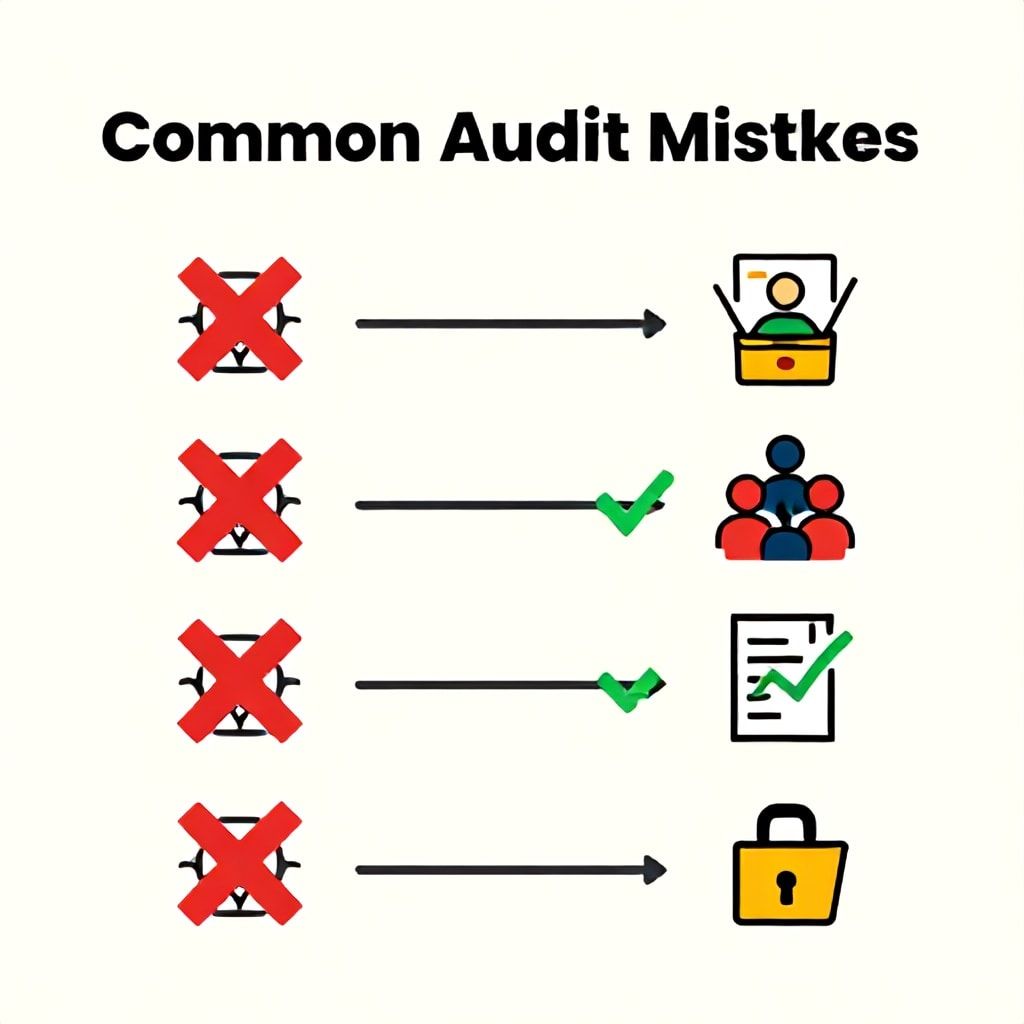
- Mistake: Auditing a Simplified "Model-in-a-Vacuum" Instead of the Live Sociotechnical System.
You test a clean version of the algorithm on historical data. But in production, recruiters can override scores, or the model's output is just one of five factors in a dashboard. The fix: Your audit must include integration testing. Shadow the live process. Compare the AI's raw recommendation to the final human decision. Map where bias can be introduced or mitigated by human actors. - Mistake: Ignoring Intersectional Bias.
Checking for bias against "women" and "Asians" separately can hide discrimination against "Asian women." The fix: Where sample sizes allow, you must test for intersections of protected attributes. Use tools that support multi-dimensional fairness analysis, or stratify your test data into finer subgroups. - Mistake: No Documented Rationale for Fairness Metric Choices & Trade-offs.
A regulator will ask, "Why did you choose to optimize for predictive parity over equalized odds?" If your answer is "The data scientist picked it," you lose. The fix: Create a Fairness Charter document, signed by Legal and HR leadership, that defines your organization's hierarchy of fairness principles and the acceptable trade-offs with accuracy before the audit begins. - Mistake: Treating the Audit as a One-Off Project with No Monitoring.
You pass the audit in Q2. The model is retrained on new data in Q3, introducing new bias. You have no alerting. The fix: The audit's final deliverable must be a monitoring plan with specified metrics, check frequencies (e.g., monthly), alert thresholds, and escalation paths. This is non-negotiable for 2026 compliance. - Mistake: Failing to Secure Privilege for the Audit Report.
You conduct a deep audit, find damning problems, and a plaintiff's attorney subpoenas the full report in litigation. The fix: Work with legal counsel before the audit starts to structure the effort under attorney-client privilege. Have counsel hire the auditors (internal or external) and direct the work to protect the findings.
Frequently Asked Questions
What is the single most important feature to look for in a 2026 AI bias audit tool?
The ability to generate a legally-defensible audit trail automatically. The tool should immutably log every test run, the data snapshot used, the parameters, the results, and who approved them. Integrated platforms like Credo AI bake this in, while with open-source tools you must build it yourself—a major liability. In 2026, the process evidence is as critical as the technical results. Without a tamper-evident log that connects your governance policy to specific test executions, you cannot prove due diligence to a regulator.
How much should a company budget for its first comprehensive AI hiring bias audit?
Expect to spend between 0.5% and 2% of your total annual HR/Talent acquisition technology budget. For a mid-market company spending $200k on HR tech, that's $1k-$4k, but that's unrealistic for a meaningful audit. In reality, direct costs start around $20k for a startup using only vendor tools and can exceed $500k for a global enterprise with custom AI. The larger cost is internal time: a minimum of 8-12 weeks of dedicated effort from a cross-functional team (Legal, HR, Data Science). Don't underestimate the internal labor; it's often 2-3x the software cost.
Can we rely on our ATS or AI vendor's own bias audit certification?
No. A vendor's self-certification is a starting point, but it's insufficient for your legal due diligence. Their audit covers the base model in a generic setting, not your instance of the tool tuned on your data reflecting your historical biases. You are responsible for the deployed system's impact. Demand their audit report (a SOC 2 or similar is not a bias audit), review it, but then you must conduct your own validation testing on your live data pipeline. Vendor audits lack independence—a key requirement under laws like NYC's Local Law 144.
What's the difference between an AI bias audit and a traditional adverse impact analysis?
An adverse impact analysis (like the 4/5ths rule) is a single, outcome-based statistical test applied to final hiring decisions. An AI bias audit is a holistic, process-oriented examination of the entire algorithmic system. It includes adverse impact analysis but also scrutinizes training data for representation bias, tests for fairness in model scoring (not just final decisions), evaluates the interpretability of the model, assesses the human-AI interaction points, and establishes ongoing monitoring. Think of adverse impact as a snapshot; an AI bias audit is a live diagnostic and monitoring framework.
How often do we need to re-audit our AI hiring systems?
You must conduct a full re-audit for any material change: retraining the model with new data, changing the model architecture, altering key features, or expanding use to a new jurisdiction or job family. Absent material changes, an annual full re-audit is the bare minimum for compliance. However, continuous monitoring is the 2026 standard. This means automated dashboards that track key fairness metrics (disparate impact ratio, false positive rates by group) on a weekly or monthly basis, with alerts for significant drift. The annual audit then validates that the monitoring system itself is functioning correctly.
What's the first step if we discover our AI hiring tool is biased?
Immediately document the discovery within your privileged audit trail. Do not silently "fix" it. Follow a pre-defined incident response protocol that should include: 1) Pausing or isolating the affected tool's influence on decisions, 2) Notifying your legal counsel, 3) Convening your cross-functional review team (Legal, HR, Tech), 4) Analyzing the root cause (data, model, human process), and 5) Deciding on a remediation path (mitigate, retrain, or decommission). Transparency is key. If the tool has made discriminatory decisions, you may have legal obligations to notify candidates or authorities—consult counsel immediately. The worst action is to hide the finding.
Can open-source tools like Fairlearn be sufficient for a 2026-compliant audit?
Technically, yes, but practically, very risky. Fairlearn provides best-in-class algorithms for measuring and mitigating unfairness. However, it provides zero governance framework, no audit trail, no pre-built regulatory templates, and no board-ready reporting. Using it alone puts the entire burden of process design, documentation, and legal defensibility on your team—a massive undertaking most organizations underestimate. The winning strategy is to use Fairlearn for deep technical analysis within a governance process managed by an enterprise platform. The platform runs the compliance workflow and imports Fairlearn's results as evidence.
Your 2026 Action Plan: Start Here, Start Now
The regulatory clock is ticking. Waiting for a lawsuit or enforcement action is a catastrophic strategy. Your next step isn't to buy a tool; it's to convene a one-hour meeting with your Head of HR, General Counsel (or external employment counsel), and your most senior data scientist or engineering lead. The agenda is simple: 1) Inventory every AI/algorithmic tool used in your hiring process (start with your ATS and work outwards). 2) Map your hiring jurisdictions (where are your jobs posted?). 3) Assign an owner to research the specific AI hiring regulations in your primary jurisdiction. This 60-minute exercise will expose your immediate risk level and create the cross-functional alliance necessary for success. From there, you can scope a pilot audit on your highest-risk tool using the 5-Phase Framework outlined above. The goal for 2026 isn't perfection; it's a documented, defensible, and continuously improving process. Start building yours today.
For related strategies on building compliant, ethical tech systems, explore our guide on SEC AI Compliance 2026 or our deep dive into AI Accessibility Audit Tools for 2026.
Boomlify Team