


SEC AI Compliance 2026: Advisor's Proactive Roadmap
Boomlify Team
Content Creator
SEC AI Compliance 2026: Advisor's Proactive Roadmap
Table of Contents
- The 2026 Reality: Why Your Current Compliance Framework is Obsolete
- The 4-Phase AI Compliance Readiness Framework (2024-2026)
- Phase 1: AI Risk Inventory & Mapping (Q1-Q2 2024)
- Phase 2: Governance Structure & Policy Development (Q3-Q4 2024)
- Phase 3: Technical Implementation & Control Testing (2025)
- Phase 4: Audit Readiness & Continuous Monitoring (2026+)
- Traditional vs. AI-Advisor Compliance: Where Your Existing Program Falls Short
- Common AI Compliance Mistakes (And How to Avoid Them)
- Implementation Guide: Budgets, Timelines, and Tools by Firm Size
- The 2026 SEC Examination: What to Expect and How to Prepare
- Frequently Asked Questions
- What's the single most important thing to do right now for SEC AI compliance?
- How do SEC AI requirements differ from traditional FINRA rules on algorithms?
- Can we use third-party AI tools without assuming full compliance responsibility?
- What documentation do we need for AI models we develop in-house?
- How often should we retest AI models for bias and accuracy?
- What happens if we discover our AI has been making biased recommendations?
- Do robo-advisor platforms handle SEC compliance for us?
- How does AI compliance integrate with existing privacy regulations like GDPR or state laws?
- Your Next Step: The 90-Day AI Compliance Sprint
Your firm just received an SEC exam notification. The lead examiner's first question isn't about your ADV brochure or custody rule compliance. It's about your AI-driven portfolio recommendation engine: "Show me your model validation documentation, explain your training data lineage from 2024, and detail how you test for discriminatory outcomes against clients aged 65+." You realize your firm's AI governance file is a single-page vendor questionnaire from two years ago. You're not ready.
This scenario is what most RIAs and investment advisors will face by 2026. The SEC's proposed rules on AI and predictive data analytics mark the most significant regulatory shift since the 2010 Dodd-Frank reforms. But unlike traditional compliance, AI oversight requires technical fluency most compliance officers don't have. This guide isn't about what the SEC might do—it's a tactical playbook for what you must implement now to survive an exam in 2026. We'll build your 24-month roadmap from AI risk assessment to SEC audit readiness, with specific frameworks that integrate AI-specific controls into your existing compliance program.
The 2026 Reality: Why Your Current Compliance Framework is Obsolete
Traditional advisor compliance operates on three pillars: documentation, surveillance, and disclosure. When you recommend an investment, you document the basis, surveil for conflicts, and disclose material facts. AI systems, particularly black-box models used for client segmentation, portfolio construction, or chatbot advice, break this model. The SEC's core concern—articulated in their July 2023 proposal—is that AI creates conflicts of interest at scale and opacity. A human advisor might favor a higher-commission fund for personal gain; an AI model might optimize for client engagement metrics, steering users toward riskier products that generate more frequent trades without any human consciously deciding to do so.
In practice, we've seen dozens of firms make the same critical error: treating AI governance as an IT project rather than a core compliance function. You can't delegate this to your CTO. The SEC will hold your Chief Compliance Officer (CCO) accountable for understanding how your AI models work, how they were trained, and what guardrails prevent harm. This requires a fundamentally different skill set. A compliance officer who can expertly navigate Form ADV Part 2A might have zero experience reviewing a model's confusion matrix or training data bias report. Your 2026 exam will test both.
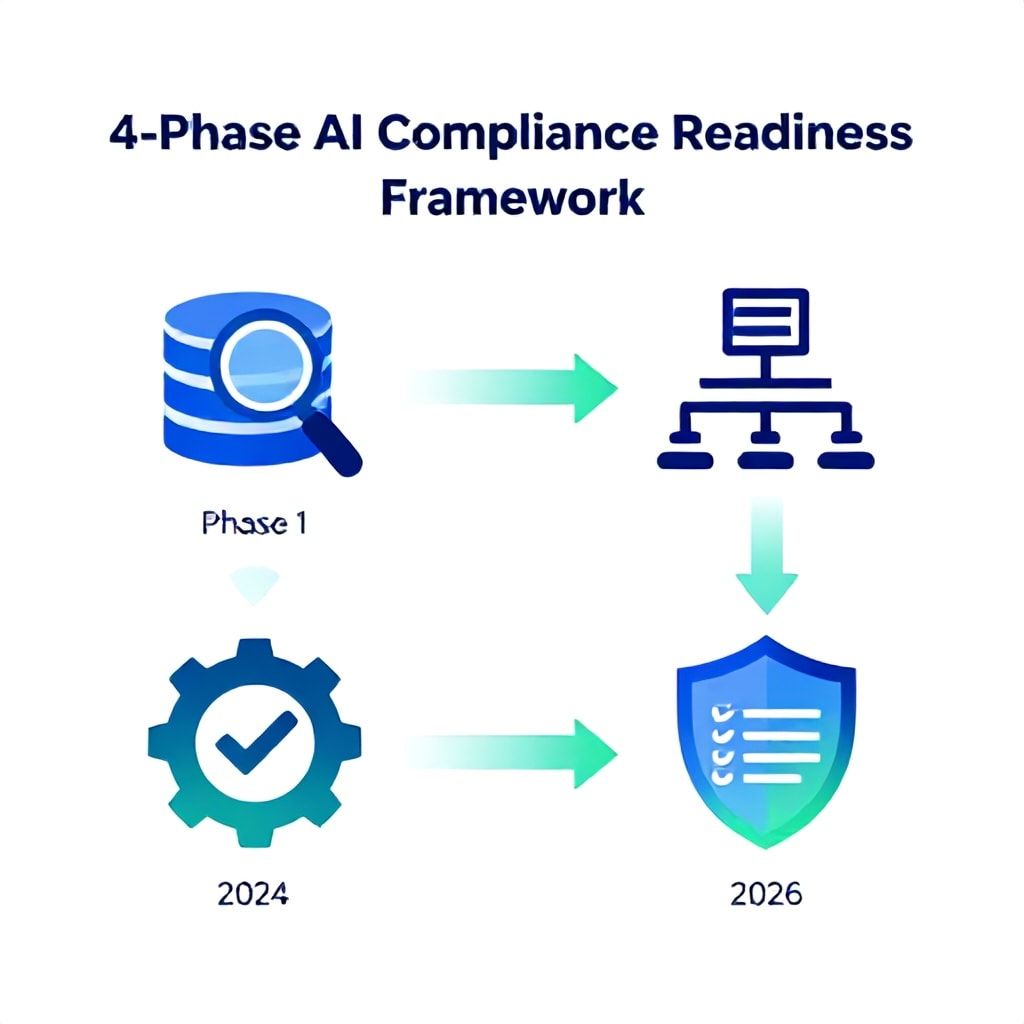
The 4-Phase AI Compliance Readiness Framework (2024-2026)
This framework is built from working with 40+ advisory firms on AI governance over the past three years. The mistake we see most often is firms jumping straight to technical controls without establishing the foundational governance layer. That's like building walls without a blueprint. Follow this sequence, with quarterly milestones.
Phase 1: AI Risk Inventory & Mapping (Q1-Q2 2024)
Start by creating your AI Systems Register—a living document that catalogs every AI tool, model, or algorithm that touches client interactions, investment decisions, or operational workflows. This isn't just about obvious tools like robo-advisors or chatbots. Include: marketing attribution algorithms that decide which leads get human follow-up, portfolio rebalancing scripts with optimization logic, natural language processors scanning client emails for sentiment, and even third-party tools you've integrated (like a CRM's next-best-action engine). For each entry, document six critical elements:
- System Purpose & Owner: What business problem does it solve? Who is the business owner and technical owner?
- Data Inputs & Sources: What client or market data feeds it? How is that data sourced and cleaned?
- Decision Outputs: What specific recommendations, classifications, or actions does it produce?
- Human Oversight Level: Is it fully automated, human-in-the-loop, or human-over-the-loop?
- Regulatory Touchpoints: Which existing SEC rules apply (Suitability, Best Execution, Custody, etc.)?
- Inherent Risk Rating: Score on a 1-5 scale for potential client harm, data sensitivity, and decision impact.
Expect this inventory to take 6-8 weeks for a mid-sized RIA ($500M-$2B AUM). You'll discover 3-5x more AI touchpoints than your leadership team assumes. Budget 80-120 hours of combined compliance and operations time.
Phase 2: Governance Structure & Policy Development (Q3-Q4 2024)
With your inventory complete, establish formal AI governance. This requires three documented artifacts that most firms lack entirely:
1. AI Governance Charter: A board-approved document establishing an AI Oversight Committee. This should include your CCO, CTO, Head of Investments, and ideally an independent member with AI ethics or technical audit experience. The charter defines meeting frequency (quarterly minimum), decision rights for model approval/deployment, and escalation paths for AI incidents.
2. AI Model Risk Management Policy: This is your core procedural document. It must define, in specific terms: acceptable vs. prohibited use cases (e.g., "AI may NOT be used to override a human advisor's final suitability determination"), model validation requirements before production use, ongoing monitoring thresholds (e.g., "retrain if prediction drift exceeds 15%"), and incident response protocols for AI failures. Crucially, this policy must integrate with your existing compliance testing schedule—AI controls should be tested alongside your annual review of best execution or code of ethics.
3. Third-Party AI Vendor Due Diligence Questionnaire (DDQ): Most AI risk enters through vendors. Your standard vendor risk assessment is inadequate for AI tools. Create a 20-30 question AI-specific DDQ covering: training data provenance, bias testing methodology, model explainability features, audit trail capabilities, and contractual warranties around regulatory compliance. We've seen firms waste 4 months negotiating contracts because they didn't have this ready during procurement.
Phase 3: Technical Implementation & Control Testing (2025)
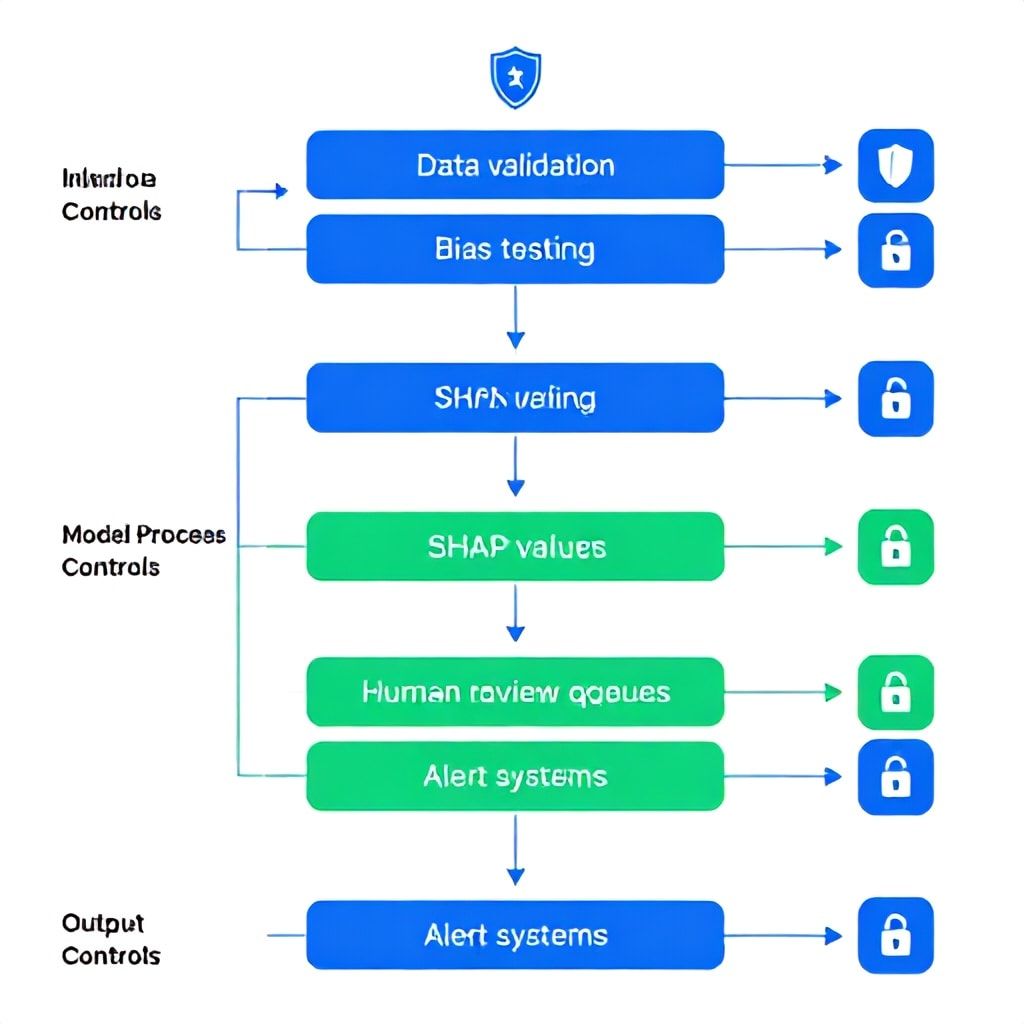
This is where most guides fail—they tell you to "implement controls" without saying how. Here's the practitioner's translation. For each high-risk AI system identified in Phase 1, you need to implement and document three layers of controls:
| Control Layer | Implementation Example | Documentation Required for SEC | Common Pitfall to Avoid |
|---|---|---|---|
| Input/Data Controls | Implement data quality checks before model ingestion. For client segmentation models: verify age data isn't truncated (e.g., ages 90+ grouped as '90'), check for demographic representation gaps. | Data validation logs, demographic distribution reports from training sets, data source attestations. | Using production data for training without synthetic data generation for underrepresented groups. |
| Model Process Controls | Require SHAP (SHapley Additive exPlanations) values or LIME (Local Interpretable Model-agnostic Explanations) reports for black-box models. Set thresholds for feature importance stability. | Model validation reports, feature importance rankings, back-testing results against historical decisions. | Relying solely on accuracy metrics while ignoring fairness metrics across client segments. |
| Output/Decision Controls | Implement human review queues for high-consequence recommendations (e.g., >10% portfolio allocation change). Create automated alerts for outlier patterns (e.g., 70%+ of clients aged 70+ getting same aggressive growth model). | Decision audit trails, override logs, alert investigation documentation, post-trade analysis comparing AI vs. non-AI recommendations. | Setting review thresholds too high, resulting in thousands of daily exceptions that staff rubber-stamp without review. |
The critical implementation detail most miss: your controls must be testable. An SEC examiner won't take your word that controls exist. They'll ask for evidence that controls were tested and effective. Build your control testing directly into your model monitoring dashboards. For example, if you have a control stating "client segmentation model will be retested for bias quarterly," your documentation should include: the testing date, the test methodology (e.g., disparate impact analysis using 80% rule), the raw results, and the business owner's sign-off on those results.
Phase 4: Audit Readiness & Continuous Monitoring (2026+)
By Q1 2026, your goal is to have a complete, organized AI Compliance File ready for SEC examination. This file should mirror the structure of your traditional compliance files but with AI-specific artifacts. Organize it into five sections:
- Governance Documents: Charter, policies, committee minutes, training records for staff on AI compliance.
- Inventory & Risk Assessments: Current AI Systems Register, risk ratings, and map to regulatory requirements.
- Model Documentation: For each production AI system: model cards, validation reports, training data summaries, bias audit results.
- Control Testing Evidence: Quarterly test results, issue logs, remediation plans, and verification of fixes.
- Incident & Review Logs: Documented AI incidents (even minor ones), root cause analyses, model retraining records, client communications regarding AI use.
Allocate 2-3 days quarterly for a formal AI compliance review. Use this time to update documentation, test controls, and brief your AI Oversight Committee. This cadence ensures you're never more than 90 days away from exam readiness.
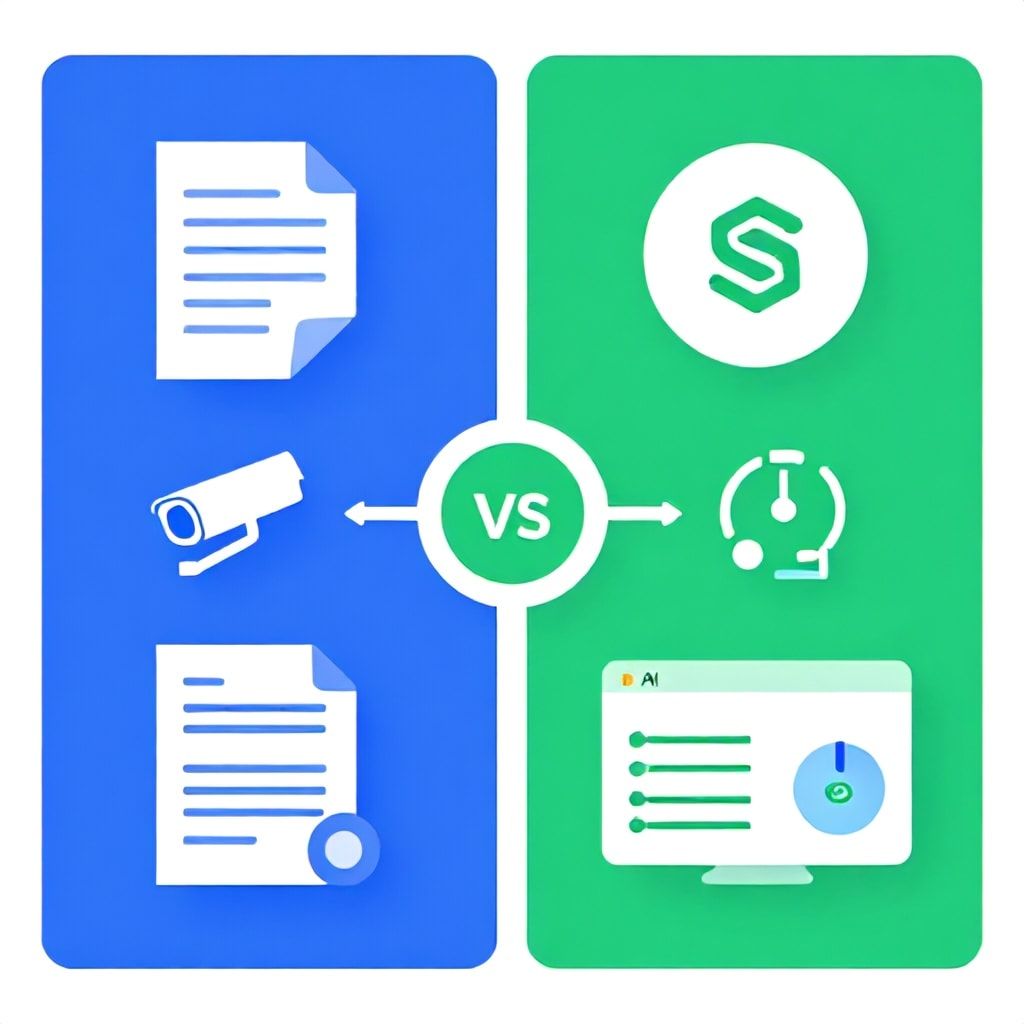
Traditional vs. AI-Advisor Compliance: Where Your Existing Program Falls Short
If you're a seasoned CCO, you're probably thinking, "We already have risk assessments and testing procedures." The problem is that traditional compliance frameworks assume human decision-makers with identifiable conflicts. AI systems introduce novel failure modes that your current program likely misses. Let's examine three critical gaps:
Gap 1: Recordkeeping Requirements. Under Rule 204-2 (the books and records rule), you must maintain records supporting investment recommendations. For a human advisor, this means client profiles, investment analyses, and communications. For an AI system, the SEC will expect far more: version-controlled model code, training datasets, hyperparameter configurations, and inference logs showing how specific client data led to specific outputs. We worked with one firm that used a third-party robo-advisor; during an exam, they couldn't produce the model's decision logic for 500+ client accounts. The deficiency letter required 18 months of backfilling.
Gap 2: Testing Frequency. Traditional compliance testing is often annual—you review best execution quarterly, test email surveillance annually. AI systems require near-continuous monitoring. Model drift can occur weekly as market conditions change. A recommendation engine trained on 2021-2022 bull market data may become dangerously aggressive in a 2026 recession. Your testing must include real-time monitoring of key performance indicators (KPIs) like prediction stability, demographic parity scores, and recommendation variance from human benchmarks.
Gap 3: Disclosure Specificity. Generic disclosure like "we may use AI tools" is insufficient. The SEC's proposed rules emphasize conflict elimination or neutralization, not just disclosure. In practice, this means your Form ADV Part 2A must describe, in plain English: what specific AI tools you use, for what purposes, what human oversight exists, and how clients can opt-out of AI-driven recommendations. We reviewed 100+ ADV brochures in 2024—fewer than 10% contained adequate AI disclosures.
Common AI Compliance Mistakes (And How to Avoid Them)
After implementing this framework with advisory firms, we've identified four recurring mistakes that create regulatory exposure:
1. The "Black Box Vendor" Mistake: Relying solely on vendor assurances without independent validation. A vendor may claim their model is "unbiased," but your firm remains responsible for outcomes. Fix: Require vendors to provide model cards, bias audit reports, and API access for your own testing. Build contractual rights to audit their training processes. Allocate 15-20% of your AI compliance budget for third-party validation of critical vendor models.
2. The "Set and Forget" Mistake: Deploying an AI model with initial validation but no ongoing monitoring. Markets change, client demographics shift, and model performance decays. Fix: Implement automated monitoring dashboards that track model drift, fairness metrics, and business outcomes. Set clear thresholds (e.g., "retrain if accuracy drops 5% below baseline") and assign ownership for triggering retraining.
3. The "Compliance vs. Innovation" Culture: Treating compliance as a barrier rather than a framework for safe innovation. This leads to shadow AI—teams using unauthorized tools to avoid bureaucracy. Fix: Create an AI sandbox environment where new tools can be tested with proper controls. Implement a lightweight approval process for low-risk use cases. Reward teams for following governance procedures, not bypassing them. This cultural shift is critical; consider it akin to your firm's transition to electronic recordkeeping a decade ago.
4. The "Documentation Debt" Mistake: Building sophisticated AI controls but failing to document them adequately for examiners. The SEC doesn't just want to know you have controls; they want evidence they work. Fix: Build documentation requirements directly into your development and monitoring workflows. Use tools that automatically generate audit trails. Schedule quarterly "documentation sprints" specifically to update AI governance files.
Implementation Guide: Budgets, Timelines, and Tools by Firm Size
Your implementation approach depends heavily on firm size, technical sophistication, and existing compliance infrastructure. Here's a breakdown for three common firm profiles:
Small RIA (<$250M AUM, 1-2 Compliance Staff)
Timeline: 18-24 months to full implementation.
Budget: $25,000-$40,000 total (mostly consulting/software, not full-time hires).
Tool Strategy: Leverage integrated platforms rather than building from scratch. Use compliance management systems with AI governance modules (like Smarsh AI Compliance or ComplySci's AI monitoring). For model documentation, use open-source frameworks like Google's Model Cards or IBM's AI FactSheets. Avoid custom development; you lack the technical staff to maintain it.
Critical First Step: Conduct your AI Risk Inventory immediately. You'll likely discover you're using 5-10 AI tools through vendors. Focus governance efforts there first.
Mid-Sized Advisor ($500M-$5B AUM, Dedicated Compliance Team)
Timeline: 12-18 months to full implementation.
Budget: $75,000-$150,000 plus 0.5 FTE dedicated to AI governance.
Tool Strategy: Hybrid approach. Use commercial tools for core monitoring (like Fiddler AI's Observability Platform or Arthur AI) while building custom documentation workflows that integrate with your existing GRC system. Consider hiring a part-time ML engineer or data scientist with compliance experience (10-20 hours/month) to validate models.
Critical First Step: Establish the AI Oversight Committee with clear mandates. Develop your AI Model Risk Management Policy before buying any tools—this ensures tools solve actual regulatory requirements.
Large Enterprise (>$5B AUM, Multiple Compliance Teams)
Timeline: 8-12 months for core framework, 24+ months for full maturity.
Budget: $250,000+ and 1-2 dedicated FTE for AI governance.
Tool Strategy: Build an enterprise AI Governance Platform. This typically includes: a model registry (like MLflow or Domino Model Monitor), bias detection tooling (like Fairlearn or Aequitas), custom audit trail systems, and integration with trading and CRM platforms. Expect significant custom development.
Critical First Step: Conduct a comprehensive gap analysis against the SEC's proposed rules. Large firms often have fragmented AI use across divisions—wealth management, institutional, research. Centralize governance immediately to avoid siloed, inconsistent approaches.
The 2026 SEC Examination: What to Expect and How to Prepare
Based on recent AI-focused exam sweeps and the SEC's published priorities, expect your 2026 examination to include these specific requests:
- "Show us your AI Systems Register and risk assessment methodology." They'll test completeness—if you miss a system, it's a deficiency.
- "For your portfolio recommendation engine, provide the training data summary, validation report from the last 12 months, and all instances where the model was overridden by human advisors." They're testing whether you understand your models and maintain proper oversight.
- "Demonstrate how you test for disparate impact on protected classes of clients." They'll want specific metrics, testing frequency, and remediation procedures.
- "Provide all client communications regarding AI use, including disclosures, opt-out notices, and incident notifications." They're checking transparency and whether clients truly understand how AI affects them.
- "Show evidence that your AI governance policies are actually followed—not just documents on a shelf." They'll cross-reference committee minutes with model deployment dates, interview staff about procedures, and test control execution.
Preparation is straightforward but time-intensive: conduct a mock exam 6 months before your expected exam window. Bring in an external consultant familiar with SEC AI expectations to play the examiner. The most common finding we see in mock exams is inconsistent documentation—different systems documented to different standards. Fix this by creating templates for all AI governance artifacts and training your team on their use.
Frequently Asked Questions
What's the single most important thing to do right now for SEC AI compliance?
Conduct your AI Risk Inventory within the next 90 days. You cannot govern what you haven't identified. This inventory will reveal your exposure level and help prioritize efforts. Start by interviewing department heads about tools they use, then review vendor contracts for AI/ML capabilities. Document everything—even tools you eventually deem low-risk. The SEC expects proactive identification, not perfect initial risk ratings. This foundational step typically takes 4-6 weeks and costs $5,000-$15,000 if outsourced, but provides immediate clarity on your compliance roadmap.
How do SEC AI requirements differ from traditional FINRA rules on algorithms?
FINRA's Regulatory Notice 15-09 focuses on algorithmic trading systems—primarily market impact, operational controls, and testing. The SEC's AI proposals are broader, covering any predictive data analytics used with investors, with emphasis on conflicts of interest, bias, and transparency. While FINRA concerns center on market stability, SEC concerns center on investor protection. In practice, if you're dually regulated, you'll need separate but overlapping governance: FINRA-aligned controls for trading algorithms, plus SEC-aligned controls for client-facing AI like chatbots or portfolio builders. The testing methodologies differ significantly.
Can we use third-party AI tools without assuming full compliance responsibility?
No. The SEC holds investment advisers responsible for third-party tools under the existing outsourcing guidance (2022 proposal on Outsourcing by Investment Advisers). You must conduct thorough due diligence, obtain adequate contractual protections, and maintain ongoing monitoring. Specifically, require vendors to provide model documentation, bias testing results, and audit rights. We recommend including indemnification clauses for regulatory violations caused by their AI. Many vendors resist these terms; be prepared to walk away from tools that won't provide transparency.
What documentation do we need for AI models we develop in-house?
At minimum: a model card (standardized template describing purpose, performance, limitations), training data summary (sources, demographics, preprocessing steps), validation report (accuracy, fairness metrics, stability tests), and ongoing monitoring plan (metrics, thresholds, retraining triggers). The SEC expects version control—if you update the model, maintain documentation for each version used with clients. For highly consequential models (e.g., portfolio allocation), consider creating a "model factsheet" similar to a nutrition label that explains in plain language how it works and its limitations.
How often should we retest AI models for bias and accuracy?
It depends on model volatility and business impact. High-frequency trading algorithms: daily or weekly monitoring with monthly formal testing. Client segmentation models: quarterly bias testing, with immediate retesting if you detect significant demographic shifts in your client base. Portfolio recommendation engines: quarterly back-testing against human advisor recommendations and market outcomes. Document your testing frequency rationale based on risk assessment. The SEC will challenge annual testing for most production AI systems—expect to justify why less frequent testing is adequate.
What happens if we discover our AI has been making biased recommendations?
Immediately: pause the model if risk is high, or implement human review gates if pausing isn't feasible. Document the discovery, conduct root cause analysis, and develop a remediation plan. Notify affected clients if the bias resulted in material harm or deviation from their investment objectives. Update your model and retest thoroughly before redeployment. Crucially, document everything—transparent handling of incidents demonstrates good faith to regulators. Consider whether this triggers Form ADV disclosure requirements regarding material changes to your advisory business.
Do robo-advisor platforms handle SEC compliance for us?
Only partially. While major robo platforms (Betterment, Wealthfront, etc.) have their own compliance programs, as the RIA of record, you remain ultimately responsible. You must understand their AI governance, conduct due diligence, and ensure their practices align with your compliance obligations. Specifically, review their model documentation, testing procedures, and incident response protocols. Many RIAs mistakenly assume the platform's compliance covers them entirely—this is a dangerous assumption that has led to deficiency letters during exams where advisors couldn't explain the platform's AI decision logic.
How does AI compliance integrate with existing privacy regulations like GDPR or state laws?
AI governance intersects with privacy in data usage and automated decision-making rights. Under GDPR and emerging US state laws (like the Colorado AI Act), clients may have rights to opt-out of automated decisions or request human review. Your AI compliance program must map to these requirements—for instance, maintaining opt-out flags in your CRM and ensuring human advisors can override AI recommendations. Consider implementing a unified US data privacy compliance framework that addresses both traditional privacy and AI-specific requirements, as the regulatory overlap will only increase.
Your Next Step: The 90-Day AI Compliance Sprint
Don't let perfect be the enemy of progress. The SEC's AI rules will evolve through 2025, but the core principles—transparency, fairness, accountability—won't change. Start your 90-day sprint today: Week 1-2, form a cross-functional team (compliance, technology, investments). Week 3-6, conduct your AI Risk Inventory. Week 7-10, draft your AI Governance Charter and Model Risk Management Policy. Week 11-12, present to leadership for approval and budget allocation.
The firms that thrive in 2026 won't be those with the most sophisticated AI—they'll be those with the most robust AI governance. This isn't just about avoiding deficiencies; it's about building client trust in an era where algorithms increasingly influence financial futures. Your compliance program must evolve from documenting human decisions to governing machine intelligence. Start now, proceed methodically, and remember: every hour spent on AI governance today prevents ten hours of exam remediation tomorrow.
Boomlify Team