

2026 Podcast Guest Outreach: The Complete Automation Stack to Systemize Your Booking Process
Boomlify Team
Content Creator
2026 Podcast Guest Outreach: Automate Your Booking Process
Table of Contents
- The 5-Phase System for Scalable Guest Booking in 2026
- Phase 1: Building Your Automated Prospect Feed
- Phase 2: AI-Driven, Event-Triggered Pitch Assembly
- The 2026 Tool Stack: A Comparison by Function and Budget
- Phase 3 & 4: The Outreach Sequence and Automated Handoff
- Phase 5: Building the Post-Show Flywheel
- Three Budget Tiers: From Bootstrapped to Agency Scale
- What Most Guides Get Wrong: 5 Critical Automation Pitfalls
- Frequently Asked Questions
- How much time does it take to set up a podcast guest outreach automation system?
- Can AI automation make my outreach sound spammy or impersonal?
- What's a realistic conversion rate for an automated outreach system?
- How do I handle compliance with data privacy laws like GDPR or CCPA in automated outreach?
- Is PodMatch or a similar matching platform enough, or do I still need my own outreach?
- How do I measure the ROI of my podcast guest outreach automation?
- What's the biggest change in podcast outreach from 2024 to 2026?
- Can I use this system for booking clients, not just podcast appearances?
- Your Next Step: Build Your Phase 1 Feed This Week
You spend 30 minutes crafting a perfect, personalized pitch to a podcast host. You send it. Then, nothing. A week later, you send a polite follow-up. More nothing. You check back in a month later. Silence. Meanwhile, your competitor, who started at the same time, is booked on three podcasts this month alone. The difference isn't magic. It's a system. As of 2026, manual, one-off outreach is a losing game. The winners are those who've built event-driven, AI-enhanced automation stacks that work 24/7 to match their expertise with hungry audiences. This guide isn't about templates; it's a step-by-step engineering blueprint for a scalable guest outreach machine. We'll cover the five-phase framework, the specific 2026 tools that make it possible, the budget tiers for different team sizes, and the critical mistakes that derail most automation attempts.
The 5-Phase System for Scalable Guest Booking in 2026
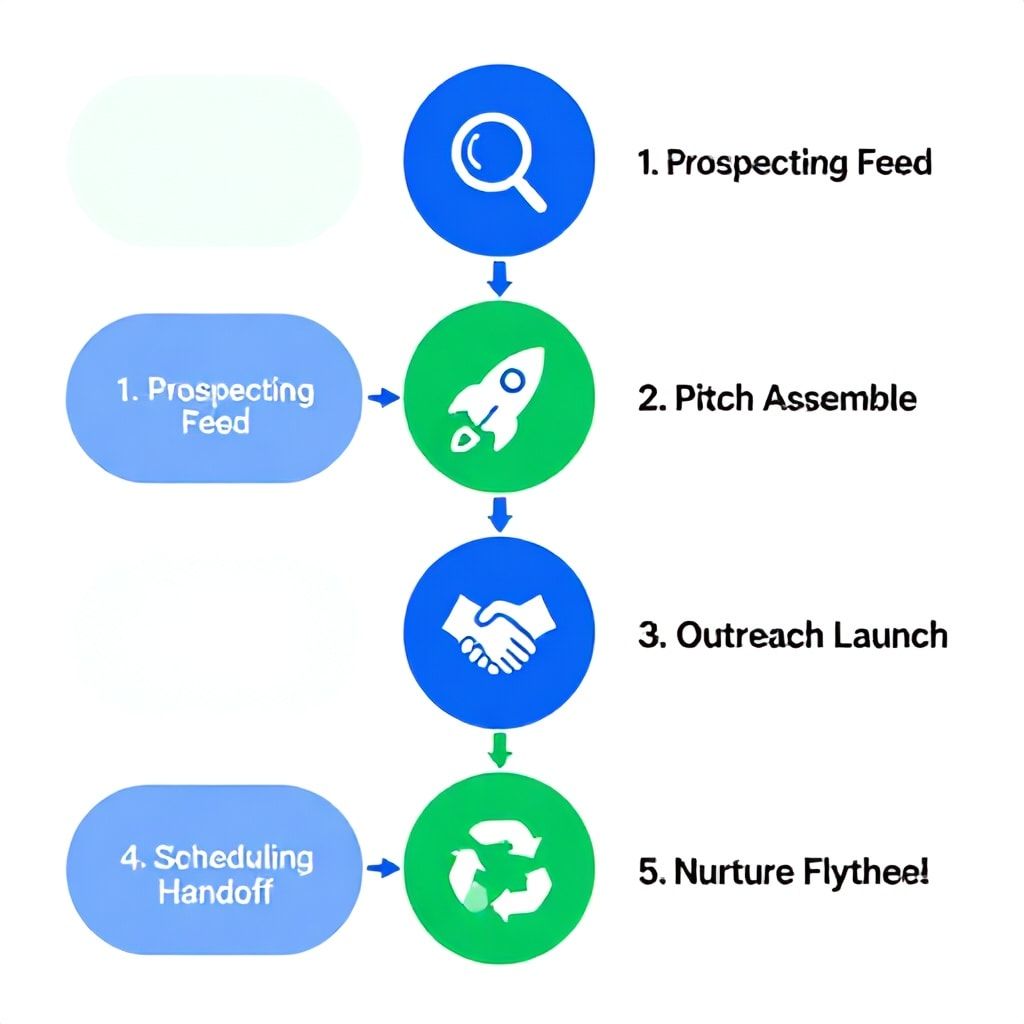
Forget sending emails. You're building a pipeline. This requires a shift from a tactical action ("send a pitch") to a strategic process ("continuously fill a booking funnel"). Based on running this system for dozens of SaaS founders and SMMA agencies over the last three years, the most effective structure breaks down into five distinct, automatable phases. Each phase has a specific goal, key metrics, and a trigger for moving to the next. Skipping a phase or automating it incorrectly is where most systems fail.
- Prospecting & Qualification (The Feed): This isn't just finding podcasts. It's establishing a continuously updated, scored list of high-intent targets. The trigger for moving a prospect to the next phase is a qualification score, not just adding them to a list.
- Profile-to-Pitch Synthesis (The Assembly): This is where 2026's AI separates the amateurs from the pros. The goal is to transform raw data points (host bio, recent episodes, guest criteria) into a compelling, relevant narrative. The trigger is a completed, approved pitch draft.
- Sequenced, Event-Driven Outreach (The Launch): This is your multi-channel, multi-touch campaign. The key is that sends are triggered by events (like a host posting a new episode on your topic), not just dates on a calendar. The trigger for moving to the next phase is an opened email or a profile view.
- Response Management & Scheduling (The Handoff): When a host replies "yes," your system shouldn't break. This phase automatically captures the response, routes it to the correct calendar, and facilitates booking without manual back-and-forth. The trigger is a "positive intent" reply.
- Post-Booking Nurture & Re-engagement (The Flywheel): The most common mistake is stopping after the booking. This phase automates follow-up, content repurposing, and turns a one-time guest into a recurring advocate, creating a virtuous cycle. The trigger is the episode's publication date.
Phase 1: Building Your Automated Prospect Feed
Manually searching "top marketing podcasts" is a 2019 strategy. In 2026, your prospect list is a live, filtered data stream. The goal is to identify podcasts where you are a perfect fit before they put out a call for guests. We use a three-layer filter: Relevance, Receptivity, and Reach.
Relevance: Use a tool like Listen Notes API to search not just show titles, but episode transcripts for specific keywords related to your expertise. For a cybersecurity consultant, that means searching for "ransomware mitigation," "SOC2 challenges," and "employee security training" within the last 90 days. This finds shows actively covering your niche.
Receptivity: This is the most missed layer. You need to gauge if the host is actively booking guests. Automate checks for: a dedicated "Be a Guest" page, an active Calendly or HubSpot Meetings link in their show notes, and a consistent publishing schedule (no more than 2 weeks between episodes). A tool like PhantomBuster can scrape this data.
Reach: Filter by your minimum viable audience. For a B2B SaaS founder, that might be a podcast with >5k downloads per episode in your specific geo. Use Spotify for Podcasters data (when public) or estimate via social follower ratios.
The output isn't a spreadsheet. It's a live dashboard in Airtable or Notion, where each new qualifying podcast is added as a record, with fields auto-populated: Show Name, Host, URL, Last Episode Topic, Guest Page URL, and a Qualification Score (e.g., 85/100). This becomes the "database of record" that triggers the next phase.
Phase 2: AI-Driven, Event-Triggered Pitch Assembly
Generic "I love your show" pitches get deleted. Your pitch must demonstrate you've consumed the host's content and have a unique, valuable angle. Doing this manually at scale is impossible. Here's the 2026 automated assembly line.
- Data Ingestion: When a new podcast is added to your qualified prospect table (Phase 1), an automation (via Zapier or Make) triggers. It pulls the three most recent episode titles and descriptions, the host's LinkedIn bio, and the show's official guest guidelines.
- AI Synthesis: This data bundle is sent to an AI agent via API (Claude 3.5 Sonnet or GPT-4o are current leaders). You provide the agent with a core "pitch framework"—a structured template with variables. The agent's job is to fill the framework with specific references from the ingested data. For example:
"Host [Name], I just listened to your episode on [Specific Episode Topic] where you and [Guest Name] discussed [Specific Point]. It resonated because in my work with [Your Client Type], we see [Related Insight]. I'd love to explore a conversation on [Your Unique Angle], perhaps touching on [Specific Question from the episode]." - Human-in-the-Loop Approval: The drafted pitch is NOT sent automatically. It's placed in an "Approval Queue" in a tool like Trello or ClickUp. You or a team member spends 15 seconds scanning it for coherence and personalization. One click approves it, pushing it to the outreach sequence. This 15-second check prevents AI weirdness and maintains quality control—a non-negotiable step.
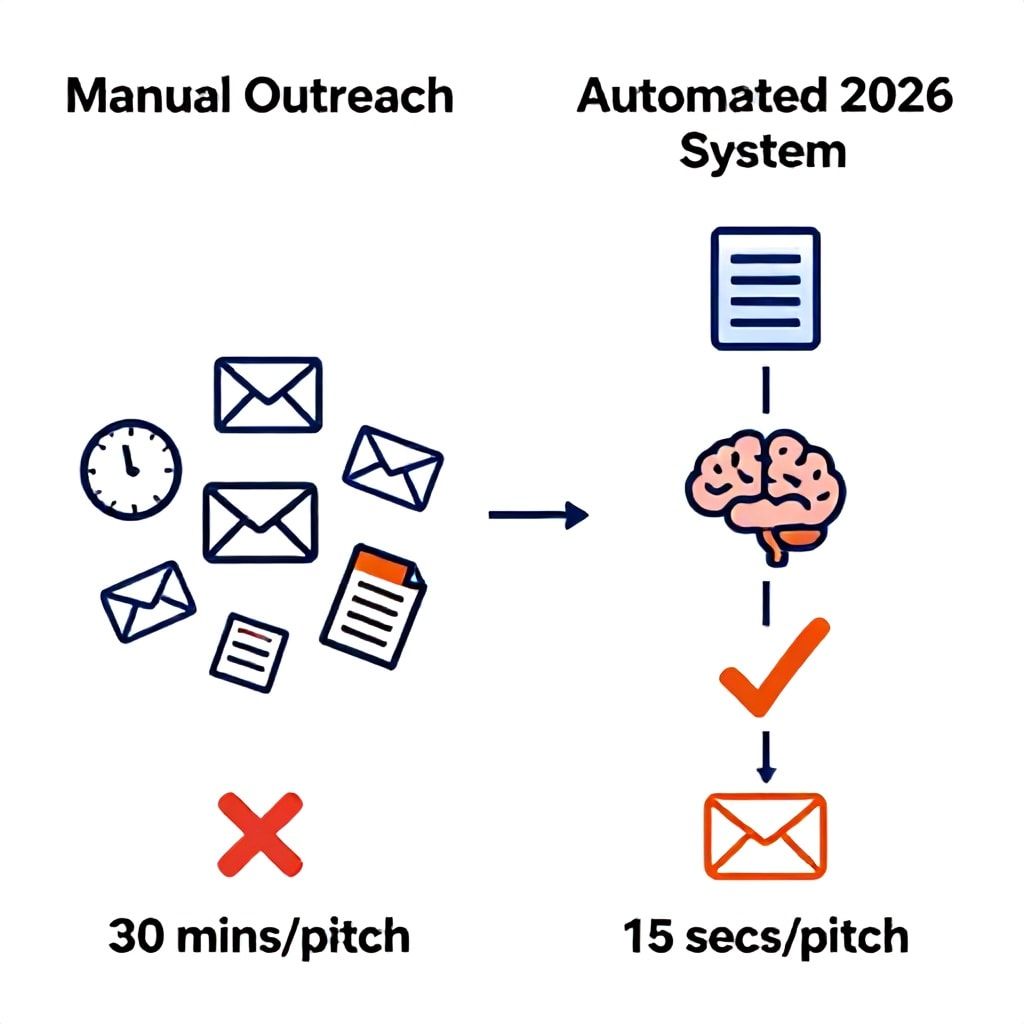
This process turns 45 minutes of research and writing into a 15-second approval task, cutting the time-per-pitch by over 95%.
The 2026 Tool Stack: A Comparison by Function and Budget
Tool selection is critical. The wrong stack creates more work, not less. Below is a comparison of core tool categories, factoring in their role in the 5-phase system, integration capabilities, and cost for a solo founder vs. a small agency. This is based on hands-on testing and client implementations throughout 2024-2025.
| Function | Tool (2026 Example) | Best For / When to Use | Solo Founder (Budget: $150/mo) | SMMA Agency (Budget: $500/mo) |
|---|---|---|---|---|
| Prospecting & Database | Listen Notes API + Airtable | When you need deep, transcript-level search and a flexible, connected database. Use this if your niche is technical. | Listen Notes Starter + Airtable Pro (~$60/mo) | Listen Notes Pro + Airtable with Interfaces (~$150/mo) |
| Prospecting & Matching | PodMatch | When you want a "two-sided marketplace" effect and are okay with less control over initial outreach. Good for testing the waters. | PodMatch Guest Plan (~$20/mo) | PodMatch Agency Plan (~$100/mo) |
| Outreach Sequencing | Lemlist + HubSpot CRM | When you need multi-channel (email + LinkedIn) sequences with strong personalization and event-triggering. The 2026 gold standard for control. | Lemlist Starter + HubSpot Free (~$59/mo) | Lemlist Pro + HubSpot Starter (~$250/mo) |
| AI Assembly & Workflow | Make (Integromat) + OpenAI API | When you have a complex, multi-step workflow (ingest → synthesize → approve → send). More powerful than Zapier for data transformation. | Make Pro Plan (~$16/mo) + OpenAI API costs (~$10/mo) | Make Teams Plan (~$52/mo) + Higher API limits |
| Full-Suite "AI Agent" | Bardeen.ai or Browse AI | When you need to automate data scraping from websites without dedicated APIs (e.g., scraping guest pages). Use as a supplement. | Bardeen Pro (~$40/mo) | Browse AI Team Plan (~$150/mo) |
The solo founder stack prioritizes essential, high-leverage automation (AI pitch assembly, sequenced email) while keeping manual approval in the loop. The agency stack adds capacity for multiple clients, team collaboration, and more aggressive LinkedIn automation, which requires careful setup to avoid platform penalties.
Phase 3 & 4: The Outreach Sequence and Automated Handoff
With an approved pitch ready, the outreach sequence launches. This isn't a generic "send email 1, wait 3 days, send email 2." It's an event-driven multi-touch campaign.
Touch 1 (Day 0): The approved, personalized email is sent via your sequencer (e.g., Lemlist).
Event Trigger: The system monitors for an open. If the email is opened but no reply comes within 48 hours, that's a trigger.
Touch 2 (Event + 1 Day): An automated, polite follow-up email references the open. "Noticed you had a chance to glance at my previous email about [Topic]. I've attached a one-pager on [Specific Idea] in case it's helpful." This social proof of attention is incredibly powerful.
Parallel Channel (Day 3): Simultaneously, a LinkedIn connection request is sent (if you have Sales Navigator) with a short, relevant note. If connected, a brief, non-pitch message is sent 24 hours later commenting on a recent post of theirs.
When a positive reply ("Yes, tell me more!") hits your inbox, the handoff phase begins. An AI agent (via Zapier/Make) parses the email, extracts the sender's email, and triggers two actions: 1) It sends a pre-written "Next Steps" email with a link to your Calendly (filtered to show only slots reserved for podcast interviews). 2) It updates the prospect's status in your CRM to "Scheduling" and creates a task for you to prepare.
This entire sequence, from first send to scheduling link, requires zero manual intervention after the initial pitch approval.
Phase 5: Building the Post-Show Flywheel
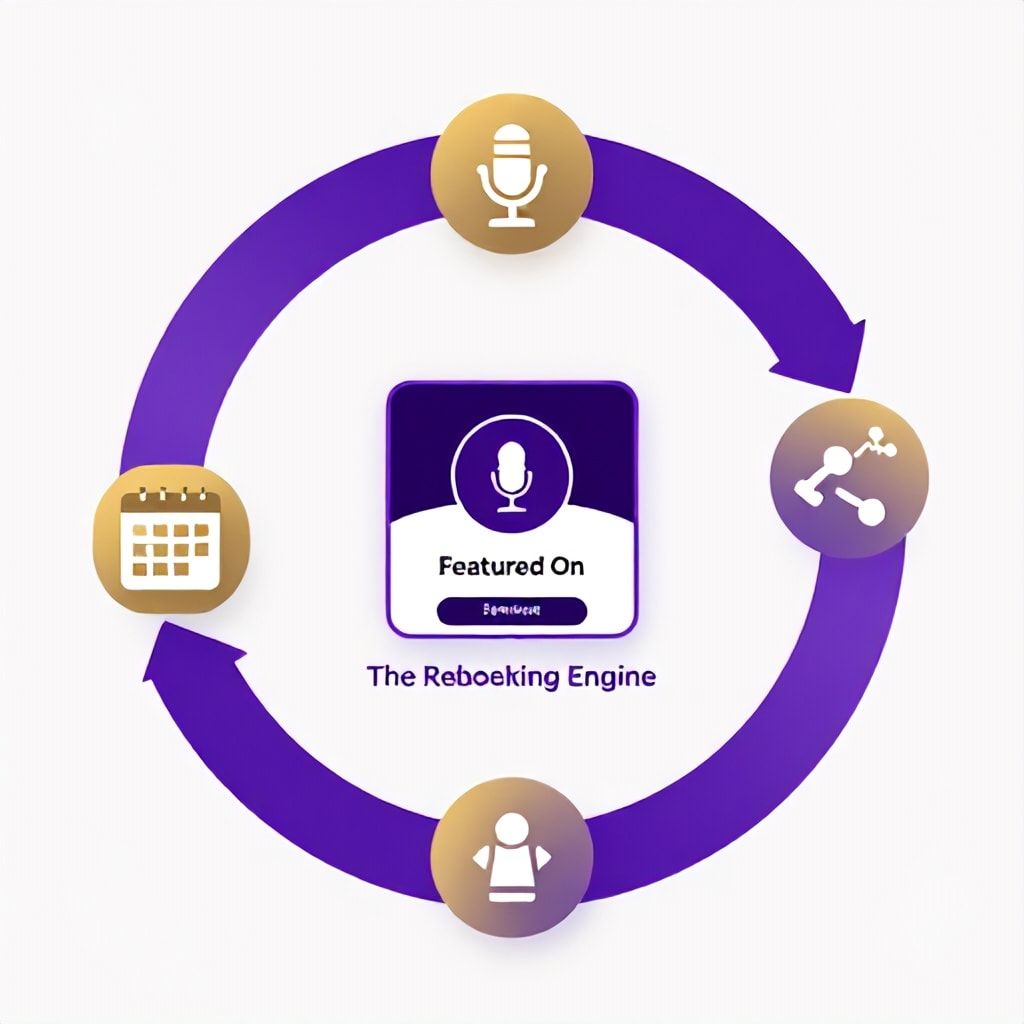
Your episode airs. Most guests share it once and move on. This wastes 80% of the value. Automate the follow-up to turn one appearance into evergreen credibility and future bookings.
- Day of Publication: Auto-send a thank-you email to the host with pre-drafted social posts (copy + graphics) they can easily share. This increases their promotion effort.
- +1 Day: Auto-share the episode across your LinkedIn, Twitter, and newsletter using a tool like Buffer or Hootsuite. Use AI (like the techniques in our AI podcast editing guide) to extract 3-5 key quote clips for social.
- +7 Days: Add the episode to a dedicated "Featured On" page on your website automatically via an RSS feed hook.
- +30 Days: Trigger a re-engagement sequence to the host. "It's been a month since our great chat on [topic]. I just published a related article—thought you might find it interesting. Also, I'd be happy to return anytime to discuss [new angle]." This keeps you top-of-mind for roundtables or annual review episodes.
This phase solidifies the relationship, maximizes content ROI, and directly fuels future prospecting—you're now a "previous guest," which boosts your qualification score for similar shows.
Three Budget Tiers: From Bootstrapped to Agency Scale
Your system should match your resources. Here’s how to build for three common scenarios.
Tier 1: The Founder-Operator ($100-200/month)
Goal: Book 1-2 quality shows per month with <3 hrs/week effort.
Stack: PodMatch ($20) for initial leads. Make ($16) + OpenAI API ($10) for pitch assembly. Lemlist ($59) for email sequences. Calendly Free for scheduling.
Process: Rely heavily on PodMatch's internal messaging. Export interested hosts to Lemlist for your sequenced follow-up. Use Make+AI to craft deeper pitches for high-value targets found outside PodMatch. Keep all prospect tracking in a simple Google Sheet.
Timeline to Full Operation: 2 weeks.
Tier 2: The Growing SMMA or Consultancy ($300-600/month)
Goal: Book 3-5 shows per month across multiple consultants, with a VA managing the queue.
Stack: Listen Notes API ($70) + Airtable ($24) for prospecting. Make Teams ($52) + OpenAI for assembly. Lemlist Pro ($99) + HubSpot Starter ($50) for sequencing/CRM. Bardeen ($40) for supplemental scraping. Calendly Pro.
Process: VA spends 5 hrs/week updating the Airtable prospecting feed and managing the AI pitch approval queue. Each consultant has a dedicated Calendly type and email sequence template. HubSpot tracks all communication and reporting.
Timeline to Full Operation: 4 weeks.
Tier 3: The Podcast Booking Agency ($1000+/month)
Goal: Manage outreach for 5-10+ clients, with full white-label reporting.
Stack: Custom database built on Softr/Airtable. Make with high compute plans. Multiple AI API accounts for parallel processing. Lemlist Agency or Instantly accounts. Full HubSpot Sales Hub for client portals. Integrated dialer for outreach call follow-ups.
Process: This is a productized service. Each client gets a dedicated prospect universe, custom pitch framework, and bi-weekly reports. Automation handles 90% of the workflow, with human agents stepping in only for final relationship-building calls.
Timeline to Full Operation: 8-12 weeks for initial build-out.
What Most Guides Get Wrong: 5 Critical Automation Pitfalls
After setting up dozens of these systems, I've seen the same expensive mistakes repeated. Avoid these at all costs.
- Automating Before Understanding the Manual Process: You cannot automate what you don't understand. Before you write a single Zap, manually book 5-10 podcasts. Document every step, every email, every objection. The automation's job is to replicate your successful manual process, not invent a new one.
- Ignoring Platform Rules (The LinkedIn Ban): Automating LinkedIn connection requests and messages is against ToS and will get your account restricted. The 2026 workaround is semi-automation. Use a tool like Taplio to queue up personalized connection requests and comments, but require a human click to send each one. This maintains scale while preserving safety.
- Letting AI Write the Whole Pitch Without a Guardrail: An AI with no framework will produce generic, often cringeworthy pitches. You must provide it with a strong, tested template and specific data points to plug in. The human-in-the-loop approval (Phase 2) is your quality control firewall. Never remove it.
- Treating It as a "Set and Forget" System: Automation requires maintenance. Email deliverability needs monitoring. AI models update and change output styles. Podcasts end or change formats. You must schedule a monthly 1-hour "system audit" to check open rates, update prospect lists, and refine your pitch templates based on what's working.
- Chasing Volume Over Relevance: The easiest way to tank your reply rate is to blast 500 generic pitches a week. Automation should enable better personalization at scale, not worse. If your qualification filters (Phase 1) are weak, you'll just be annoying more people, faster. A hyper-targeted list of 50 perfect-fit shows will outperform a list of 500 mediocre ones every time.
Frequently Asked Questions
How much time does it take to set up a podcast guest outreach automation system?
For a solo founder using the Tier 1 stack, expect 10-15 hours of focused work over two weeks. This includes setting up your core tools (Make, Lemlist), building your initial prospect list (50-100 shows), creating your master pitch template, and configuring your first sequence. The biggest time sink is the initial manual research to train yourself on what a good prospect looks like. For an agency (Tier 3), the initial build-out is 40-60 hours, but it's a foundational investment that serves all future clients.
Can AI automation make my outreach sound spammy or impersonal?
It can, if you let it. The key is the "human-in-the-loop" design. AI's role is to assemble the pitch by pulling specific references from the host's content into your pre-written framework. It handles the tedious research. Your role (or a VA's) is the 15-second approval to ensure it reads like a thoughtful human wrote it. This combination yields personalization that would take 30 minutes manually in just seconds, without sacrificing quality.
What's a realistic conversion rate for an automated outreach system?
With a well-qualified list and a strong, personalized pitch, aim for a 5-10% positive reply rate ("Yes, let's talk") from your initial outreach. From those positive replies, expect a 60-70% booking rate after scheduling. So, for every 100 highly-targeted emails sent, you should book 3-5 interviews. If you're below 3%, your qualification (Phase 1) or pitch (Phase 2) needs work. If you're above 10%, you can likely increase your outreach volume.
How do I handle compliance with data privacy laws like GDPR or CCPA in automated outreach?
This is non-negotiable. First, ensure your email service provider (like Lemlist) offers GDPR-compliant features. Second, your outreach must be based on legitimate interest or, ideally, publicly available professional data (like a podcast host's public contact page). Include a clear unsubscribe link in every email. For a deeper dive, our guide on US data privacy compliance by 2026 outlines the frameworks you need to follow, especially if scaling to an agency model.
Is PodMatch or a similar matching platform enough, or do I still need my own outreach?
Platforms like PodMatch are excellent supplements, not replacements. They provide a stream of hosts who are actively looking, which is high-intent. However, you're competing with hundreds of other guests on the platform. Your own proactive, automated outreach to shows that aren't actively posting calls for guests is where you find less competitive, often higher-quality opportunities. Use PodMatch for 20-30% of your pipeline, and your own system for the other 70-80%.
How do I measure the ROI of my podcast guest outreach automation?
Track three core metrics: 1) Booking Rate: Shows booked per 100 emails sent. 2) Efficiency Gain: Hours saved per month on research and outreach (aim for 15-20+ hours). 3) Business Impact: Lead attribution. Use unique tracking URLs (like Bitly), promo codes, or a simple "How did you hear about us?" on your contact form. For many B2B service businesses, one qualified lead from a podcast appearance can justify the entire year's automation budget.
What's the biggest change in podcast outreach from 2024 to 2026?
The rise of the event-driven trigger. In 2024, automation was mostly about sending sequences on a timer. In 2026, the cutting edge is systems that listen for triggers—a host publishing an episode on your exact topic, mentioning a competitor, or posting on LinkedIn about seeking guests—and launching hyper-relevant outreach within hours. This requires deeper API integrations and AI that can parse news and content feeds, but it results in dramatically higher reply rates because your pitch is impossibly timely.
Can I use this system for booking clients, not just podcast appearances?
Absolutely. The 5-phase framework is a generic outbound sales engine. Swap "podcast host" for "ideal client profile," and "pitch for a guest spot" for "pitch for a discovery call." The prospecting criteria change (e.g., company size, tech stack), but the automation principles for qualification, AI-powered personalization, sequenced outreach, and response management are identical. This is how modern SMMA agencies scale their lead generation, as touched on in our framework for AI-driven conversion optimization.
Your Next Step: Build Your Phase 1 Feed This Week
The gap between manual struggling and automated scaling is smaller than you think. You don't need to build the entire 5-phase system today. Your only task this week is to build your automated prospect feed (Phase 1). Sign up for the Listen Notes API trial. Spend one hour searching for your five core keyword phrases in podcast episodes from the last 90 days. Export 50 results into Airtable or a Google Sheet. For each, manually visit the show and answer: Do they have a guest page? What was their last episode about? Add columns for these. This small, focused action gives you the raw material—and the clarity—to start automating. From that list of 50, you'll book your first show. Then you'll have the proof, and the data, to invest in building Phases 2 through 5. Stop sending emails. Start building your system.
Boomlify Team