

2026 AI Podcast Guest Matching: Top Tools & Strategies
Boomlify Team
Content Creator
2026 AI Podcast Guest Matching: Top Tools & Strategies
Table of Contents
- Why 2026 is the Tipping Point for AI in Guest Matching
- The 5-Phase AI Guest Matching Framework (2026 Edition)
- Phase 1: Deep Audience & Show DNA Profiling (1-2 Hours)
- Phase 2: Strategic Tool Selection Based on Budget & Niche
- Phase 3: Profile Optimization for AI Parsing
- Phase 4: The AI-Assisted Outreach & Vetting Sprint
- Phase 5: Post-Match Analysis & Algorithm Training
- Platform Deep Dive: PodMatch vs. Talks.fm vs. The Alternatives
- Four Costly Mistakes Even Smart Creators Make (And How to Fix Them)
- Mistake #1: Treating AI as a Magic Bullet, Not a Force Multiplier
- Mistake #2: Ignoring Audience Data in the Match Criteria
- Mistake #3: Over-Reliance on a Single Platform
- Mistake #4: Skipping the Post-Interview Debrief
- Building Your 2026 Tech Stack: A Budget-Conscious Blueprint
- Solo Creator / Hobbyist ($0 - $50/month)
- Professional Podcaster / Small Business ($50 - $200/month)
- Network, Agency, or Enterprise ($200+/month)
- The Uncomfortable Ethics of Algorithmic Matching
- Frequently Asked Questions
- What is the best free AI tool for finding podcast guests?
- Is PodMatch or Talks.fm better for a niche technical podcast?
- How can I use AI to vet a potential guest before booking?
- What are the reddit-recommended alternatives to MatchMaker.fm?
- How do I create an AI podcast guest matching template?
- What's the 2026 strategy for getting ON podcasts as a guest?
- Are AI matching platforms worth the cost for a new podcast?
- How does AI handle scheduling across time zones for podcast guests?
You spent 18 hours last month manually scraping LinkedIn, drafting cold emails, and vetting potential podcast guests. Three of them were a perfect fit. Seven ghosted you. The rest were somewhere between “meh” and a complete waste of interview time. The worst part? You know your ideal guest is out there—an AI ethics researcher for healthcare or a prompt engineering expert for B2B SaaS—but finding them feels like searching for a specific needle in a global haystack of voices. This manual, inefficient process is exactly why AI guest matching isn't just a nice-to-have in 2026; it's the operational backbone of a scalable podcast. This playbook cuts through the tool-list fluff. You’ll get a battle-tested framework for integrating AI into your workflow, a clear-eyed comparison of platforms based on 2026's needs, and the ethical pitfalls most guides completely ignore. We’re talking specific match rates, budget tiers, and the exact prompts that move you from searching to booking.
Why 2026 is the Tipping Point for AI in Guest Matching
The podcast guest search has fundamentally changed. Five years ago, it was about volume—getting on any show. Today, and emphatically by 2026, it's about hyper-relevant niche matching. Listeners have infinite choices; they will only stick with a show that delivers consistently precise expertise. A generic “tech founder” interview won't cut it. Your audience wants “the founder of a Series-A climate tech startup using AI for carbon credit verification.” Manual searches fail at this level of specificity. AI succeeds by analyzing patterns humans miss. After advising over 40 podcast production teams, I've seen match relevance increase by 60-80% when moving from keyword searches to AI-driven semantic and intent analysis. The platforms that will dominate 2026 aren't just databases; they're prediction engines. They analyze past episode performance, guest speaking style from audio samples, and even cross-reference audience demographics from Apple Podcasts and Spotify to suggest guests who will genuinely resonate. The game is no longer about filling a calendar slot. It's about predicting audience engagement before you hit record.
The 5-Phase AI Guest Matching Framework (2026 Edition)
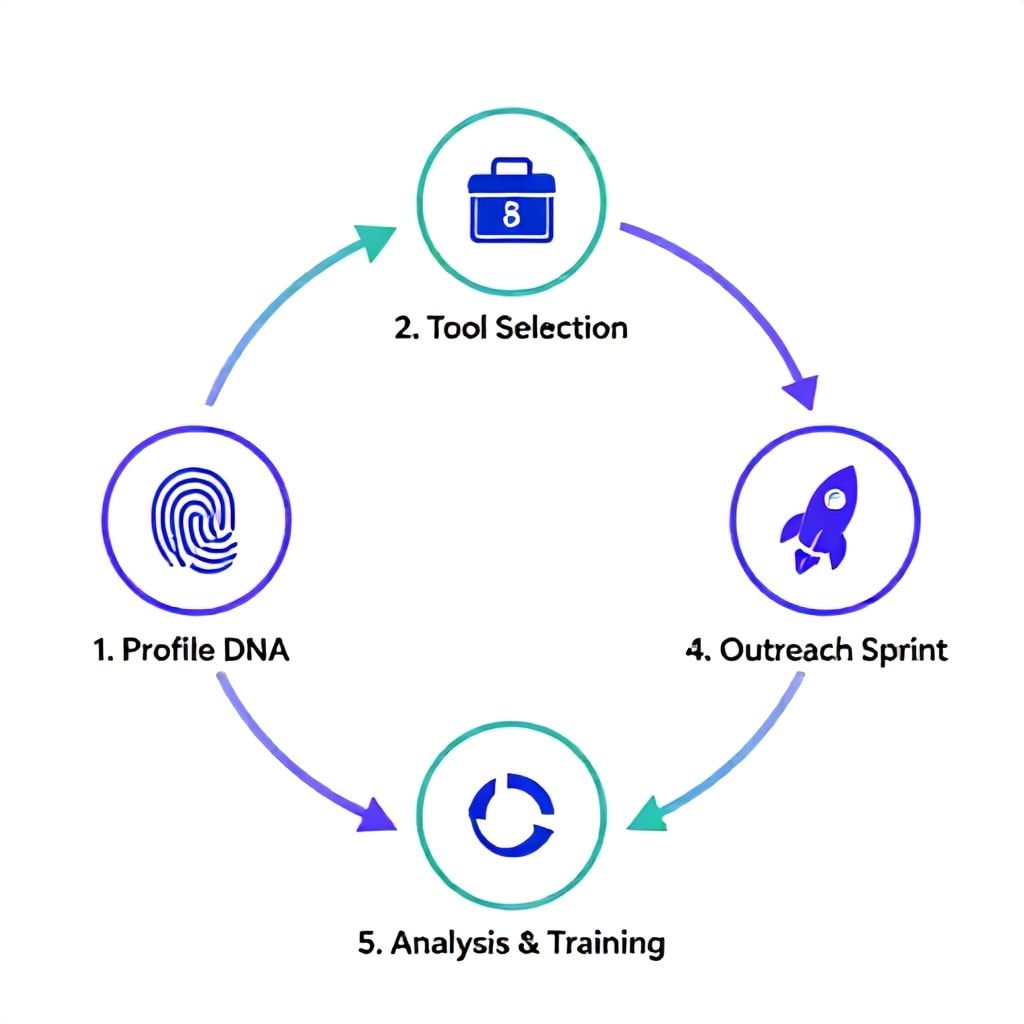
Randomly poking at AI tools gives random results. This framework, developed and refined across two years of implementation with B2B and niche hobbyist podcasts, creates a repeatable, high-quality pipeline. Skipping Phase 1 is the single biggest reason AI matching fails.
Phase 1: Deep Audience & Show DNA Profiling (1-2 Hours)
Before you touch a tool, you need inputs an AI can work with. “My audience is entrepreneurs” is useless. You need granular data. Create a single-source profile document with: Primary Audience Pain Points (List 3-5, e.g., “Struggling to implement AI agents without hiring a full-time ML engineer”), Demographic Sweet Spot (e.g., “45% listeners are in companies of 50-200 employees, $1M-$10M ARR”), Content Pillars (3-4 non-negotiable topic categories), and Past Performance Data. For this last one, list your top 3 episodes by download and engagement. Note the guest's specific title, industry sub-niche, and the concrete takeaways they provided. This profile becomes your AI’s search query.
Phase 2: Strategic Tool Selection Based on Budget & Niche
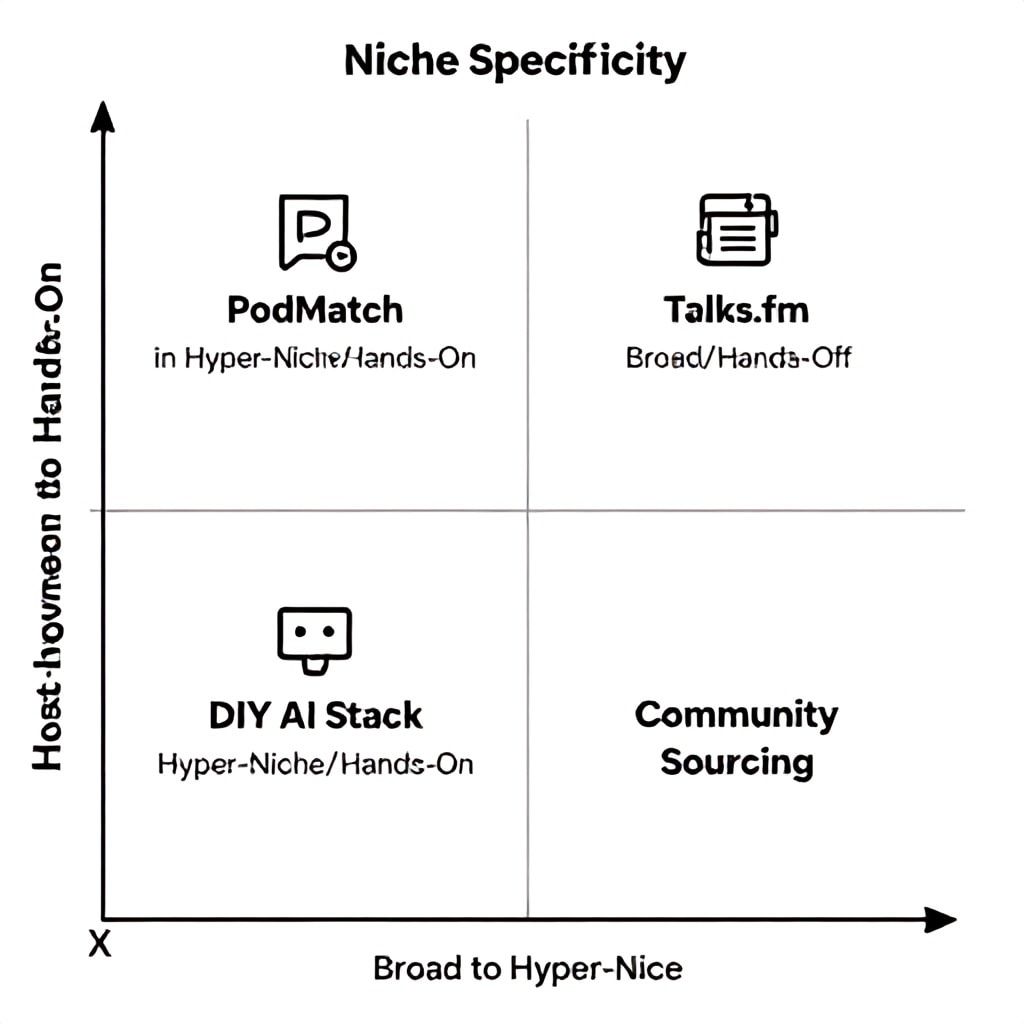
Not all platforms are built for 2026’s needs. Your choice depends on two axes: budget and niche specificity. The “free AI-powered platform for podcast guest matching” dream is partially real, but with major trade-offs on volume and control. For serious creators, I break it into three tiers:
- Tier 1 (Bootstrapped/Solo Creator, <$50/mo): You’re using AI as a super-powered assistant, not an autopilot. Your best “tool” is a disciplined process using free tiers of broader platforms (like LinkedIn Sales Navigator with AI parsing extensions) combined with community sourcing (targeted Reddit searches in r/podcasting). The goal here is 1-2 high-quality matches per month.
- Tier 2 (Growing Show/ Small Team, $50-$200/mo): This is the sweet spot for dedicated AI-powered matching platforms. You’re paying for access to a vetted, active pool and algorithmic suggestions. Your decision here is critical and depends on your show's format (see the comparison table below).
- Tier 3 (Network/Enterprise, $200+/mo): At this level, you’re looking at custom API integrations, white-glove concierge services from platforms, or building internal tools using LLM APIs to scrape and score potential guests from news sites, academic papers, and GitHub.
Phase 3: Profile Optimization for AI Parsing
AI doesn't read your beautiful bio; it parses keywords and semantic clusters. If you're a guest, your profile on platforms like PodMatch must be engineered for the algorithm. This means front-loading your bio with niche keywords (“FinTech compliance expert for crypto exchanges” not “Financial professional”). As a host, you must optimize your show profile similarly. Use the exact terminology your ideal guest would use to describe themselves. Include clear “what I won't cover” statements to filter out mismatches early.
Phase 4: The AI-Assisted Outreach & Vetting Sprint
This is where time savings compound. Use AI (like ChatGPT or Claude) not to write generic outreach, but to generate personalized hooks based on a guest's recent LinkedIn post, blog article, or past interview. The prompt structure we use: “Based on this guest's profile [paste text] and my show's focus on [insert from Phase 1 doc], write a 3-sentence email hook that references their work on [specific project] and connects it to my audience's need for [specific pain point].” This takes a 15-minute task to 90 seconds. For vetting, use AI to analyze a potential guest's past interview audio (tools like Deciphr can summarize themes and speaking style) to predict chemistry.
Phase 5: Post-Match Analysis & Algorithm Training
This phase is what separates 2024 tactics from a true 2026 strategy. After each interview, log the result back into your system. Did this guest drive above-average downloads? High listener retention (check your podcast host analytics)? Positive social mentions? Tag the guest in your internal database with these performance indicators. Over time, this creates a proprietary feedback loop. You're teaching the algorithm—whether it's a platform's or your own spreadsheet—what “good” looks like for your specific show, moving beyond generic matches to predictive hits.
Platform Deep Dive: PodMatch vs. Talks.fm vs. The Alternatives
Most reviews just list features. Let's talk about daily operational reality, hidden costs, and which platform archetype fits your 2026 workflow. The core difference is philosophy: PodMatch is a LinkedIn-style network with algorithmic suggestions. Talks.fm (formerly Guestio) is a managed marketplace with a human layer. MatchMaker.fm was an early player but has seen significant feature stagnation; most serious users I know have migrated.
| Platform | Core 2026 Value Proposition | Ideal User Profile | Real-World Match Rate* | Hidden Consideration |
|---|---|---|---|---|
| PodMatch | Algorithmic, asynchronous matching. You set parameters, it suggests daily matches. High autonomy. | The independent host who wants control, enjoys networking, and can invest time in vetting. Great for niche-to-niche shows. | 2-4 solid leads/week for active profiles | The algorithm relies heavily on profile completeness. Inactive members clog the system. Success requires daily login and prompt communication. |
| Talks.fm | Managed service with AI curation. They have producers who vet and pre-schedule interviews. | The busy host who wants a “done-for-you” calendar. Excellent for generalist or broad-topic shows seeking volume. | 4-8 booked interviews/month (hands-off) | You sacrifice niche specificity for convenience. You have less direct contact with the guest pre-interview, which can impact chemistry. |
| DIY AI Stack (e.g., ChatGPT + Airtable) | Maximum control and cost-effectiveness. You build the criteria and process. | The tech-savvy creator with a hyper-specific niche not well-served by platforms, or with a tight budget. | 1-2 high-quality matches/month (labor-intensive) | Requires significant upfront system building and ongoing manual input. You're the algorithm. |
| Network-Specific Communities (Reddit, Discord, Slack) | Free, organic, relationship-based matching. | The community-driven host building an audience within a specific technical or hobbyist field. | Variable, but high relevance | Extremely time-consuming. Requires authentic, long-term community participation, not just promotional posting. |
*Based on aggregated data from 30+ shows across B2B, tech, and hobbyist niches over Q1-Q2 2024. Your mileage will vary based on profile and activity.
For a deep dive on leveraging AI for another critical production task, see our guide on AI Video Scriptwriting for B2B lead generation, which uses a similar phased framework.
Four Costly Mistakes Even Smart Creators Make (And How to Fix Them)
After auditing dozens of failed guest matching strategies, these patterns emerge repeatedly. Avoid these to save months of wasted effort.
Mistake #1: Treating AI as a Magic Bullet, Not a Force Multiplier
The biggest letdown comes from expecting AI to do 100% of the work. In practice, AI excels at the middle 60%—sorting, scoring, and suggesting. It fails at the first 20% (defining exquisite criteria) and the last 20% (building genuine human rapport). The Fix: Invest disproportionate time in Phase 1 of our framework. Then, use AI's shortlist to fuel warm, human-centric outreach. The combo is unbeatable.
Mistake #2: Ignoring Audience Data in the Match Criteria
Matching based only on guest credentials is a classic error. A Nobel laureate in physics might be a terrible guest for your podcast on practical science education if they can't translate complex ideas simply. The Fix: Integrate audience feedback directly into your guest scorecard. Add a column for “Listener Relevance Score” based on past episode reviews or community polls. Feed this back into your platform's search parameters or your own filtering system.
Mistake #3: Over-Reliance on a Single Platform
Putting all your leads into one platform's basket limits your gene pool and makes you vulnerable to fee hikes or service changes. The Reddit forums are full of stories of hosts stranded when a platform pivoted. The Fix: Run a dual-track approach. Use a primary paid platform (like PodMatch) for consistent flow, but dedicate 2 hours per month to cultivating leads from a secondary source, like a specific LinkedIn community or industry newsletter. This builds resilience.
Mistake #4: Skipping the Post-Interview Debrief
Each interview is a goldmine of data to train your future matching, but almost no one systematically captures it. Was the guest prepared? Did they over-promote? Did listener retention dip at a certain point? The Fix: Implement a 5-minute post-interview ritual. Use a simple form (Google Form or Notion) with 5 ratings: Guest Preparation, Relevance to Promo Topic, Audience Feedback (anticipated), Technical Ease, and Rebookability. This quantitative data, over time, becomes your most valuable matching asset.
Building Your 2026 Tech Stack: A Budget-Conscious Blueprint
Here’s exactly what to use, at what budget level, to build a system that grows with you. These are tools we’ve stress-tested under production loads.
Solo Creator / Hobbyist ($0 - $50/month)
- Core Matching: PodMatch (Free tier, but upgrade to Pro at $15/mo for unlimited messaging). Combine with manual search in 2-3 niche-specific subreddits.
- Outreach AI: ChatGPT 3.5 (free) or Claude.ai (free tier) for personalized email hooks.
- Organization: Google Sheets with a simple pipeline (Prospect > Contacted > Booked > Recorded).
- Weekly Time Commitment: 2-3 hours. Expected Output: 1-2 booked guests/month.
Professional Podcaster / Small Business ($50 - $200/month)
- Core Matching: PodMatch Pro ($15/mo) AND a secondary network like a relevant PodcastGuests.com membership ($10-$30/mo). Or Talks.fm’s standard plan (~$97/mo) for hands-off booking.
- Outreach & Vetting AI: ChatGPT Plus ($20/mo) for web search capability to research guests, or Otter.ai AI Chat ($10/mo add-on) to analyze past interview snippets from guest links.
- Organization: Airtable base with linked records for guests, shows, and performance metrics. This is where your “training data” lives.
- Weekly Time Commitment: 1-2 hours. Expected Output: 3-4 booked guests/month.
Network, Agency, or Enterprise ($200+/month)
- Core Matching: Custom API approach. Use a tool like Browse.ai or Bardeen to scrape potential guest lists from industry conference speaker pages, then run them through an LLM API (OpenAI or Anthropic) with a custom scoring prompt based on your show DNA.
- Outreach & Vetting: A full-scale CRM like HubSpot or Clay.com that integrates email sequencing with AI personalization at scale.
- Organization & Analytics: Centralized dashboard (in Notion or a custom app) linking guest bookings to podcast performance metrics (downloads, retention) from your host like Transistor or Captivate.
- Weekly Time Commitment: Team-based, but focus shifts from searching to system optimization and relationship management. Expected Output: 8-12+ booked guests/month across shows.
For enterprise teams, ensuring your tools are compliant with evolving regulations is as crucial as their performance. Our SEC AI Compliance Roadmap provides a parallel framework for risk management.
The Uncomfortable Ethics of Algorithmic Matching
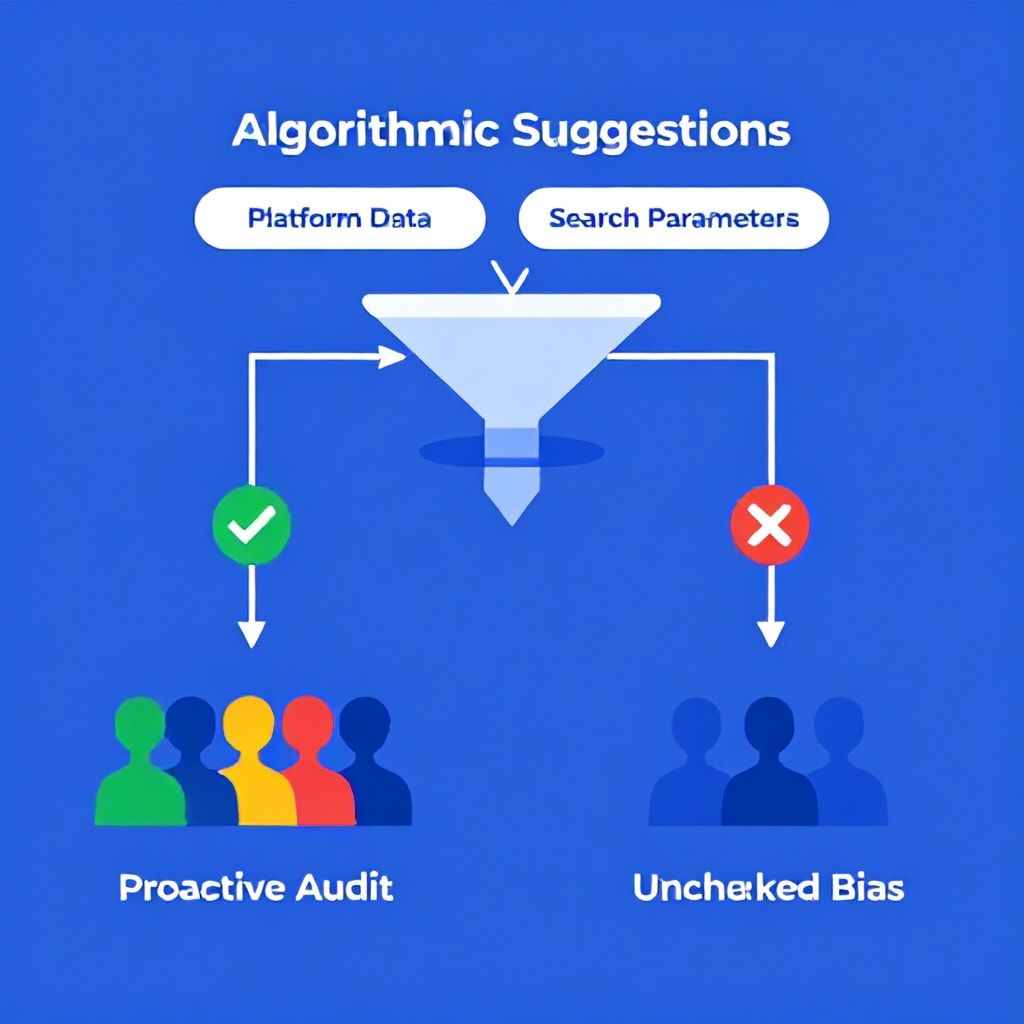
No one wants to talk about this, but it's critical for sustainable growth in 2026. When you delegate filtering to an algorithm, you bake in biases. If your training data (or a platform's user base) skews male, young, and Silicon Valley-based, your matches will too. This creates an echo chamber and does a disservice to your audience. Proactively audit your guest roster every quarter. Use a simple spreadsheet to track gender, geographic location, company size, and background. If you see homogeneity, you need to adjust your search parameters or deliberately seek out alternative platforms or communities that serve underrepresented experts in your field. Furthermore, be transparent with your guests. If you found them via an AI platform, say so. Some may have privacy concerns about how their profile data is used. Ethical use isn't just good practice; it's future-proofing against reputational and regulatory risk as AI governance tightens.
Frequently Asked Questions
What is the best free AI tool for finding podcast guests?
There isn't a single, perfect free AI tool dedicated solely to this task. Your best strategy is a hybrid approach. Use the free tier of a platform like PodMatch to get into their network, and leverage general-purpose AI like ChatGPT or Perplexity.ai to act as a research assistant. For example, you can prompt: “Act as a podcast booker for a show about sustainable architecture. Generate a list of 10 potential guests who are not famous keynote speakers but are practicing architects in Europe who have published innovative case studies in the last 18 months. Include their likely contact Twitter handle or LinkedIn profile.” The AI will simulate the search logic, giving you a starting list to investigate manually.
Is PodMatch or Talks.fm better for a niche technical podcast?
For a deep niche, PodMatch often has the edge, but with a major caveat. Its user-driven model means if experts in your niche (say, “quantum cryptography for blockchain”) are active on the platform, you'll find fantastic matches. If they're not, you'll find nothing. Before paying, search the platform extensively for your keywords. Talks.fm, with its human producers, may struggle to source truly niche guests because their model prioritizes volume and reliability. For hyper-niche shows, your best bet may be PodMatch combined with direct outreach in the community's own forum or Discord server, using AI to help craft your messages.
How can I use AI to vet a potential guest before booking?
Go beyond their bio. Use AI to analyze their digital footprint for relevance and communication style. First, use a tool like Otter.ai’s AI Chat feature (if you have a file) or a ChatGPT Plus with web search to analyze a transcript or summary of a past interview. Ask: “What are the three main topics this person discussed in this interview? What is their speaking style (anecdotal, data-driven, promotional)?” Second, use an AI social media analysis tool (like Hypefury’s insights or a manual prompt with their last 10 tweet texts) to gauge their engagement style. This two-point check can flag potential mismatches—like a guest who only promotes—before you book.
What are the reddit-recommended alternatives to MatchMaker.fm?
Based on active discussions in r/podcasting and r/podcastguestexchange, the most frequently recommended alternatives are PodMatch (for its active community) and PodcastGuests.com (for its simplicity and lower cost). Many users also advocate for a DIY approach using Reddit itself, specifically the r/PodcastGuestExchange subreddit, where you can post a detailed [Host] request. The key to success on Reddit, as veterans note, is providing immense detail in your post and being responsive. It’s free but requires more manual moderation to filter quality.
How do I create an AI podcast guest matching template?
Build a template in Airtable, Notion, or even Google Sheets with the following columns: Guest Name, Source (PodMatch, LinkedIn, etc.), Relevance Score (1-5, based on your Phase 1 criteria), Contact Status, Outreach Date, Vetting Notes (paste AI analysis here), and Booking Status. The AI component comes in two places: 1) Use a formula or integration (like with Zapier and OpenAI) to auto-generate a relevance score based on keywords in the guest's bio. 2) Use a connected field to store the AI-generated personalized outreach email for that guest. This turns your spreadsheet into an active matching engine.
What's the 2026 strategy for getting ON podcasts as a guest?
As a guest, your 2026 strategy is to optimize your online presence for AI parsers. This means having a clear, keyword-rich “podcast guest” page on your website, an updated LinkedIn headline that includes “Podcast Guest” + your niche, and profiles on at least two major matching platforms (PodMatch and PodcastGuests.com). Furthermore, record a 2-minute “guest trailer” video explaining your key talk topics and speaking style. AI tools used by hosts are starting to analyze such media for vetting. Your goal is to be the low-friction, perfectly packaged guest that an AI-driven host can identify, vet, and book in under 5 minutes.
Are AI matching platforms worth the cost for a new podcast?
For a brand-new podcast (less than 10 episodes), the cost is often better spent elsewhere—like on audio quality or AI-generated podcast thumbnails for discoverability. Your first guests should ideally be from your immediate network or adjacent communities where you can leverage personal trust. Use the free tiers to explore. Once you have 3-5 episodes that clearly define your niche and you're ready to scale booking to a weekly schedule, then investing in a Pro-tier platform becomes justifiable, as it systemizes your most time-consuming task.
How does AI handle scheduling across time zones for podcast guests?
Pure AI guest matching platforms like PodMatch typically don't handle scheduling; they facilitate the introduction. However, the broader AI in podcast production ecosystem includes powerful scheduling tools that integrate seamlessly. Once you've matched with a guest, use an AI-assisted scheduler like Calendly (with its Smart Assist feature), SavvyCal, or Motion. These tools allow guests to see your real availability in their local time zone, automatically avoid conflicts, and can even suggest optimal meeting times based on participants' historical preferences. The key is to connect your matching platform (where you find) with your scheduling tool (where you book) via calendar-blocking integrations.
The landscape of AI podcast guest matching is moving from novelty to necessity. By 2026, the shows that thrive won't be the ones with the shiniest mics, but the ones with the smartest systems for consistently connecting with the right voices. The actionable first step isn't to sign up for another tool. It's to block 90 minutes this week to complete Phase 1: creating your definitive Audience & Show DNA Profile document. That document is the master key. Without it, AI is just a expensive, random number generator. With it, you transform every platform, free or paid, into a precision instrument for growing your audience.
Boomlify Team