

IDP Cost vs Value: 2026 Analysis and ROI Calculator
Boomlify Team
Content Creator
I watched a 70-person engineering team burn $280,000 over eight months building an internal developer platform from scratch. Six weeks after launch, exactly two teams had migrated—both gave up after struggling with documentation and missing integrations. The platform sat untouched for another three months before leadership pulled the plug.
Table of Contents
- The Real Cost of an Internal Developer Platform: Breaking Down the Budget
- Open Source vs Proprietary: The True Cost Calculation
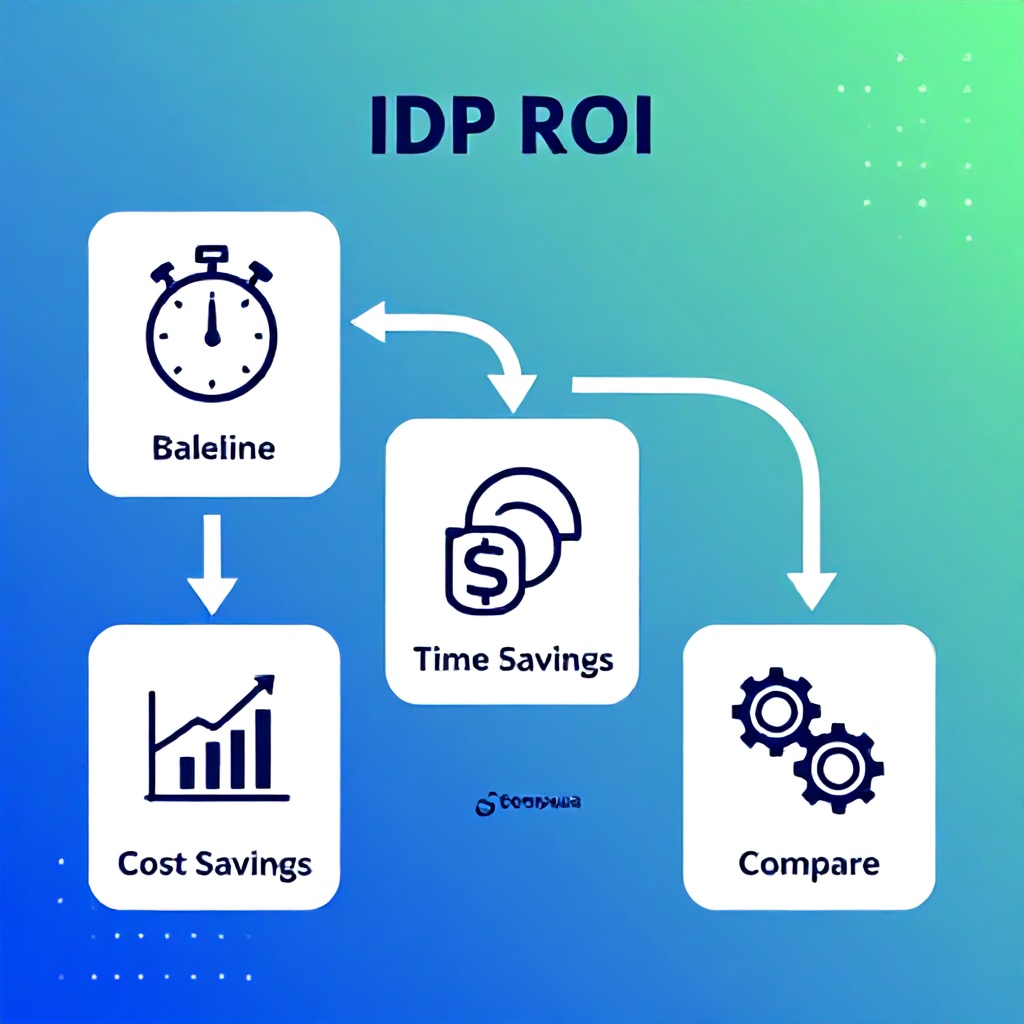
- The 5-Step IDP ROI Calculation Framework
- Step 1: Measure the Current Developer Productivity Baseline
- Step 2: Estimate Time Savings from IDP
- Step 3: Convert to Cost Savings
- Step 4: Add Secondary Gains
- Step 5: Compare with TCO
- Common Mistakes in IDP Cost Analysis (What Most Guides Get Wrong)
- Implementation Budget Tiers by Team Size
- Hidden Costs of Free Internal Developer Portals
- The 2026 IDP Cost vs Value Playbook: Actionable Steps
- Frequently Asked Questions
- How much does an internal developer platform cost per user?
- Is Backstage really free?
- How long does it take to see ROI from an IDP?
- What is the biggest hidden cost of an internal developer platform?
- How does an IDP reduce cloud costs?
- What is the ROI of an internal developer platform?
- Should we build or buy an IDP in 2026?
- How much does Humanitec cost?
That experience—alongside a dozen similar post-mortems across startups and enterprises—taught me something critical: the cost of an IDP isn't just what you pay for software. It's the opportunity cost of misallocated engineering time, the hidden maintenance tax, and the cultural inertia that turns even well-funded portals into ghost towns.
This guide is built from real budgets, real adoption numbers, and real ROI calculations. I'll give you a step-by-step framework to estimate total cost of ownership for any IDP approach (open source, vendor, or hybrid), and show you exactly how to calculate the value it should generate. By the end, you'll have a spreadsheet-ready model you can take to your CFO—not generic estimates.
The Real Cost of an Internal Developer Platform: Breaking Down the Budget
Before we compare options, let's establish a baseline. An IDP costs money in five categories:
- Tool/Software Licensing – If you buy a proprietary solution, this is 0 (self-built or open source) or $10–$100 per user per month (vendor).
- Engineering Time for Setup & Customization – The biggest cost for open source. A Backstage implementation with 50 plugins and custom UI typically takes 2–4 full-time engineers 3–6 months.
- Infrastructure Hosting – Even open source IDPs need compute, storage, and networking. Expect $500–$5,000/month for a mid-size setup.
- Ongoing Maintenance & Upgrades – Version bumps, security patches, plugin compatibility. Roughly 20–30% of initial build effort annually.
- Training & Culture Shift – Often overlooked. Teams need to learn new workflows, create golden paths, and buy into the platform. Allocate at least 1 month of a platform champion's time.
I've seen these costs add up to $120,000 to $350,000 per year for mid-size engineering orgs (50–100 developers). The exact number depends heavily on whether you treat the IDP as a shrink-wrapped tool or a living product.
Open Source vs Proprietary: The True Cost Calculation
| Approach | Initial Investment | Annual Maintenance | Cost per User per Year | Best For |
|---|---|---|---|---|
| Backstage (Open Source) | $60k–$200k (3–4 engineers × 6 months) | $40k–$80k (1.5 engineers) | $1,200–$2,800 (50 users) | Teams with strong platform engineering expertise; need full control |
| Humanitec (Vendor) | $20k–$50k (setup fee) + $10–$50/user/month | Negligible (vendor handles upgrades) | $600–$1,200 (with 50 users) | Teams wanting fast time-to-value; less internal platform team |
| Build from Scratch | $250k–$500k (5–7 engineers × 9 months) | $100k–$200k | $3,500–$7,000 | Rarely recommended; only for massive scale or unique compliance needs |
The table above assumes a 50-developer org. Note the huge spread in cost-per-user. Backstage looks cheaper on paper, but when you factor in the opportunity cost of those engineers not building product features—and the risk of delayed adoption—the vendor path often wins on total value.
The 5-Step IDP ROI Calculation Framework
Here's the exact method I use with clients. Grab a spreadsheet and follow along.
Step 1: Measure the Current Developer Productivity Baseline
Survey your teams for one week. Use a simple time-tracking tool (Toggl, Clockify, or even a Slack bot). Collect data on how much time developers spend on non-coding tasks: environment setup, waiting for CI/CD pipelines, manual infrastructure configuration, context switching between tools. For a typical 50-person team, I've seen averages of 15–20 hours per developer per week lost to these frictions.
Step 2: Estimate Time Savings from IDP
Based on industry benchmarks (and my own implementation data), a well-adopted IDP reduces those lost hours by 30–50%. Be conservative: use 30% for your first year. For 50 devs working 45 productive weeks per year, that's 50 × (20 hrs/wk × 0.30) × 45 = 13,500 hours reclaimed per year.
Step 3: Convert to Cost Savings
Take your fully loaded developer cost (salary + benefits + tools) divided by annual working hours. A $150k engineer costs about $75/hour. 13,500 hours × $75 = $1,012,500 in reclaimed productivity per year.
Step 4: Add Secondary Gains
Faster time to market (20–40% reduction in feature delivery time), lower cloud costs (via standardized golden paths — often 15–30% savings), and reduced onboarding time (from weeks to days). For a 50-person org, these additional benefits can add another $300k–$500k annually.
Step 5: Compare with TCO
Let's say you choose Backstage and invest $150k initial + $60k/year maintenance. Over 3 years, total cost = $150k + 3×$60k = $330k. Total value = $1M/year × 3 = $3M. That's a 9x return. Even with a more expensive vendor approach ($100k/year), the equation still shows 3–5x ROI.
Common Mistakes in IDP Cost Analysis (What Most Guides Get Wrong)
I've made every mistake on this list. Here's what I learned.
- Ignoring opportunity cost of the platform team – Your best senior engineers are the ones building the IDP. While they're building, they're not shipping product features. That delay has a real dollar figure. I've seen startups miss product-market fit windows because their top talent was deep in plugin development.
- Underestimating training and cultural adoption – A new portal means new workflows. If your teams aren't bought in, adoption stalls. Budget for internal champions, demos, and at least two sprints of hand-holding. Otherwise your ROI calculations are built on sand.
- Treating open source as free – Backstage's code is free; your engineer's time to tame it is not. I've watched teams spend $200k customizing Backstage when a $30k/year vendor solution would have worked day one.
- Forgetting vendor lock-in costs – Some proprietary IDPs store your configurations, templates, and integrations deeply. Migrating away later can be painful and expensive. Factor in exit costs up front.
- Neglecting maintenance vs. innovation balance – The first year of any IDP requires heavy maintenance (upgrades, bug fixes). After that, you should shift to innovation. If you don't plan that shift, you'll burn budget on updates forever.
- Assuming all users are equal – A junior developer gains more from an IDP than a senior one. Segment your ROI calculation by role. Often 20% of users drive 80% of the value.
Implementation Budget Tiers by Team Size
Here are realistic budgets I've seen work in practice:
- Small (10–20 developers) – Use an open-source Backstage with 5–10 core plugins. Expect $5k–$15k initial (2 months part-time of one senior engineer) and $1k–$3k/month maintenance (cloud hosting + minor updates). Total first year: $17k–$51k. ROI positive within 6 months if adoption hits 70%.
- Mid-size (50–100 developers) – Hybrid approach: start with Backstage but invest in 1 full-time platform engineer. Or go with a vendor like Humanitec ($10–$30/user/month). Initial budget $50k–$100k, annual run rate $120k–$200k. ROI positive within 1 year.
- Enterprise (200+ developers) – Build a dedicated 3-5 person platform team. Use a vendor as the backbone (Humanitec, Port, Cortex) and customize heavily. Initial budget $250k–$500k, annual run rate $500k–$1M. Expect 18–24 months to full ROI, but the scale makes it worthwhile.
Hidden Costs of Free Internal Developer Portals
"We'll save money by rolling our own." I've heard this exact sentence at least twenty times. Here's what those teams missed:
- Engineering time to maintain compatibility – Every time your API, service mesh, or CI tool updates, your portal breaks. I've seen teams dedicate 40% of a senior engineer's time just to keeping things working.
- Security and compliance gaps – Open source IDPs lack enterprise-grade RBAC, audit logs, and SOC2 compliance out of the box. Adding these yourself costs easily $50k–$100k.
- Scaling surprises – Backstage's default PostgreSQL setup struggles past 1,000 components. You'll need to invest in sharding, caching, or a custom database architecture. That's another $30k–$60k in engineering time.
- Lack of documentation & support – When a plugin breaks at 2 AM, you have no vendor to call. Your team owns the pager. That operational burden is a real cost.
The "free" portal is often the most expensive option when you account for total cost of ownership over 3 years.
The 2026 IDP Cost vs Value Playbook: Actionable Steps
Here's my step-by-step checklist for building a bulletproof IDP business case:
- Audit current developer pain points – Spend one hour per developer in 1:1 interviews. Identify the top 3 friction points (e.g., environment setup, CI wait times, service discovery).
- Benchmark current productivity – Use the time-tracking method from Step 1 above to get real numbers.
- Choose your approach – Use the decision matrix below.
Decision matrix: Use open source (Backstage) if you have 2+ experienced platform engineers and need deep customization. Use a vendor (Humanitec, Port, Qovery) if you want faster time-to-value and less internal maintenance. Build from scratch only if you have 5+ platform engineers and unique requirements that no off-the-shelf tool can meet.
- Pilot with 10 users – Pick one team that feels the pain most acutely. Give them the IDP for 4 weeks. Measure before/after time spent and user satisfaction.
- Calculate pilot ROI – If the pilot generates 30% productivity gain for that team, project it across the org. That becomes your justification.
- Scale with a rollout plan – Budget for 2 internal evangelists, weekly brown bags, and a feedback loop. Expect 3–6 months to reach 80% adoption.
Frequently Asked Questions

How much does an internal developer platform cost per user?
Cost per user ranges from $50 to $400 per month, depending on whether you use open source or a vendor. Open source Backstage costs mostly engineering time to set up and maintain, so per-user costs drop as your team grows. Vendors like Humanitec charge $10–$50 per user per month plus setup fees. Including infrastructure, maintenance, and training, a realistic average is $100–$200 per user per month for a 50-person team.
Is Backstage really free?
Backstage’s source code is free, but the total cost includes the engineering time to install, customize, integrate, and maintain it. For a mid-size team, that easily exceeds $100,000 in the first year. Add in hosting, plugin compatibility fixes, and security hardening, and the three-year TCO can rival a vendor solution. The trade-off is flexibility—if you need to deeply customize workflows, Backstage is powerful. But don't tell your CFO it's free.
How long does it take to see ROI from an IDP?
Most teams see positive ROI within 6–12 months of full adoption. The key is a focused pilot with a high-pain team. If you see 30%+ reduction in environment setup time and CI/CD wait times in the first 4 weeks, you can confidently project broader savings. Vendor-backed IDPs often show results faster because they skip the build phase. Larger enterprises with complex legacy systems should budget 12–18 months.
What is the biggest hidden cost of an internal developer platform?
Without a doubt, the hidden cost is the platform team's opportunity cost. When you pull your best engineers to build an IDP, product delivery slows down. That delay can cost millions in missed revenue for a startup. For larger companies, it's lost competitive agility. Always weight the time-to-value factor heavily in your decision. If a vendor can get you 80% of what you need in 2 months, that's often worth more than the 100% custom solution taking 8 months.
How does an IDP reduce cloud costs?
An IDP enforces golden paths—standardized infrastructure templates with default resource limits, auto-scaling policies, and cost-aware configurations. Teams using those paths avoid overprovisioning and orphaned resources. In practice, I've seen cloud costs drop 15–30% within three months of IDP adoption, simply because developers no longer spin up oversized clusters. Combined with automated cleanup of idle resources, the savings can fund the IDP itself.
What is the ROI of an internal developer platform?
A properly implemented IDP typically delivers 3–5x ROI over three years, driven by developer productivity gains (30–50% time savings on non-coding tasks), faster time-to-market (20–40% reduction in feature delivery cycles), and cloud cost optimization. For a 50-person engineering team, that translates to $1–$3 million in recovered salary costs and earlier revenue from faster releases. The ROI is highest in organizations with high developer-to-infrastructure ratios—i.e., where devs currently spend the most time on undifferentiated heavy lifting.
Should we build or buy an IDP in 2026?
Build if you have 2+ dedicated platform engineers, unique compliance requirements, and the patience to iterate for 6–12 months. Buy if you need rapid adoption, lower upfront engineering cost, and a vendor that handles maintenance, security, and upgrades. The middle path—starting with an open source foundation and adding a vendor-managed layer (like Humanitec's Orchestrator for Backstage)—is increasingly popular. It gives you control without the full maintenance burden.
How much does Humanitec cost?
Humanitec's pricing starts at $10 per developer per month for the basic plan, with tiered options for advanced features like multi-account orchestration, custom golden paths, and premium support. Setup fees range from $20,000 to $50,000 for guided onboarding and integration. For a 50-developer team on the standard plan, the annual software cost would be around $60,000–$100,000, plus the one-time setup. They also offer a free trial for up to 10 developers.
The decision to invest in an internal developer platform is one of the highest-leverage moves an engineering organization can make—but only if you base it on real data, not vendor hype or open source romanticism. Start with the audit I outlined above. Pick one team. Run a 4-week pilot. Measure everything. That 10% of effort will save you from the 90% waste I've seen too many times.
If you want to dive deeper into specific areas, I recommend reading our Platform Engineering ROI Metrics 2026 guide for the spreadsheet-ready formula, and Avoid IDP Adoption Pitfalls for tactical rollout tactics.
Boomlify Team