

ESG Reporting for Private Equity: 2026 Compliance Roadmap
Boomlify Team
Content Creator
ESG Reporting for Private Equity: 2026 Compliance Roadmap
Table of Contents
- What is ESG in Private Equity? Moving Beyond the Acronym
- The 2026 Regulatory Landscape: What's Actually Changing
- The 5-Phase ESG Implementation Framework for Private Equity
- Phase 1: Materiality & Baseline (Months 1-3)
- Phase 2: Policy & Process Design (Months 2-4)
- Phase 3: Tooling & Integration (Months 3-6)
- Phase 4: Rollout & Capacity Building (Months 6-12)
- Phase 5: Monitoring, Reporting & Value Creation (Ongoing)
- Private Equity ESG Reporting Requirements: A Practical Breakdown
- Common ESG Reporting Mistakes Private Equity Firms Make (And How to Avoid Them)
- ESG Reporting Software 2025: A Buyer's Guide for Private Equity
- Practical Implementation: Budgets, Timelines & Team by Fund Size
- Small Fund (<$500M AUM, 6-10 Portfolio Companies)
- Mid-Market Fund ($500M - $2B AUM, 10-20 Portfolio Companies)
- Large Fund (>$2B AUM, 20+ Portfolio Companies)
- ESG Reporting Examples: What Good Looks Like in Private Equity
- Actionable 12-Month Roadmap Checklist
- Frequently Asked Questions
- What is ESG in private equity, really?
- How do I report ESG compliance to my LPs?
- What are the ESG reporting requirements for private companies in 2025/2026?
- What are the best private equity ESG reporting best practices?
- What is the best ESG reporting software for a first-time PE firm?
- Can you give me a private equity ESG reporting example?
- What are the new ESG reporting regulations for 2026 I need to prepare for?
- What tools are essential for ESG compliance reporting?
- Your Next Step: The 90-Day Sprint
Right now, ESG reporting at most private equity firms is a compliance checkbox. A junior analyst plugs numbers into a spreadsheet every 18 months, the data quality is questionable, and the final report gets buried in a data room. This approach is about to get expensive. By Q4 2026, regulators, institutional LPs, and even your portfolio companies' commercial customers will demand professional-grade, auditable ESG data. The difference between a firm that sees this as a value-creation lever and one that sees it as a compliance tax will be measured in basis points of IRR, reputation, and fund-raising velocity. This guide isn't about why ESG matters. It's the operational playbook we've developed after building ESG frameworks for 40+ portfolio companies across three different funds. We'll detail the step-by-step framework to move from reactive reporting to proactive value management, identify the exact tools that work at different stages, and provide realistic budgets and timelines so you can build a defensible strategy before the 2026 regulatory wave hits.
What is ESG in Private Equity? Moving Beyond the Acronym
In private equity, ESG isn't a philanthropy initiative or a marketing campaign. It's a systematic process for identifying, managing, and reporting on non-financial risks and opportunities that materially impact enterprise value. Think of it as operational due diligence 2.0. A manufacturing portfolio company's energy intensity (Environmental) isn't just a carbon footprint—it's a direct input cost vulnerable to volatile prices. Employee turnover rates (Social) in a services business aren't just an HR metric—they're a leading indicator of future margin erosion from recruitment and training costs. Governance failures at the board level are the fastest way to destroy deal value. The most sophisticated PE firms we work with have stopped talking about "ESG reporting" and started talking about "value resilience reporting." They map each ESG data point back to a specific value driver: revenue (e.g., access to green markets), cost (e.g., energy efficiency savings), or risk (e.g., avoiding regulatory fines). If a metric doesn't connect to at least one of those three drivers, they question why they're collecting it.
The 2026 Regulatory Landscape: What's Actually Changing
Forget vague "increasing scrutiny." Specific, enforceable rules are coming online with hard deadlines. The two most significant for US-based private equity sponsors are the SEC's Climate Disclosure Rules (though currently stayed, the underlying demand from LPs remains) and the EU's Corporate Sustainability Reporting Directive (CSRD), which has extra-territorial reach. The CSRD is the real sleeper hit for mid-market PE. If any portfolio company has €40M+ in net turnover in the EU, or an EU subsidiary of that size, it will likely fall under CSRD requirements for the 2025 reporting year (published in 2026). This isn't optional. It requires third-party assurance. The mistake we see funds making is waiting for final rule clarity. By the time the ink is dry on the regulations in late 2025, you'll need 18-24 months of baseline data. The smart play is to start collecting that baseline now using the most likely frameworks (SASB Standards for industry-specific metrics and the GRI for broader impact) so you're not scrambling. A firm with $500M AUM we advised started in 2023; their first-year software and consultant cost was ~$85k. A peer who waited until 2025 is now looking at a rushed $250k+ project with higher consultant fees and system implementation premiums.
The 5-Phase ESG Implementation Framework for Private Equity
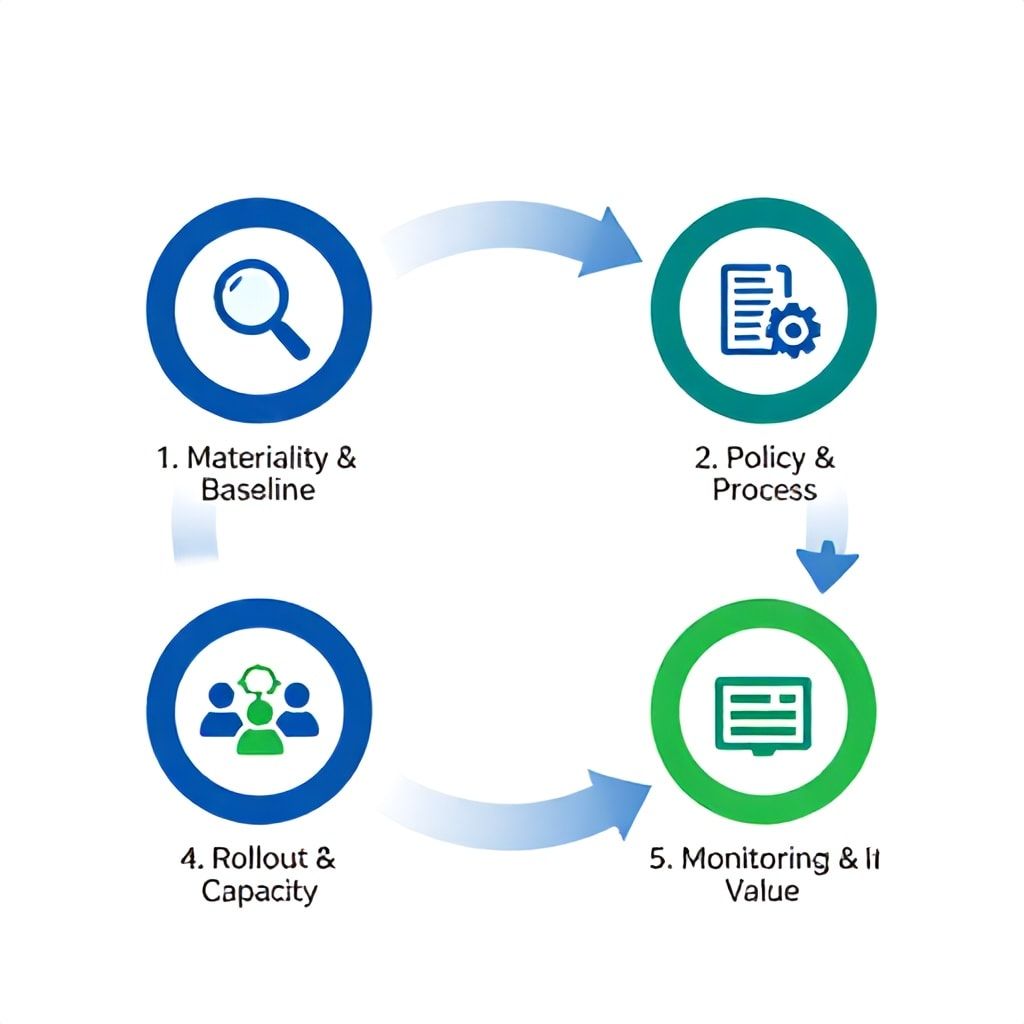
Most guides offer a generic "plan, do, check, act" cycle. That's useless for a PE firm managing 10-15 disparate companies. This framework is built for the PE model: centralize strategy, decentralize execution.
Phase 1: Materiality & Baseline (Months 1-3)
Don't try to boil the ocean. Start with a double materiality assessment for your two most exposed portfolio companies (e.g., one industrial, one software). This means assessing both how the world impacts the company (financial materiality) and how the company impacts the world (impact materiality). Use the SASB Materiality Finder as your starting point, then conduct 8-12 stakeholder interviews (management, key customers, ops leads). The output is a prioritized list of 8-12 key ESG topics. Then, conduct a baseline gap analysis: what data exists, where is it stored (often in 5+ different systems), and what's the quality? Expect this phase to cost $25k-$40k per company if using an external consultant, or require 120-150 internal hours if done by a dedicated portfolio operations lead.
Phase 2: Policy & Process Design (Months 2-4)
This is where you build the playbook. Develop a concise, fund-level ESG policy (max 5 pages) that outlines expectations, governance (who at the fund and portco is responsible), and reporting timelines. Then, create a standardized ESG Data Collection Protocol. This is a living document that specifies, for each KPI: the exact calculation formula, data source system, data owner at the portco, collection frequency, and validation steps. For example, "Scope 1 & 2 GHG Emissions" should link to utility bill portals, fuel purchase records, and specify the emission factors source (e.g., EPA or DEFRA). This phase is about creating replicable templates. One of our clients built a shareable Notion workspace with video walkthroughs for each metric, cutting portco onboarding time by 70%.
Phase 3: Tooling & Integration (Months 3-6)
You cannot scale this on Excel and email. You need a dedicated ESG data management platform. The choice isn't about "best" but "best fit" for your fund's size, portco mix, and internal bandwidth. A small fund (<$300M AUM) with simple portcos might use a lighter-weight, questionnaire-based tool like Novata (co-founded by the PE industry for this purpose). A larger fund with complex manufacturing assets will need a more robust platform like Persefoni for carbon accounting, integrated with Workiva for report assembly. The critical success factor is API connectivity. The tool must pull data automatically from portco ERP, HR, and utility systems where possible. Manual entry is the #1 point of failure. Budget $15k-$50k annually for the software, plus a $20k-$75k implementation fee.
Phase 4: Rollout & Capacity Building (Months 6-12)
Roll out to your entire portfolio in cohorts, not all at once. Start with the two companies from Phase 1 (now your champions), then add the next 3-4 most material or cooperative companies. For each portco, hold a 90-minute kickoff with the CEO and CFO (not just the sustainability coordinator), framed around value: "We're doing this to identify cost savings, mitigate regulatory risk, and prepare for your exit." Then, run a practical 3-hour workshop with the operational data owners (e.g., facility manager, HR director). Assign a single point of contact at the portco and link their ESG performance to management incentives. We've seen a 40% improvement in data quality and timeliness when ESG metrics are tied to 10-15% of the annual management bonus pool.
Phase 5: Monitoring, Reporting & Value Creation (Ongoing)
This is where you move from reporting to managing. The fund's Portfolio Ops team should review ESG dashboards quarterly alongside financials. Look for trends: Is energy use per unit of production ticking up? Is voluntary turnover spiking in one division? Use this data to trigger operational interventions—an energy audit, a retention review. For annual reporting, produce two documents: 1) a LP-Facing Annual ESG Report (aligned with PRI or ILPA guidelines) that tells your fund's story, and 2) a set of CSRD/SEC-Ready Data Packs for each portco that needs them—dry, auditable, and framework-specific. The dialogue with LPs should shift from "Do you have a report?" to "How did your ESG initiatives contribute to EBITDA growth this year?"
Private Equity ESG Reporting Requirements: A Practical Breakdown
You're not reporting to one master. You're serving multiple audiences with different needs. Here’s how to segment them:
- Limited Partners (LPs): They want evidence of competent risk management and alignment with their own policies. They increasingly use due diligence questionnaires (DDQs) from the Institutional Limited Partners Association (ILPA). Your report should directly answer their common questions on climate risk, diversity on portfolio company boards, and ethical governance. Provide quantitative data, but wrap it in a narrative about value preservation.
- Regulators (SEC, EU CSRD): They want compliance, not stories. This is a technical, audit-focused exercise. Data must be accurate, consistent, and backed by a reasonable assurance process. For CSRD, you'll need to report using the European Sustainability Reporting Standards (ESRS). Start by mapping your SASB/GRI metrics to the ESRS now—the overlap is about 60-70%.
- Portfolio Company Management & Boards: They need actionable operational intelligence. Their reports should be dashboard-driven, highlighting performance against industry benchmarks and prior periods, with clear owners for any red flags.
- Exit Counterparties (Strategic Buyers, IPO Markets): During diligence, they will tear apart your ESG data. A clean, well-documented ESG track record can support a premium valuation (3-5% in competitive processes, based on our observations). A messy one becomes a liability and a deal point.
The key is to collect data once at the most granular level, then use your software platform to slice and format it for each audience. Never write four separate reports from scratch.
Common ESG Reporting Mistakes Private Equity Firms Make (And How to Avoid Them)
After auditing dozens of PE-backed ESG programs, these are the recurring, costly errors we see.
- Starting with the Wrong Metrics: Adopting a generic "top 20 ESG metrics" list instead of conducting a materiality assessment for each industry. A SaaS company doesn't need to track water usage; a data center does. This wastes hundreds of hours collecting irrelevant data. The Fix: Use the SASB Standards as your industry-specific anchor. They identify the 5-7 financially material issues per sector.
- Underestimating Data Governance: Assuming portfolio company controllers will just "figure out" how to calculate Scope 3 emissions or workforce diversity rates. Without a clear, step-by-step protocol, you get inconsistent, unusable data. The Fix: Invest time in Phase 2 (Process Design). Create a digital playbook with screenshots and examples. Appoint a fund-level "ESG Data Steward" to answer portco questions.
- Treating ESG as a One-Annual-Report Exercise: Collecting data once a year for the report means you're always looking in the rear-view mirror. You miss the chance to intervene on emerging issues like a spike in safety incidents. The Fix: Set up quarterly flash reporting on 3-5 leading indicators (like energy use, turnover, training hours). Integrate discussion into regular Portfolio Review meetings.
- Choosing Software Last: Many firms design their entire process on spreadsheets, then look for a tool to automate it. This forces you to reconfigure everything to fit the software's logic. The Fix: Select your core ESG data management platform at the end of Phase 1. Let its capabilities inform your process design in Phase 2.
- Ignoring the Talent Gap: Assigning ESG to a mid-level associate with no operational experience and no bandwidth. They become a bottleneck. The Fix: Hire or designate a dedicated Portfolio Operations professional with 20-30% of their time focused on ESG. Their background should be in ops, finance, or engineering, not pure ESG theory.
- Over-Promising and Under-Delivering to LPs: Making bold net-zero commitments in a fundraising deck without a credible, funded plan to achieve them. This creates reputational risk. The Fix: Be transparent about your journey. State: "In 2024, we are establishing baselines across our portfolio. By 2025, we will set reduction targets for our most material sectors." LPs respect credible stepwise progress.
ESG Reporting Software 2025: A Buyer's Guide for Private Equity
The market is flooded with options. Your choice should be dictated by your fund's strategy and portco complexity. Here’s a breakdown of the leading platforms we've implemented or evaluated firsthand.
| Software | Best For | Core Strength | Implementation Complexity | Annual Cost Range (Fund Level) |
|---|---|---|---|---|
| Novata | Small to Mid-Market PE/Venture ( <$2B AUM), first-time reporters. | Built by PE (GMP, TPG) for PE. Intuitive, LP-aligned metrics, good portco user experience. | Low-Medium. Cloud-based, template-driven. Can be fund-led with minimal IT. | $10k - $30k |
| Persefoni | Funds with high climate focus, complex Scope 3 emissions, or preparing for audit. | Best-in-class carbon accounting engine. Strong GHG Protocol alignment, granular calculation, audit trail. | Medium-High. Requires deeper data integration (APIs with utility providers, ERPs). | $25k - $75k+ |
| Workiva | Larger funds ( >$5B AUM) needing integrated financial and ESG reporting, especially for SEC/CSRD. | Unmatched in connecting underlying data to polished, compliant disclosures. Collaboration and control features. | High. Often requires professional services. Better for centralized, controlled processes. | $50k - $150k+ |
| Greenstone+ | Funds with heavy exposure to manufacturing, energy, or real estate. | Strong on supply chain/social metrics. Good for granular site-level data collection (e.g., across 100+ facilities). | Medium. Modular, can start with core modules and expand. | $20k - $60k |
| Brightest | Funds prioritizing employee/HR-centric social metrics (D&I, wellbeing, pay equity). | Excellent survey and engagement tools for collecting social data directly from employees. | Low-Medium. Easy to deploy surveys, but needs integration with HRIS for full value. | $15k - $40k |
Implementation Advice: Regardless of the tool, budget for a 3-month pilot with 2-3 portcos before fund-wide rollout. Negotiate a pilot price (often 50% off) with the vendor. The goal is to test data flows, portco resistance, and internal resource needs. Always demand a live, hands-on demo using your data (e.g., try inputting one portco's utility bills), not their canned sales deck.
Practical Implementation: Budgets, Timelines & Team by Fund Size
Here’s what getting this right actually costs and who needs to do the work. These estimates are based on actual deployments from the past 18 months.
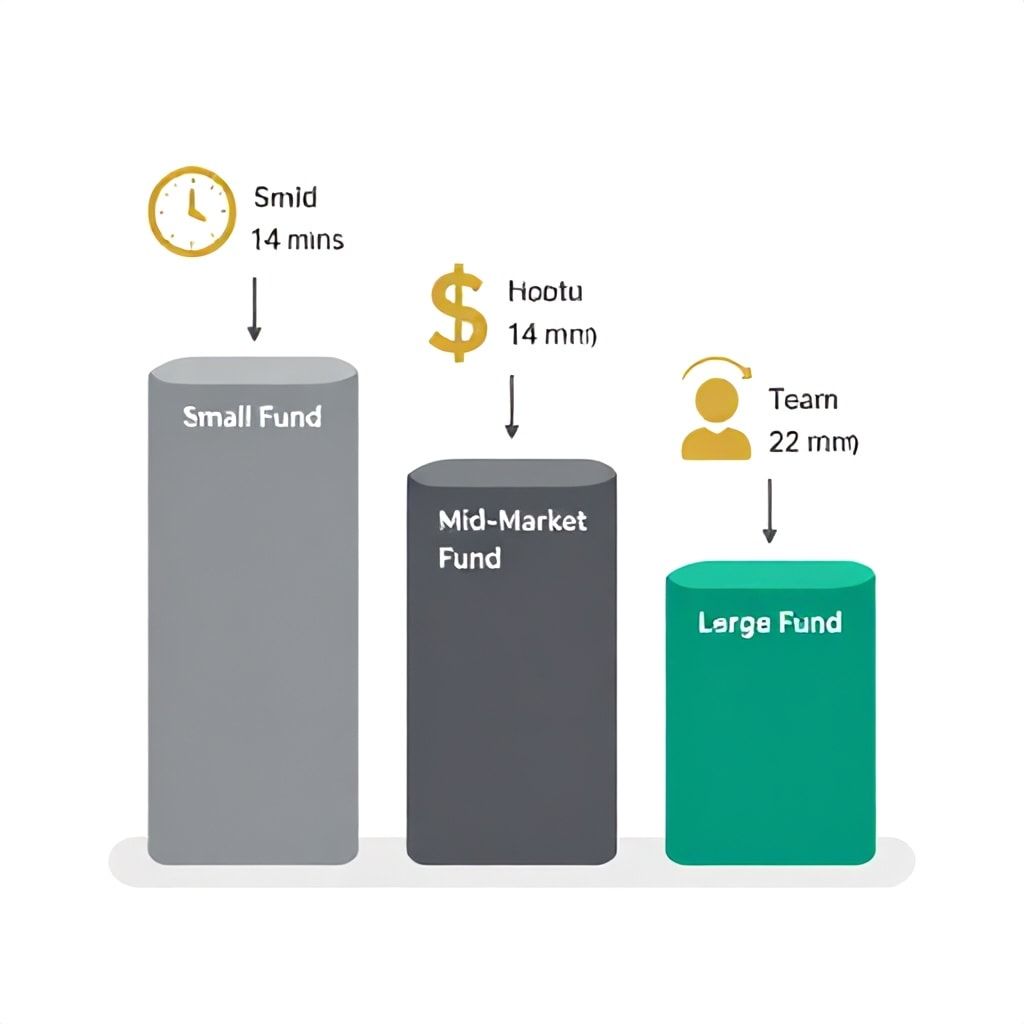
Small Fund (<$500M AUM, 6-10 Portfolio Companies)
- Team: 1 dedicated Portfolio Ops/Finance professional (20-30% FTE). No new hire needed initially.
- Budget (Year 1): $70k - $120k. Breakdown: Software (Novata/Brightest tier): $15k. External consultant for materiality & baseline at 2 companies: $50k. Miscellaneous (training, travel): $5k-10k.
- Timeline to First Mature Report: 14 months. Months 1-6: Phases 1-3 with pilot portcos. Months 7-12: Phase 4 rollout to full portfolio. Month 14: Publish first comprehensive annual report.
- Key Tools: Novata for data aggregation, Miro for virtual materiality workshops, a shared Notion/Airtable for the process playbook.
Mid-Market Fund ($500M - $2B AUM, 10-20 Portfolio Companies)
- Team: 1 dedicated ESG/Value Creation Manager (80-100% FTE), supported by Portfolio Ops team.
- Budget (Year 1): $180k - $300k. Breakdown: Software (Persefoni/Greenstone tier): $40k. Consultant for framework design & 4 company baselines: $100k. Partial internal headcount cost: $40k. Assurance readiness review: $20k.
- Timeline to First Mature Report: 16 months. Includes a more formal stakeholder engagement process and deeper tool integration.
- Key Tools: Persefoni for carbon, Greenstone for broader ESG, Zoom for portco trainings, Power BI for internal dashboards.
Large Fund (>$2B AUM, 20+ Portfolio Companies)
- Team: Central ESG team of 2-3 (Director, Manager, Analyst). Relies heavily on Portfolio Ops/IR for rollout.
- Budget (Year 1): $400k - $750k+. Breakdown: Enterprise software (Workiva + modules): $100k+. Consultant for program design & roll-out support: $200k+. Internal team cost: $150k+. External assurance: $50k+.
- Timeline to First Mature Report: 18-24 months. Rollout is in structured waves, with full integration into investment and exit processes.
- Key Tools: Workiva for reporting, dedicated ESG platform, integration with fund's existing data room (e.g., DealCloud), advanced data visualization (e.g., Tableau).
Remember, these are Year 1 "build" costs. Year 2+ ongoing costs typically drop by 30-50% as you move into maintenance and refinement.
ESG Reporting Examples: What Good Looks Like in Private Equity
Abstract principles are hard to implement. Here are two concrete, anonymized examples from our work:
Example 1: The Industrial Manufacturer (Portfolio Company of a Mid-Market Fund)
Challenge: High energy costs, customer RFPs demanding carbon data, potential CSRD applicability.
Process: Conducted a materiality assessment identifying energy management, worker safety, and supply chain ethics as top issues. Installed sub-meters at key production lines (cost: $25k). Used Persefoni to auto-ingest utility data via API from the utility provider's portal.
Outcome & Report: The first quarterly dashboard identified a 15% energy variance between two identical lines. An investigation found outdated motors on one line. The fix cost $8k and saved $18k annually in energy. The annual ESG report for this company included: 1) A 2-page executive summary linking ESG to operational efficiency, 2) A data appendix with 12 core metrics (GHG emissions by scope, TRIR, % suppliers screened), and 3) A 1-year roadmap targeting a 10% energy intensity reduction. This report was used in the company's next financing round.
Example 2: The Software Platform (Portfolio Company of a Growth Fund)
Challenge: High employee turnover threatening product roadmaps, need to demonstrate responsible AI governance to enterprise clients.
Process: Materiality focus on talent retention, diversity, and product responsibility. Used Brightest to deploy anonymous employee surveys and track D&I metrics pulled from the HRIS (BambooHR). Established an AI ethics review checklist for new features.
Outcome & Report: Data revealed turnover was 3x higher in one acquired team. Exit interview data pointed to cultural integration issues. Interventions improved retention by 40% in that group within 9 months. The ESG report highlighted: low Scope 1 & 2 emissions, but deep dives into social metrics and the AI governance framework. This became a key slide in the management presentation during the fund's subsequent LP annual meeting.
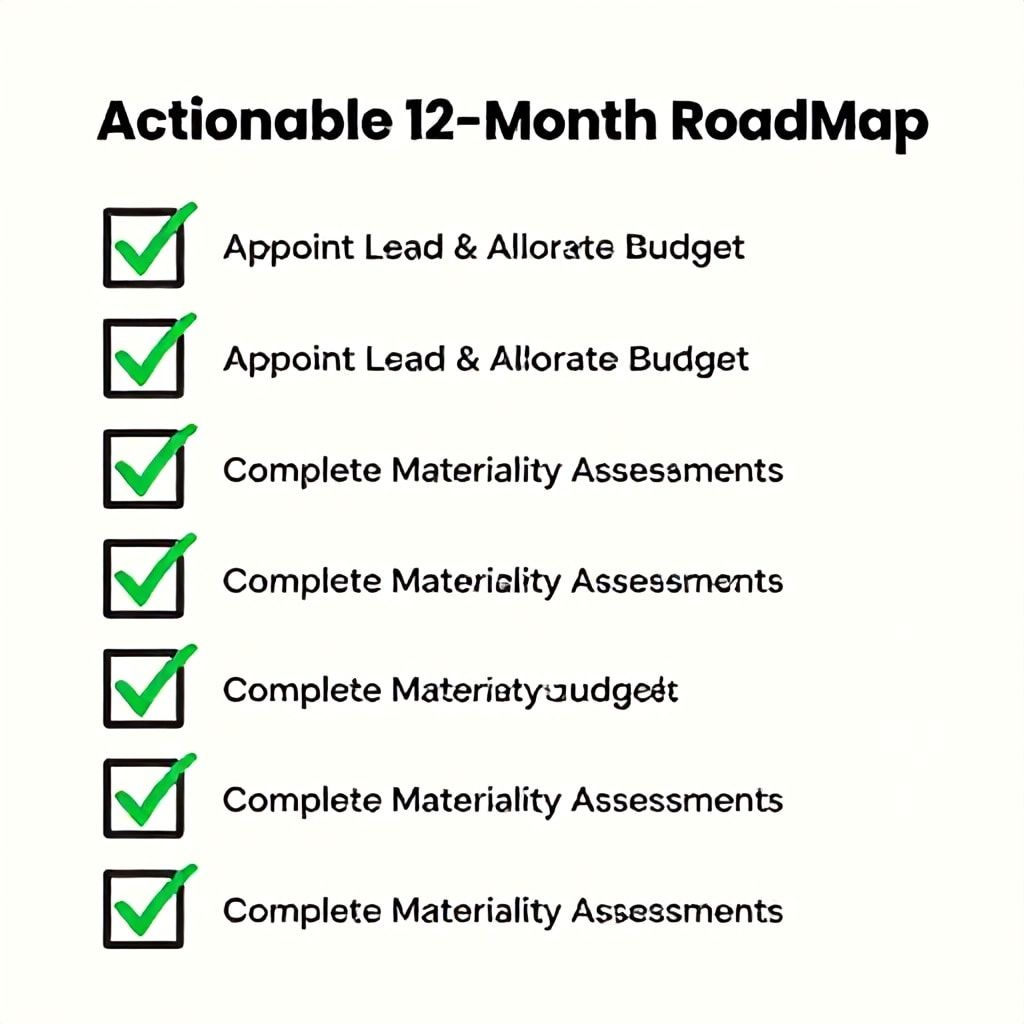
Actionable 12-Month Roadmap Checklist
- Month 1-2: Appoint an internal lead. Allocate budget. Select and contract with an ESG consultant for the discovery phase.
- Month 2-3: Complete double materiality assessments for 2-3 pilot portfolio companies. Draft the fund-level ESG policy.
- Month 4: Evaluate and select your core ESG data management software. Run a pilot with vendor using one portco's data.
- Month 5-6: Finalize the ESG Data Collection Protocol. Build your digital playbook (Notion/Airtable). Train the pilot portco teams.
- Month 7-9: Roll out software and process to the next cohort of 3-4 portfolio companies. Establish quarterly flash reporting.
- Month 10-12: Complete first annual data collection cycle from all portcos. Produce a dry-run LP report and identify gaps.
- Month 13+: Publish first formal annual ESG report. Begin planning for Year 2: target setting and assurance readiness.
Frequently Asked Questions
What is ESG in private equity, really?
In private equity, ESG is an operational framework for managing non-financial risks and opportunities that directly impact enterprise value. It's not charity. It's about identifying material issues—like energy costs in a factory or employee turnover in a services firm—that affect profitability, growth, and risk profile. A strong ESG program helps avoid value erosion from regulatory fines, reputational damage, or operational inefficiencies, and can uncover new value through cost savings, talent retention, and market differentiation. It's due diligence extended throughout the hold period.
How do I report ESG compliance to my LPs?
Start by aligning with the Institutional Limited Partners Association (ILPA) Due Diligence Questionnaire template, which is becoming an industry standard. Your report should quantitatively address their priority areas: climate risk strategy, diversity at the portco board and management level, and governance practices like anti-corruption. Beyond the data, tell a concise story. Structure the report with an executive summary of your fund's ESG philosophy and key annual achievements, a section on governance (who does the work), then data dashboards for environmental and social metrics, followed by case studies of value creation. Submit it alongside your annual financial reports, and be prepared to discuss it in your LP advisory committee meeting.
What are the ESG reporting requirements for private companies in 2025/2026?
For 2025 data (reported in 2026), the primary new requirement for many PE-backed companies is the EU's Corporate Sustainability Reporting Directive (CSRD). If a portfolio company has €40 million+ in EU turnover, an EU branch with €40M+ revenue, or an EU subsidiary considered a "large undertaking" (meeting 2 of 3: 250+ employees, €40M+ revenue, €20M+ assets), it will likely need to comply. This requires reporting according to European Sustainability Reporting Standards (ESRS), covering a wide range of environmental, social, and governance topics with detailed, auditable data. In the US, while the SEC climate rules are paused, state-level laws (like in California) and customer pressure are creating de facto reporting requirements for mid-market companies.
What are the best private equity ESG reporting best practices?
The best practices we've seen work are: 1) Start with materiality: Don't report on everything; focus on the 8-12 issues that matter most to your specific industries. 2) Integrate with operations: ESG data collection should be part of the portco's normal business rhythm (e.g., pulled from monthly financial closes, HR systems). 3) Use dedicated software: Excel and email break at scale. A platform ensures consistency and auditability. 4) Incentivize portco management: Tie a portion of management's bonus to ESG data quality and improvement targets. 5) Report proactively: Use dashboards for quarterly management, not just an annual retrospective report. This turns data into a tool for intervention.
What is the best ESG reporting software for a first-time PE firm?
For a first-time firm (typically under $2B AUM), we most often recommend starting with Novata. It was built by a consortium of PE firms (including Apollo and KKR) specifically for the private markets, so its metrics and reporting templates are pre-aligned with what LPs like the California Public Employees' Retirement System and other institutional investors expect. Its user interface is designed for non-experts at portfolio companies, which reduces friction during rollout. It's also priced accessibly for the mid-market. The key is that it helps you avoid building a framework from scratch, allowing you to focus on implementation and data quality instead of design.
Can you give me a private equity ESG reporting example?
A concrete example: A lower-middle-market PE fund with a portfolio of 10 light industrial companies used the SASB standards to identify "Energy Management" and "Employee Health & Safety" as material topics. They built a simple, 10-metric dashboard in their portfolio monitoring software. For safety, they tracked the Total Recordable Incident Rate (TRIR) quarterly. One company's TRIR spiked from 2.1 to 4.5. The Portfolio Ops lead investigated and found a lapse in safety training for new hires after a rapid expansion. They funded a dedicated safety trainer, and the TRIR dropped to 1.8 within a year, reducing insurance premiums and downtime. This case study, with the before-and-after data, formed the centerpiece of the "Social" section in their annual LP report, demonstrating tangible value protection.
What are the new ESG reporting regulations for 2026 I need to prepare for?
The 2026 reporting cycle (for 2025 data) will be the first major wave of the EU CSRD for many companies. This means if you have applicable portfolio companies, they will need to publish a sustainability statement alongside their financial report, following the ESRS, with data subject to limited assurance (audit). This requires identifying value chains, calculating Scope 3 emissions, and reporting on a wide set of social metrics like workforce diversity and working conditions. Preparation must start in 2024 because you need to establish data collection processes, select a reporting platform, and potentially gather 2024 data to establish a baseline. Waiting until 2025 will result in a costly, rushed, and non-compliant process.
What tools are essential for ESG compliance reporting?
Four tools are essential: 1) A centralized ESG data management platform (like Novata, Persefoni, or Workiva) to aggregate and standardize data. 2) A collaborative workflow tool (like Notion, Asana, or a dedicated module in your platform) to manage the data collection process, assign tasks, and store protocols. 3) Data visualization software (like Power BI or Tableau) to create internal dashboards for the investment team and portco boards. 4) A secure document portal (like your existing data room, e.g., DealCloud or Ansarada) to store audit-ready evidence and distribute final reports to LPs. The integration between these tools is critical—manual data transfer between them kills efficiency.
Your Next Step: The 90-Day Sprint
The gap between leading and lagging firms on ESG is widening. The regulatory clock for 2026 is ticking, but the bigger cost is missed value creation in your portfolio today. Your next step isn't to form a committee or write a lofty policy. It's to execute a 90-day diagnostic sprint. Pick one portfolio company—preferably one with clear ESG exposure like energy costs or regulatory risk. Allocate $15k-$25k. Hire a specialist consultant for 4-6 weeks to conduct a focused materiality assessment and data availability review for that single company. The deliverable is a clear, 10-page report showing: 1) The 3-5 most material ESG issues, 2) The current state of data (what exists, what's missing), 3) A 12-month roadmap to build a compliant, value-focused program for that company, with estimated costs. This gives you a concrete, small-scale proof of concept, a realistic budget estimate, and a template you can replicate across your portfolio. It moves you from theory to execution. Start that sprint next quarter, and by this time next year, ESG won't be a reporting burden—it'll be a core component of your value creation playbook.
For more on strategic operational frameworks, see our guide on 2026 collaboration tool adoption metrics, or for navigating complex regulatory landscapes, our SEC AI compliance roadmap.
Boomlify Team