


2026 GDPR Compliance Sprint for SaaS Startups: A 60-Day Action Plan
Boomlify Team
Content Creator
2026 GDPR Compliance Sprint for SaaS Startups
Table of Contents
- Why the “Sprint” Mindset is Non-Negotiable in 2026
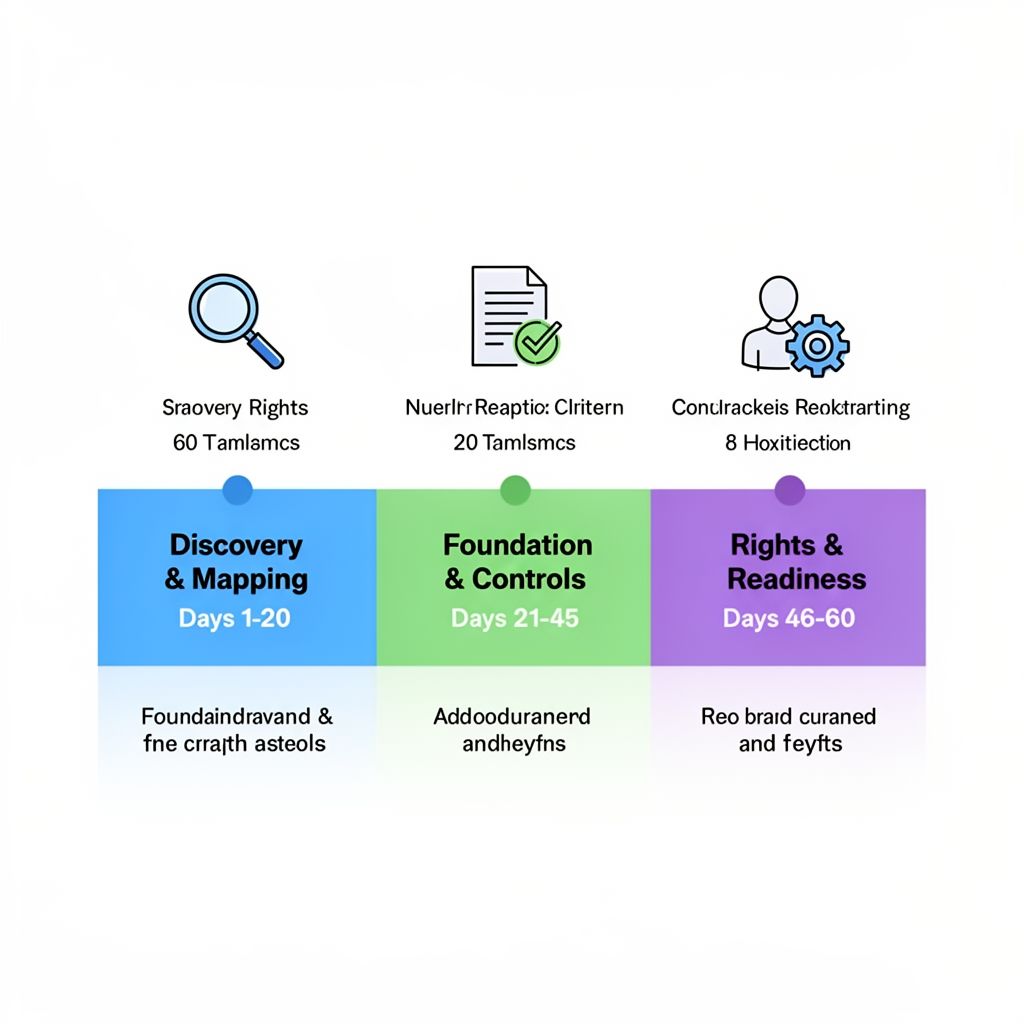
- The 60-Day GDPR Sprint Framework: 3 Phases to Defensible Compliance
- Phase 1: Discovery & Mapping (Days 1-20)
- Phase 2: Foundation & Controls (Days 21-45)
- Phase 3: Rights & Readiness (Days 46-60)
- Budget & Tool Tiers: Getting Compliant Without a Compliance Budget
- The 2026 Overlay: Integrating the EU AI Act
- 5 Critical Mistakes That Sink SaaS Startups (And How to Avoid Them)
- Your Actionable 60-Day Checklist
- Frequently Asked Questions
- Is GDPR mandatory for US-based SaaS startups with no EU office?
- What's a realistic GDPR compliance cost for a small SaaS business (under 10 people)?
- How do we handle GDPR data processing agreements with our vendors?
- What are the best GDPR compliance software tools for SaaS in 2026?
- Do we need to appoint a formal Data Protection Officer (DPO)?
- What are the penalties and fines for non-compliance in 2026?
- How does GDPR consent management differ for a B2B vs. B2C SaaS?
- What is a Data Protection Impact Assessment (DPIA) and when is it required?
You’ve just landed your first enterprise customer in Germany. Their legal team sends over a 15-point GDPR questionnaire. Your stomach drops. You’re a three-person SaaS team with a $7k MRR runway, no in-house counsel, and your "data processing" consists of user emails in Stripe and Postgres. Sound familiar? You’re not alone. Most guides treat GDPR as a monolithic legal burden, but for startups, it’s an operational puzzle you must solve with zero budget and a ticking clock. This isn’t about fear; it’s about building defensible, trust-based products. By 2026, GDPR will be further integrated with the EU AI Act, making a proactive stance non-negotiable. This guide provides a tactical, 60-day sprint framework we’ve used to get over two dozen seed-stage SaaS companies to a state of defensible compliance, often for under $5k in initial costs. We’ll cover exactly what to do, in what order, and where to cut corners when you absolutely must.
Why the “Sprint” Mindset is Non-Negotiable in 2026
Traditional compliance is a marathon. For a startup, that’s a death sentence. A marathon assumes consistent resources you don’t have. A sprint is a focused, all-hands effort with a clear finish line—in this case, a state of documented, operational compliance that satisfies 95% of prospect due diligence. The regulatory landscape is shifting. The EU AI Act, now in full enforcement, introduces new layers for SaaS using any form of automation or profiling. A 2025 study by IAPP found that 68% of initial GDPR fines now also cite inadequate security measures linked to cloud configurations, a direct hit for SaaS. Waiting for a “compliance round” on your roadmap is a gamble with a 4% annual revenue fine. The sprint focuses on accountability and evidence. You won’t be perfect on day 60, but you’ll have a documented system to improve upon, which is what regulators and customers actually look for.
The 60-Day GDPR Sprint Framework: 3 Phases to Defensible Compliance
This framework prioritizes risk and evidence. We ignore theoretical perfection and focus on what stops deals and triggers fines. Each phase has a clear output.
Phase 1: Discovery & Mapping (Days 1-20)
Goal: Know your data universe. You cannot protect what you don’t know you have.
Core Output: A living Record of Processing Activities (RoPA).
Start with a “Data Mapping Sprint.” For 3 days, have every engineer, PM, and founder list every system that touches personal data. “Personal data” isn’t just emails. In 2026, it includes IP addresses (if linkable), device IDs, and any inference data. Use a simple spreadsheet with columns: Data Category (e.g., user email), Purpose (why we have it), System (e.g., PostgreSQL, Stripe, Mixpanel), Location (AWS eu-west-1), Third-Party Shared (Yes/No), Retention Period (e.g., “until account deletion”). The biggest mistake here is overcomplication. A founder-led spreadsheet is better than a $20k tool you never update. A practical shortcut: Start by auditing your OAuth scopes. If you use “Sign in with Google,” you’re likely pulling profile data you don’t need. Reduce scope immediately.
Phase 2: Foundation & Controls (Days 21-45)
Goal: Implement the core technical and legal guardrails.
Core Outputs: Updated Privacy Policy, Data Processing Agreements (DPAs), and Security Baselines.
This is the heavy lift. Parallelize three workstreams:
- Legal Documents: Do not copy-paste a generic template. Use your RoPA to inform your Privacy Policy. For DPAs, most cloud providers (like AWS, Google Cloud) offer pre-signed annexes in their privacy centers. For your own customer DPAs, use a generator like TermsFeed’s DPA generator as a starting point, then have a lawyer on UpCounsel review it for 2 hours ($400). This is your single biggest legal spend and it’s worth it.
- Lawful Basis & Consent: For B2B SaaS, “legitimate interest” is often your primary basis for business contact data. For end-user accounts, “performance of contract” is key. If you rely on consent (e.g., for marketing emails), it must be a separate, unambiguous action. Pre-ticked boxes are illegal. Implement a consent management platform (CMP) like OneTrust or Cookiebot if you have a public website with tracking. For early-stage apps, a custom-built modal logging to a database is sufficient if documented.
- Security Baseline: This is where most technical debt lies. Enable MFA on all admin accounts—today. Ensure database backups are encrypted. Review subprocessor lists from your vendors. This phase dovetails with broader SaaS stack security principles.
Phase 3: Rights & Readiness (Days 46-60)
Goal: Operationalize data subject rights and prepare for incidents.
Core Outputs: Data Subject Request (DSR) workflow and Breach Response Plan.
You will get a user asking to delete their data. When you’re panicked, you’ll miss something. Build a checklist now. A DSR workflow should be a simple internal wiki page: 1) Verify requestor identity (a reply to the account’s email is often sufficient), 2) Triage request type (access, deletion, correction), 3) Identify all data locations from your RoPA, 4) Execute changes, 5) Document completion. For deletion, remember backups. A practical approach: Anonymize the user record in your primary DB immediately, then purge from backups on the next scheduled cycle (document this policy). Your Breach Response Plan can be a one-pager: Who is notified first (CEO, CTO), when do you decide to notify authorities (within 72 hours of becoming aware), and who drafts the communication. Run a tabletop exercise: “What if our customer database was publicly exposed on GitHub?”
Budget & Tool Tiers: Getting Compliant Without a Compliance Budget
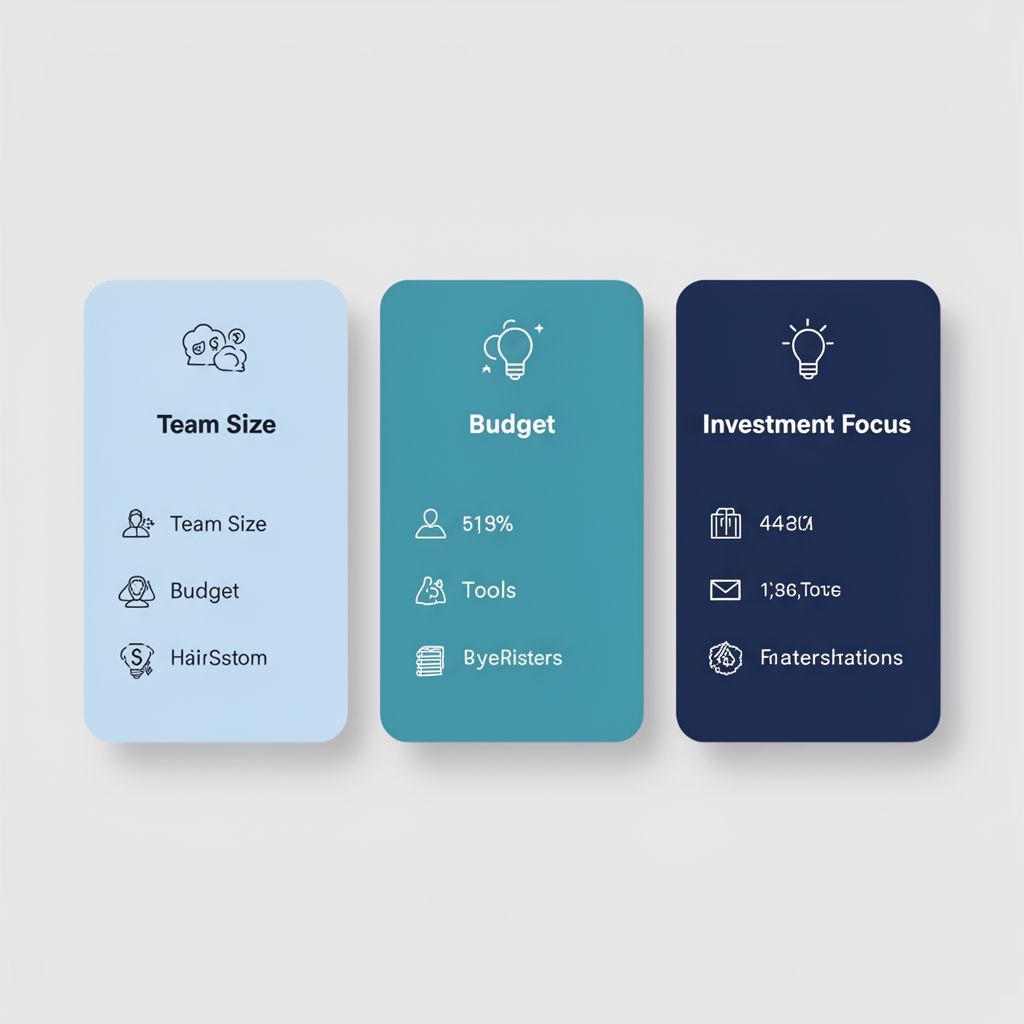
Your spend should match your stage and risk. Here’s a realist’s breakdown.
| Team Size / MRR | Realistic Budget (Initial 60 Days) | Core Tool Stack | Where to Invest | Where to Defer |
|---|---|---|---|---|
| 1-5, <$10k MRR | $500 - $2,000 | Spreadsheets (RoPA), UpCounsel (2h legal review), In-house built consent/DSR forms. | Legal doc review ($400), Backup encryption. | Enterprise CMP, Full-scale DPIA automation. |
| 6-20, $10k-$100k MRR | $2,000 - $10,000 | Securiti.ai or DataGrail for RoPA/DSR automation, OneTrust Fundamentals tier. | Automated DSR workflow tool ($300/mo), Basic security audit. | Full-time DPO, Penetration testing. |
| 20+, >$100k MRR | $10,000+ | Dedicated compliance SaaS (OneTrust/TrustArc), SIEM for logging, External DPO service. | Annual penetration test, Comprehensive DPIA for core features. | Nothing—scale systematically. |
Tool Deep Dive: For the mid-tier, Securiti.ai wins for SaaS because its “Robotic Automation” can actually connect to APIs like Stripe and Salesforce to auto-populate your RoPA. OneTrust is more comprehensive but has a steeper setup curve. For startups under 20 people, I recommend starting with Securiti’s startup program. The key is integration effort. A tool that takes 3 months to configure is worse than a spreadsheet.
The 2026 Overlay: Integrating the EU AI Act
If your SaaS uses any machine learning for automated decision-making (e.g., scoring users, dynamic pricing, content moderation), the EU AI Act now applies. The synergy with GDPR is in transparency and data governance. For a “limited risk” AI system (which covers most SaaS analytics features), your new requirements are twofold: 1) Transparency: You must clearly notify users that they are interacting with an AI system. A simple “Powered by AI” label suffices. 2) Human Oversight: You must design a way for a human to review and override significant automated decisions. In practice, this means building an admin dashboard to review algorithmic bans or flags. Update your RoPA to document your AI processing purposes and the logic involved (a high-level description, not your source code). This is where your existing GDPR documentation pays off—you’re just adding a new processing activity.
5 Critical Mistakes That Sink SaaS Startups (And How to Avoid Them)
After auditing dozens of startups, these are the consistent, costly failures.
- Treating the Cloud Provider as the “Processor” and Stopping There. Yes, AWS is your processor. But if you send EU user data to a US-based analytics tool (like Mixpanel or HubSpot), you are the controller for that transfer. You need a legal mechanism—most likely Standard Contractual Clauses (SCCs). Every vendor in your stack needs a DPA. Use a tool like VendorRisk to track this.
- Building a “GDPR Delete” That Only Soft-Deletes. A soft-delete (setting `user.deleted = true`) does NOT satisfy the right to erasure. The data must be irrecoverable by your team. You need a hard delete process, albeit one that considers backup integrity. Document your retention schedule and purge cycle.
- Ignoring the “Privacy by Design” Mandate Until a Feature Launch. This is a classic sprint failure. Two weeks before launch, you realize your new social feature shares user locations by default. Run a micro-DPIA for every major new feature: What data? Why? What’s the lawful basis? What’s the retention? Bake these questions into your PRD template.
- Assuming US-Only Startups Are Exempt. If you have a single user in the EU, or if you monitor behavior of individuals in the EU (e.g., through a publicly accessible website analytics), the GDPR applies to you. The “territorial scope” (Article 3) is broad. I’ve seen US startups with .com domains get fined by the French DPA (CNIL) for non-compliant cookie banners.
- Failing to Document the “Why.” The GDPR’s accountability principle means you must be able to demonstrate compliance. A decision log is crucial. Why did you choose legitimate interest over consent? Document it in a simple internal memo. When an auditor asks, you have evidence, not excuses.
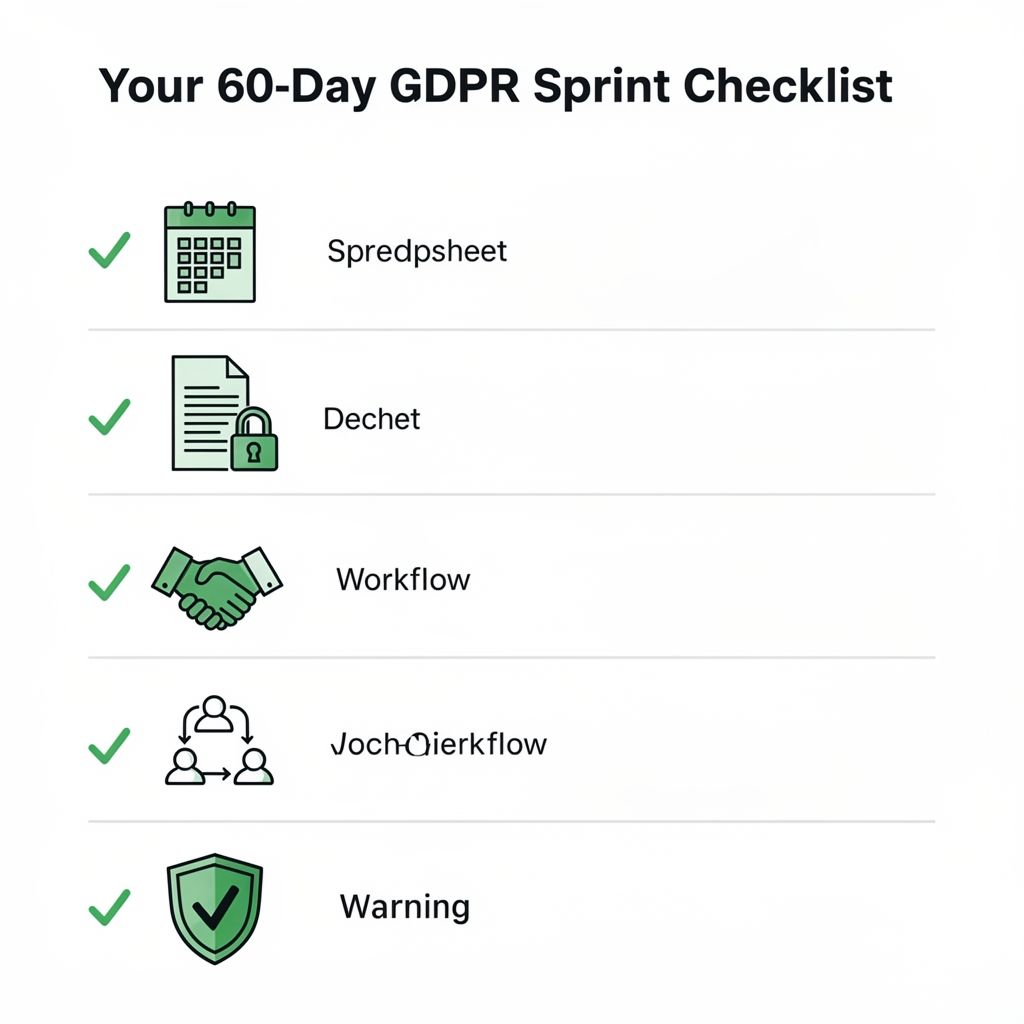
Your Actionable 60-Day Checklist
Copy this into your project management tool.
- Week 1-2: Appoint a lead (usually the CTO/CEO). Draft initial RoPA via spreadsheet. Audit all third-party vendors for DPAs.
- Week 3-4: Finalize RoPA. Update Privacy Policy and Terms. Enable MFA on all critical systems. Encrypt database backups.
- Week 5-6: Draft DPA for customers. Set up a [email protected] email. Document lawful basis for each processing activity in RoPA.
- Week 7-8: Build internal DSR workflow (wiki page). Draft 1-page Breach Response Plan. Review OAuth scopes and reduce data collection.
- Week 9-10: Conduct a tabletop breach exercise. Implement cookie/consent banner if needed. Finalize all internal policies and share with team.
Frequently Asked Questions
Is GDPR mandatory for US-based SaaS startups with no EU office?
Yes, if you target or process data of individuals in the EU. Targeting includes offering your service in European languages, pricing in Euros, or marketing to an EU audience. Even a passive website accessible in the EU collecting cookies can trigger obligations. The enforcement risk scales with your EU presence, but the legal obligation exists from your first EU user. Proactive compliance is cheaper than responding to a regulatory inquiry.
What's a realistic GDPR compliance cost for a small SaaS business (under 10 people)?
You can achieve a defensible baseline for $1,500-$5,000 in initial costs and 5-10 hours per week of founder/engineer time over 60 days. The major costs are legal review of your DPA and Privacy Policy ($400-$1,500), potential tooling for consent or data mapping ($0-$300/month), and potentially an external consultant for a 2-day gap analysis ($2,000-$4,000). The bulk of the work is internal operational change, which is time, not cash. The most common unexpected cost is engineering time to build data deletion workflows.
How do we handle GDPR data processing agreements with our vendors?
First, identify all vendors that process personal data on your behalf (payment processors, analytics, cloud hosting, support ticketing, email marketing). Visit each vendor's privacy or legal center—most major providers (AWS, Stripe, SendGrid, etc.) have a pre-signed DPA you can activate. Download and file these. For smaller vendors without a DPA, you may need to send your own. Prioritize vendors that handle sensitive or high-volume data. Maintain a vendor log in your RoPA with columns for “DPA Status” and “Data Location.”
What are the best GDPR compliance software tools for SaaS in 2026?
The tool landscape has consolidated. For all-in-one programs: OneTrust and TrustArc are enterprise-grade but complex. For startups, Securiti.ai is superior due to its API-driven automation for data mapping and DSRs. For consent management specifically, Cookiebot and Usercentrics are robust. For privacy-focused analytics that minimize compliance burden, consider Fathom Analytics or Plausible. Your choice should hinge on integration depth—can the tool pull data directly from your databases and SaaS apps to keep the RoPA accurate?
Do we need to appoint a formal Data Protection Officer (DPO)?
Legally, you only need a mandatory DPO if your core activities involve large-scale, regular monitoring of individuals (like a tracking-based adtech) or large-scale processing of special category data (health, biometrics). Most B2B SaaS startups do not fall under this. However, you must still designate someone responsible for data protection. This is usually the CTO or CEO initially. Document this person's name and make sure they have the authority to implement changes. You can hire an external DPO-as-a-service later if needed, costing ~$500-$2,000/month.
What are the penalties and fines for non-compliance in 2026?
Fines remain tiered: up to €10 million or 2% of global annual turnover for lesser infringements (e.g., record-keeping failures), and up to €20 million or 4% of global turnover for serious violations (e.g., lacking a lawful basis for processing). In 2025, the average fine for SMEs decreased slightly but enforcement actions increased by 22%, showing regulators are pursuing more, smaller cases. Beyond fines, the real cost is operational: mandatory corrective orders, reputational damage, and lost enterprise deals during prolonged due diligence. A single large customer walking away often costs more than the maximum fine.
How does GDPR consent management differ for a B2B vs. B2C SaaS?
Fundamentally. For B2C, consent is often the primary lawful basis for marketing and many profiling activities. It must be freely given, specific, informed, and unambiguous—a clear opt-in. For B2B, you can more frequently rely on legitimate interest for processing business contact data (e.g., an employee's work email) for contract-related communication. However, you must still conduct a Legitimate Interest Assessment (LIA) to balance your interests against the individual's rights. For B2B marketing emails to individual employee addresses, consent is still the safest basis. Never assume a B2B context is a free pass.
What is a Data Protection Impact Assessment (DPIA) and when is it required?
A DPIA is a systematic process to identify and minimize the privacy risks of a new project or feature. It's legally required when processing is “likely to result in a high risk” to individuals. For SaaS, triggers include: systematic and extensive profiling, processing sensitive data at scale, publicly monitoring a publicly accessible area (via a feature), or using new technologies. In practice, run a lightweight DPIA for any major feature launch involving novel data use or automated decision-making. Template: 1) Describe the processing, 2) Assess necessity & proportionality, 3) Identify risks to users, 4) Outline mitigating measures. Document the outcome.
The sprint ends, but compliance doesn’t. Your goal on Day 60 isn’t a perfect system; it’s a functioning one that learns and improves. The single most impactful action you can take today is to open a shared spreadsheet and start your Data Mapping Sprint. In one hour, you’ll know more about your data flows than 80% of your competitors. This operational knowledge isn’t just about avoiding fines—it’s the foundation of a trustworthy, scalable product. Now go build that RoPA.
Boomlify Team