

How AI Is Enhancing Cloud Based Access Control Systems
Boomlify Team
Arif Khan
How AI Is Enhancing Cloud Based Access Control Systems
Security used to be simple. You gave someone a key or a card, and they could enter a building. If something went wrong, you checked logs later and tried to figure out what happened.
That model does not work anymore.
The global access control market is expected to exceed $20 billion, and one of the biggest drivers behind that growth is the integration of AI into cloud systems. At the same time, studies show that over 60% of security incidents involve internal access misuse, not external threats. This means the real risk is not always someone breaking in. It is often someone using valid access in the wrong way.
Now add modern work environments into the mix.
Businesses operate across multiple offices. Teams are hybrid. Employees, vendors, and contractors move in and out constantly. Managing access in this environment using traditional systems is not just inefficient. It is risky.
This is where AI is changing the foundation of how access control works.
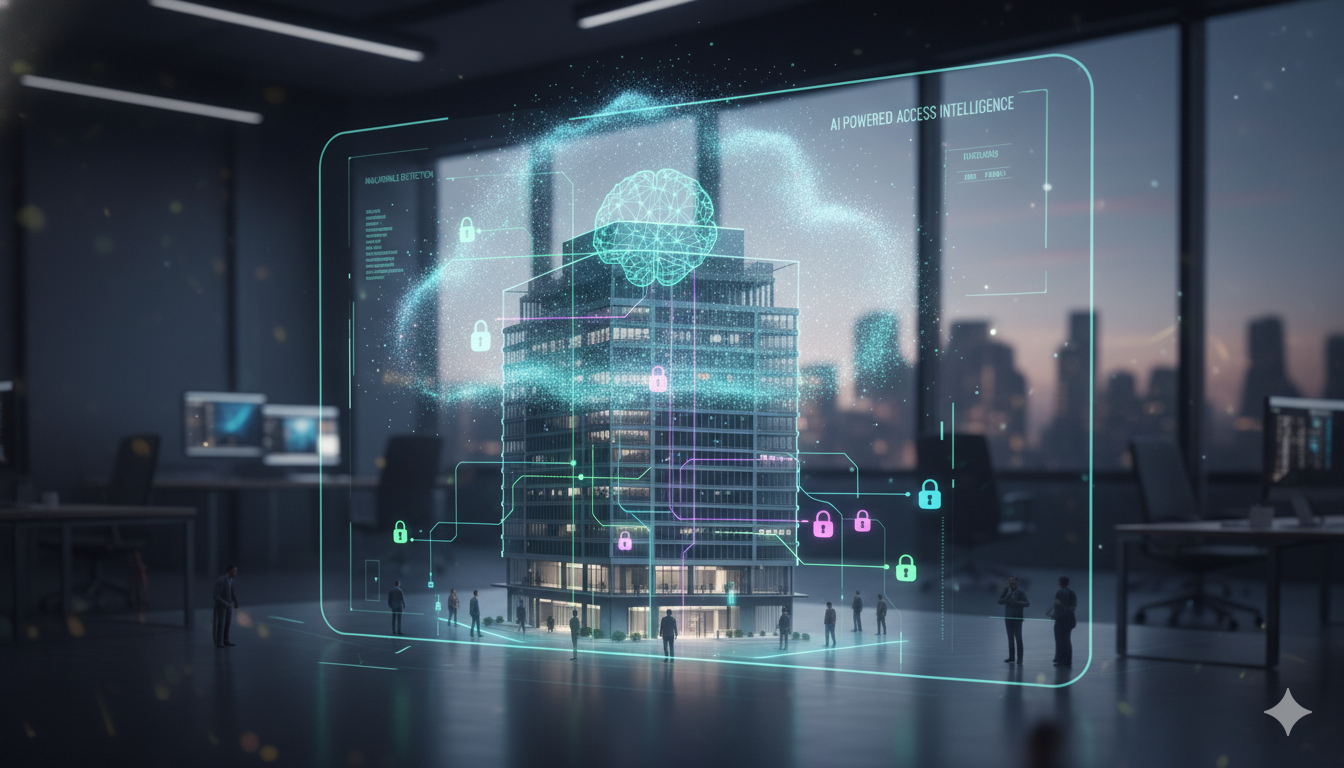
When combined with a cloud based access control system, AI does more than manage permissions. It adds intelligence. It understands patterns, detects anomalies, and helps businesses respond in real time instead of after the fact.
Let’s look at how this shift is actually happening in practice.

Image source
Access Control Is No Longer Just About Permissions
Traditional access control systems are built on rules. If a person has permission, the door opens. If they do not, it stays closed. The system does exactly what it is told, but nothing more.
The problem is that real-world security is rarely that simple.
An employee accessing an office at 10 AM is normal. The same employee accessing a restricted area at 2 AM might not be. A system based only on permissions cannot tell the difference.
AI introduces context into this process.
Instead of just checking access rights, it analyzes behavior over time. It learns patterns such as when people usually enter, which areas they access, and how frequently they move between locations. When something deviates from that pattern, it can flag it instantly.
For example, if someone who typically works in one location suddenly tries to access multiple restricted areas across different offices, the system can identify that as unusual behavior. This does not mean access is automatically blocked, but it creates awareness that something needs attention.
This shift from static rules to dynamic understanding is what makes AI so powerful in access control.
Real-Time Alerts Are Replacing Delayed Reactions
One of the biggest weaknesses of older systems is that they are reactive. They tell you what happened, but only after it has already happened.
In many situations, that delay is the difference between a minor issue and a serious security incident.
AI changes this by enabling real-time detection and alerts.
Instead of requiring someone to manually review logs, the system continuously monitors access activity and highlights anything that looks unusual. This could include repeated failed attempts, access outside normal working hours, or unexpected movement across locations.
The key advantage here is speed.
Security teams no longer need to dig through data to find problems. The system surfaces them immediately. This allows faster decisions and quicker responses, which is critical in environments where even small delays can create larger risks.
This is also where modern platforms like Coram’s cloud based access control system become relevant. By combining centralized cloud management with real-time monitoring and integration capabilities, they allow businesses to track access events across locations while maintaining full visibility. When AI is layered onto such a system, it becomes possible to detect unusual activity instantly and respond without manual intervention.
The result is not just better security, but a system that actively works in the background to prevent issues before they escalate.
AI Reduces Complexity as Businesses Scale
Growth introduces complexity, especially when it comes to access management.
As companies expand, they add more employees, more locations, and more access points. Managing permissions manually in such an environment becomes difficult and error-prone.
It is common for employees to retain access they no longer need or for permissions to be assigned too broadly just to avoid delays. Both situations create security gaps.
AI helps simplify this.
By analyzing usage patterns, AI can identify which access permissions are actually being used and which are unnecessary. Over time, it can suggest optimizations or highlight areas where access should be reviewed.
For example, if an employee has access to multiple areas but consistently uses only one, the system can flag this for review. This helps organizations tighten security without disrupting workflows.
Instead of adding more rules and more manual oversight, AI reduces the need for both by making the system smarter.
Smarter Access for Hybrid and Distributed Workplaces
The rise of hybrid work has made access control significantly more complex.
Employees are no longer tied to one location. They move between offices, work remotely, and collaborate across teams. This makes static access rules difficult to manage.
AI brings flexibility into this environment.
It allows systems to adapt based on behavior rather than fixed assumptions. For example, if an employee regularly works from multiple locations, the system can recognize this pattern and treat it as normal. At the same time, it can still detect behavior that falls outside expected activity.
This balance between flexibility and control is critical.
Without AI, businesses often have to choose between strict rules that slow down operations or loose rules that create risk. With AI, they can maintain both efficiency and security.
Data Is Becoming the Most Valuable Security Layer
One of the most important changes AI brings is the ability to turn access data into insights.
Every access event generates information. When analyzed correctly, this data can reveal patterns that are not visible in real time.
For example, businesses can identify:
- Peak access times across locations
- Areas with unusually high activity
- Patterns that may indicate inefficiencies or risks
- Gaps in security coverage
This information is valuable beyond security.
It can help improve operations, optimize space usage, and support better decision-making. Instead of treating access control as a standalone system, businesses can use it as a source of intelligence.
This is where AI adds long-term value. It does not just react to events. It helps organizations understand their environment better over time.
The Bigger Shift: From Control to Intelligence
What we are seeing is not just an upgrade in technology. It is a shift in how access control is defined.
It is no longer just about controlling who enters a building.
It is about understanding behavior, detecting risk early, and enabling faster, smarter decisions.
AI plays a central role in this transformation. When combined with cloud-based systems, it removes the limitations of traditional infrastructure and replaces them with flexibility, visibility, and intelligence.
For modern businesses, this is not just a security improvement. It is a competitive advantage.
FAQs
What is a cloud based access control system?
It is a system that allows businesses to manage physical access to buildings and facilities through a centralized cloud platform instead of traditional on-premise systems.
How does AI improve access control systems?
AI analyzes access patterns, detects unusual behavior, and provides real-time alerts, making systems more intelligent and proactive.
Can AI reduce security risks?
Yes. By identifying anomalies and highlighting suspicious activity early, AI helps prevent incidents before they escalate.
Is it suitable for multi-location businesses?
Yes. AI combined with cloud systems provides centralized control and visibility across multiple locations.
Does it replace human security teams?
No. It enhances their efficiency by automating monitoring and highlighting critical events that require attention.
Conclusion
Access control is no longer just about doors and permissions. It is becoming an intelligent system that understands behavior, adapts to change, and helps businesses respond faster to potential risks. AI is the driving force behind this shift.
When combined with a cloud based access control system, it transforms a basic security tool into a powerful operational asset.
For businesses that are growing, scaling, and adapting to modern work environments, this is not just an upgrade. It is a necessary evolution.
Boomlify Team