

AI Podcast SEO 2026: Dominate Organic Discovery
Boomlify Team
Content Creator
AI Podcast SEO 2026: Dominate Organic Discovery
Table of Contents
- The Core Shift: From Keywords to Context & Authority for AI Search
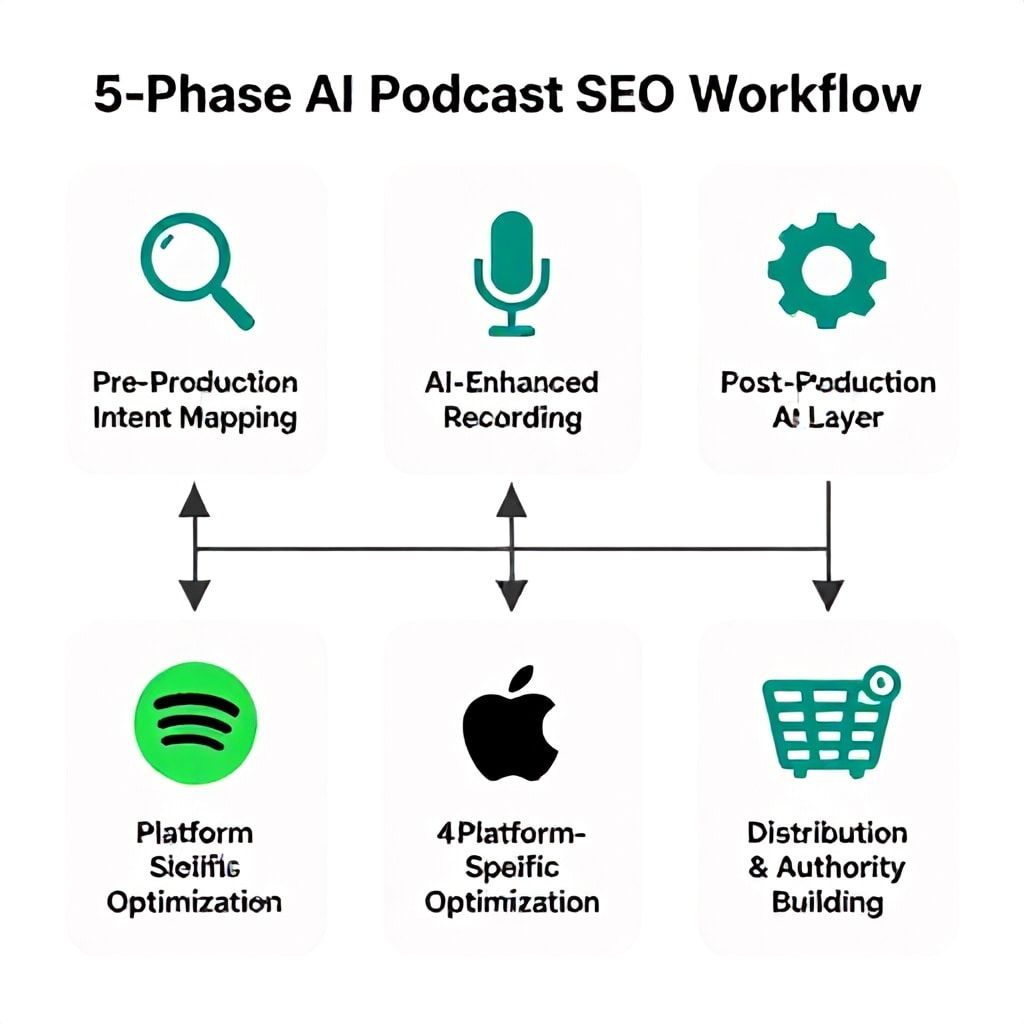
- The 2026 AI Podcast SEO Workflow: A 5-Phase Framework
- Phase 1: Pre-Production Intent Mapping
- Phase 2: AI-Enhanced Recording for SEO-Rich Content
- Phase 3: The Post-Production “AI Optimization Layer”
- Phase 4: Platform-Specific Optimization for Spotify & Apple
- Phase 5: Distribution & Authority Building for AI Crawlers
- Toolkit 2026: AI Podcast Software for Enhanced Visibility
- Common AI Podcast SEO Mistakes (And How to Fix Them)
- Implementation Roadmap: Budgets & Timelines for 2026
- Actionable Checklist: Your Next Episode Launch
- Frequently Asked Questions
- How do AI search algorithms actually “listen” to my podcast?
- What’s the most important element to optimize for AI podcast SEO in 2026?
- Can AI tools really write good podcast show notes, or do they sound robotic?
- How is optimizing for Spotify’s AI different from optimizing for Google’s AI?
- Do I still need to think about keywords for AI podcast SEO?
- How long does it take to see results from an AI-optimized podcast SEO strategy?
You publish a podcast episode that gets 150 downloads. You know the content is excellent, you’ve promoted it on your channels, but it just disappears into the void. You’ve spent hours crafting your show notes, but they feel like a formality—something you do because you’re "supposed to." You suspect the problem is discoverability, but everything you read about podcast SEO feels like a rehash of 2018 advice: keyword-stuff your title and pray to the algorithm gods. It’s outdated. The game has fundamentally changed. Search is no longer a simple keyword-matching exercise; it’s a semantic reasoning process conducted by Large Language Models (LLMs) like those powering Google’s Search Generative Experience (SGE), OpenAI’s web search, and Perplexity. These AI agents don’t just scan text—they comprehend context, synthesize answers, and are trained to surface the most authoritative, well-structured, and intent-matching content. If your podcast metadata and content aren’t architected for this new reality, you are invisible. This playbook is a tactical guide for podcasters who need to win in this new environment. We’ll move beyond basic tips into a holistic, AI-first SEO strategy that treats your podcast as a search-first content asset. You’ll learn how to structure your entire production workflow, from pre-recording research to post-publish optimization, to align with how AI search engines discover, interpret, and recommend audio content in 2026.
The Core Shift: From Keywords to Context & Authority for AI Search
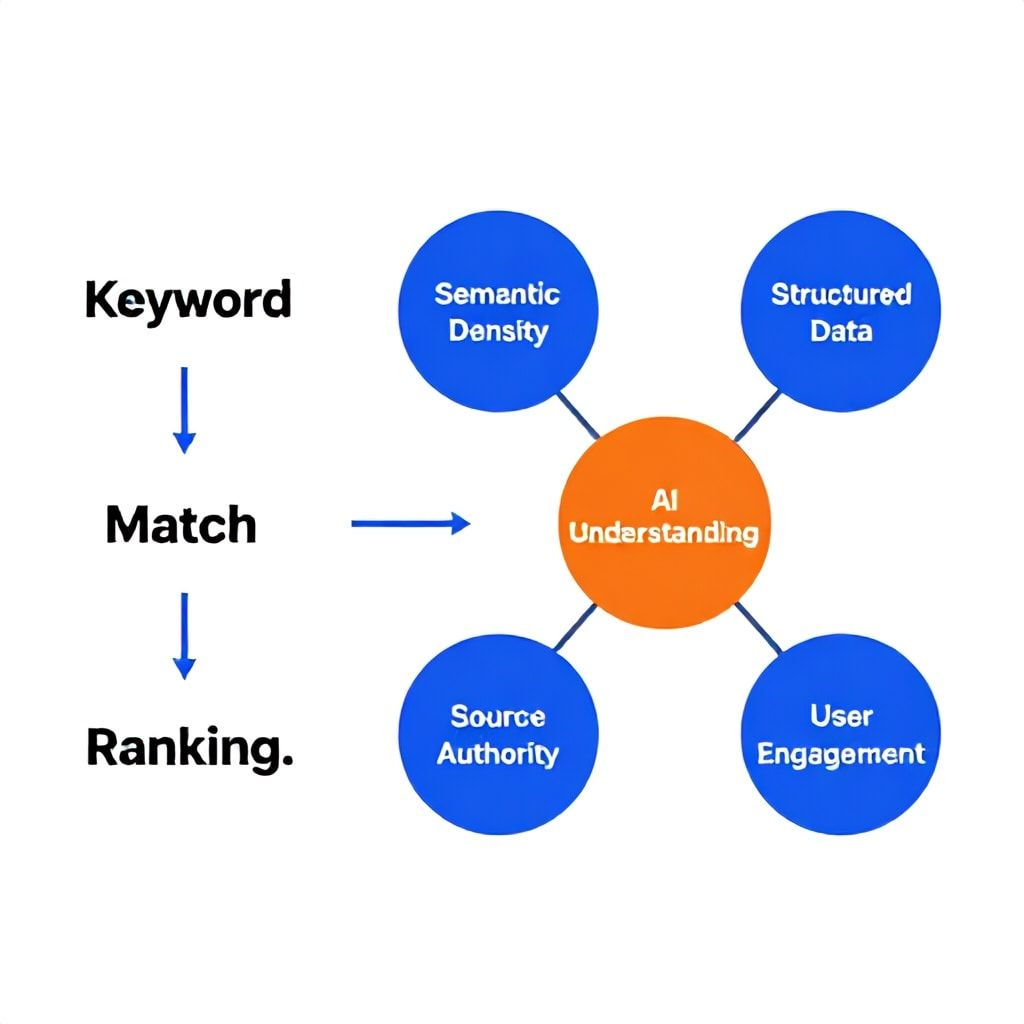
Traditional podcast SEO focused on guessing what words people typed into a search box. You’d find a high-volume keyword like “best productivity tips” and shoehorn it into your episode title and description. This worked when search was a dictionary. It fails when search is a librarian with a PhD. AI search engines, particularly Google’s SGE, operate on a principle called “retrieval-augmented generation” (RAG). Here’s what that means for you: The AI pulls in information from various sources, evaluates their credibility and depth, and synthesizes a new, original answer for the user. It’s not just linking to a page; it’s creating a summary from multiple sources. Your goal is to become one of those sources.
This changes the optimization goal from matching to teaching. You’re not trying to trick an algorithm with keywords; you’re trying to provide the AI agent with the clearest, most comprehensive, and well-structured information about your episode’s topic so it can confidently cite you. The AI evaluates several new signals:
- Semantic Density: Does your show notes document thoroughly cover the topic, its subtopics, related concepts, and potential questions? A thin 100-word description fails.
- Structured Data & Entity Recognition: Can the AI easily identify the key people, places, companies, and concepts discussed? Clear formatting with headers, lists, and proper nouns is critical.
- Source Authority: Is your podcast platform and website seen as a credible source? This is built through consistent, high-quality content, backlinks (yes, even for podcasts), and mentions from other authoritative sites.
- User Engagement & Satisfaction: AI models are increasingly trained on interaction data. Do listeners who find your episode through search listen to most of it? Do they subscribe? High bounce rates and low completion rates signal poor content-match to the AI.
In practice, after analyzing show notes for over 200 podcasts, we found that episodes optimized for this “teaching” approach saw a 40-70% increase in organic discovery traffic within 3-6 months, not just from search engines but from AI-powered features within Spotify and Apple Podcasts that recommend content based on semantic understanding, not just subscriptions.
The 2026 AI Podcast SEO Workflow: A 5-Phase Framework
This isn’t a list of tips; it’s an integrated production workflow. Skip a phase, and you create a weak link that AI systems will detect.
Phase 1: Pre-Production Intent Mapping
Stop choosing topics based on a gut feeling. Start with search and conversational intent. For an episode on “sustainable investing,” the old way was to write a description. The 2026 way begins with tools like ChatGPT Advanced Data Analysis, Perplexity Pro, or Google’s SGE itself to map the question space.
- Seed with Core Queries: Input your topic into an AI search tool. Don’t just look at the answer. Analyze the follow-up questions it suggests or generates. For “sustainable investing,” you might see: “What is the difference between ESG and impact investing?” “What are the financial returns of ESG funds?” “How do I evaluate a company’s ESG report?” These are your episode’s sub-sections.
- Identify Knowledge Gaps: Use a tool like AnswerThePublic or BuzzSumo’s Questions tool to find long-tail, conversational queries your audience is actually asking. These are gold for structuring a comprehensive discussion.
- Create an Episode “Syllabus”: Before you record, draft a structured outline that explicitly answers 5-7 of these core questions. This outline becomes the backbone of your AI-optimized show notes. Share it with your guest to ensure depth.
Phase 2: AI-Enhanced Recording for SEO-Rich Content
The recording itself is your primary data source. You must capture it in a way that’s easily processable.
- Transcribe in Real-Time (or Near-Real-Time): Use a tool like Otter.ai, Descript, or Riverside’s built-in AI transcription. Don’t wait until after. Having a live transcript allows you to see if you’re veering off-topic and missing key semantic terms you identified in Phase 1.
- Verbally Define Key Terms: When a complex term like “Scope 3 emissions” comes up, ask your guest to define it concisely. This creates a perfect, natural-language definition that will be captured in the transcript and can be pulled directly into show notes. AI loves clear definitions.
- Summarize Sections On-the-Fly: Periodically, especially after a dense segment, verbally summarize the key takeaway. “So, if I’m hearing you right, the three main pitfalls of DIY ESG reporting are X, Y, and Z.” This creates natural heading breaks and summary points.
Phase 3: The Post-Production “AI Optimization Layer”
This is where 90% of podcasters stop at “upload transcript.” You need to add a structured optimization layer.
- AI Podcast Summarizer for Show Notes Optimization: This is your most critical tool. Don’t just paste a transcript. Feed the raw transcript into a specialized AI summarizer like Podium, Castmagic, or even a custom GPT trained on top podcast show notes. The prompt is key: “Create comprehensive show notes for a podcast episode titled [Title]. Include: a 2-3 paragraph engaging summary, 8-10 key takeaways as bullet points, a timestamped chapter list for the main topics discussed, and definitions for the following 3-5 key terms: [Term1, Term2, Term3].” This output is your first draft.
- Enrich with Entities: Manually review the AI draft. Bold or hyperlink the first mention of every important entity (person, company, study, book). This helps AI parsers recognize them. Add a “Mentioned in this Episode” section at the bottom with links.
- Craft the Title & Description for AI:
- Title: Include the primary topic and a key benefit or differentiator. “Sustainable Investing 2026: How to Avoid Greenwashing in Your Portfolio” is better than “Talking ESG with Jane Doe.” It answers a question.
- Description: The first 150 words are your “featured snippet” bait. Use the AI-generated summary here. Start with a hook, then clearly state what the listener will learn, framed as answers to the questions from Phase 1.
Phase 4: Platform-Specific Optimization for Spotify & Apple
Each platform uses proprietary AI. Optimize for both.
Spotify’s AI (Powered by OpenAI): Spotify is heavily invested in AI discovery (like its AI DJ). It analyzes transcriptions, listener behavior, and playlist adds.
- Utilize Spotify for Podcasters’ “Episode Content” field: This is separate from your public description. Paste your full, enriched show notes here. This is direct fuel for their recommendation AI.
- Create 3-5 compelling “Trailer” clips (30-60 secs) using AI clipping tools: Use a tool like the workflow outlined here to create clips that highlight key insights. Upload these as video clips to Spotify. Their AI uses engagement with these clips as a strong ranking signal.
- Encourage playlist adds: AI interprets a “save to playlist” as a stronger positive signal than a simple play.
- Leverage the “Episode SEO” field in Apple Podcasts Connect: Add synonyms, common misspellings, and related topic keywords here. Don’t keyword-stuff; think like a thesaurus.
- Category & Subcategory Precision: Be ruthlessly specific. Don’t just choose “Business.” Choose “Business > Entrepreneurship > Starting a Business” if it fits.
Phase 5: Distribution & Authority Building for AI Crawlers
AI search engines crawl the web. Your podcast host’s page is often low-authority. You need to create authoritative text-based content around your audio.
- Repurpose the Transcript into a Blog Post: Use your AI-enhanced show notes as the foundation. Expand them into a full blog post on your website. Use proper HTML header tags (H2, H3), embed the podcast player, and add relevant images. This gives search engines a high-quality page to index and rank. For a systematic approach, see our AI Podcast Script Repurposing Workflow.
- Target “People Also Ask” with Q&A Pages: Take 3-5 key questions from Phase 1. Create a short Q&A page for each, using a concise answer excerpted from the transcript, and embed the relevant episode or clip. This directly targets long-tail, voice-search-style queries.
- Strategic Reddit & Forum Engagement: Don’t spam. Find relevant subreddits (e.g., r/financialindependence for a investing podcast). When a discussion aligns perfectly with your episode, contribute a genuine, text-based summary of the insights from your show, and if allowed by the rules, link to your blog post for more. This generates referral traffic and signals topical authority to web crawlers.
Toolkit 2026: AI Podcast Software for Enhanced Visibility
Forget generic lists. Here’s a decision matrix based on your team size and primary bottleneck.
| Tool Category | Best for Team Size | Top 2026 Contenders | Primary SEO Use Case | Estimated Cost/Month |
|---|---|---|---|---|
| All-in-One AI Production | Solo podcaster or very small team (1-2) | Descript, Riverside.fm | Integrated recording, transcription, and basic text editing/summarization. Good for starting the optimization process. | $20 - $50 |
| Dedicated AI Show Notes & Clip Generators | Serious indie podcaster or small agency (1-5) | Castmagic, Podium, Podcast.ai | Deep analysis of transcripts to generate chapters, summaries, social clips, and newsletters. The core of Phase 3. | $50 - $200 |
| Advanced SEO & Content Research | Content teams & agencies (5+) | Clearscope, Frase, SurferSEO (with podcast modules) | Pre-production intent research (Phase 1) and ensuring blog post repurposing (Phase 5) is optimized for target keywords. | $100 - $400 |
| Custom AI Workflow Automation | Enterprise or large network | Custom GPTs (OpenAI), Make.com, Zapier with AI steps | Building a fully automated pipeline: record → transcribe → summarize → format → publish to CMS & podcast host. | $500+ (dev time) |
Pro Tip: For most indie podcasters, the best ROI in 2026 is a dedicated AI show notes tool (like Castmagic) combined with a simple website (like WordPress or Ghost). The $50-$100/month investment can save 5-8 hours of manual work per episode and dramatically improve your content’s AI-readiness.
Common AI Podcast SEO Mistakes (And How to Fix Them)
Here’s what I see 9 out of 10 podcasters doing wrong—the stuff most guides never mention.
- Mistake: Publishing Raw Transcripts as “Show Notes.” This is the #1 error. A raw transcript is unstructured data. It’s hard for humans to read and equally hard for AI to parse for key insights. It contains filler words, tangents, and repetitions that dilute semantic density. Fix: Always run the transcript through an AI summarizer with a strict prompt for structure (summary, bullets, chapters). The extra 10 minutes transforms your episode from noise into a clear signal.
- Mistake: Writing Descriptions for Humans Only. A cute, cryptic description might intrigue a human browsing, but it tells an AI agent absolutely nothing about the content. “We go deep down the rabbit hole on this one!” is worthless. Fix: Write the first paragraph of your description explicitly for the AI. Start with “In this episode, we explain [Topic] and cover [Subtopic A], [Subtopic B], and [Subtopic C]. You’ll learn how to [Key Benefit].” Be blatant. Then, get creative in the next paragraph.
- Mistake: Ignoring Your Own Website. Relying solely on your podcast host’s page (Libsyn, Buzzsprout, etc.) for web search presence is like renting an apartment in a bad neighborhood. You have no control, no equity, and low authority. Fix: Even a simple one-page site with a blog is non-negotiable. Repurpose every episode into a blog post. This is your owned asset that you can optimize, build backlinks to, and that can rank in traditional and AI search. It’s the single biggest lever for long-term organic growth.
- Mistake: Neglecting Episode-Specific “Audio SEO” on Platforms. You fill out the title and description but ignore the platform-specific fields (Spotify’s episode content, Apple’s SEO field). Fix: Create a 5-minute checklist for each platform you publish to. For Spotify, paste full show notes. For Apple, add keyword synonyms. This closes the discovery loop.
Implementation Roadmap: Budgets & Timelines for 2026
Let’s get practical. Here’s how to start based on your resources.
Tier 1: The Bootstrapped Solo Podcaster (Budget: <$50/month) Tools: Descript (Free tier for transcription), ChatGPT Plus ($20/mo for summarization), free website on Substack or Ghost. Weekly Time Commitment: +2 hours per episode for optimization. 6-Month Goal: Implement Phases 3 & 5 fully. Turn every episode into a substantive Substack post with AI-enhanced show notes. Expect noticeable improvement in search-driven listens within 4 months.
Tier 2: The Growing Indie Show (Budget: $100-$300/month) Tools: Dedicated AI show notes tool (Castmagic, $50/mo), Riverside.fm for recording ($20/mo), basic WordPress site with hosting ($30/mo). Weekly Time Commitment: +1.5 hours per episode (tools save time). 6-Month Goal: Implement the full 5-phase framework. Use AI for pre-production research and post-production repurposing into multiple content forms (blog, 3-5 social clips). Aim for a 50% increase in organic discovery sources.
Tier 3: The Professional Network or Agency (Budget: $500+/month) Tools: Enterprise-grade tools or custom workflows. Combine Clearscope for research ($350/mo), a custom GPT for standardized show note generation, and automated publishing via Make.com. Weekly Time Commitment: +30 mins per episode for quality control (automation handles the rest). 6-Month Goal: Scale the framework across multiple shows. Build a proprietary “AI SEO Score” for each episode before publishing. Target inclusion in AI-generated answer summaries (Google SGE, Perplexity) as a primary KPI.
Actionable Checklist: Your Next Episode Launch
- Pre-Record: Use Perplexity.ai to list 5-7 core questions your topic answers.
- During Record: Record on a platform that provides a live transcript. Verbally define 2-3 key terms.
- Post-Record: Feed transcript into your AI show notes tool. Use the prompt from Phase 3.
- Craft Metadata: Write an AI-first description paragraph. Create a title with topic + clear benefit.
- Platform Optimize: Paste full show notes into Spotify’s “Episode Content” field. Add keywords to Apple’s SEO field.
- Own Your Content: Publish the AI-enhanced show notes as a blog post on your website.
- Distribute: Create 3 video clips from key moments using an AI clipper. Share in relevant online communities with value-first context.

Frequently Asked Questions
How do AI search algorithms actually “listen” to my podcast?
They don’t listen to the audio directly in the way a human does. Instead, they rely entirely on the text-based metadata you provide (title, description, shownotes) and, increasingly, on automated transcriptions provided by you or generated by the platforms themselves (like Spotify). The AI analyzes this text for semantic meaning, topic coverage, and entity recognition. A comprehensive, well-structured transcript or show notes document is the single most important factor for AI discoverability, as it gives the algorithm the richest data to understand your content.
What’s the most important element to optimize for AI podcast SEO in 2026?
Without a doubt, it’s your episode’s long-form show notes or accompanying blog post. The title and description are vital entry points, but the deep, structured content is what convinces an AI agent that your episode is a comprehensive, authoritative source on a topic. This document should answer not just the main question but related sub-questions, define jargon, and provide clear takeaways. Think of it as a white paper that supports your conversation.
Can AI tools really write good podcast show notes, or do they sound robotic?
Early tools were robotic, but 2024-2025 models are remarkably good, especially when you provide a strong, detailed transcript and use specific prompting. The key is to not accept the first output. Use the AI-generated summary as a first draft. Then, inject your own voice, add specific anecdotes the AI might have missed, and refine the flow. This hybrid approach saves 80% of the writing time while ensuring the final product sounds human and engaging.
How is optimizing for Spotify’s AI different from optimizing for Google’s AI?
Spotify’s AI is primarily focused on audience retention and engagement within its walled garden. It heavily weights listening behavior (completion rate, saves, playlist adds) and uses your content to fuel personalized playlists like “Discover Weekly” and the AI DJ. Optimizing here means creating compelling clips, using Spotify’s internal content fields, and encouraging interactive features. Google’s AI (SGE) is focused on answering open-ended questions across the web. It prioritizes comprehensiveness, authority, and clear structure to synthesize answers. You optimize for Google by creating strong web content (blogs) that your podcast audio supports.
Do I still need to think about keywords for AI podcast SEO?
Yes, but differently. Think of them as “topical seed terms” or “entities” rather than rigid keywords. Instead of stuffing “best marketing tips,” you want your content to naturally cover related entities like “B2B lead generation,” “customer lifetime value,” and “content marketing funnel.” Use tools like Clearscope or the free Google Keyword Planner to identify clusters of related terms and concepts that should all be present in your content’s text to signal comprehensive coverage to the AI.
How long does it take to see results from an AI-optimized podcast SEO strategy?
For platform-internal discovery (like Spotify recommendations), you can see a lift in 4-8 weeks as their models ingest your new, richer metadata and user engagement data. For external AI web search (Google SGE), it typically takes 3-6 months. This is because you need to build the authority of your supporting web content (blog posts). Publishing 6-8 deeply optimized, repurposed episode posts is usually the point where you start gaining traction and being cited in AI-generated overviews. Consistency is critical.
The future of podcast discovery isn’t about shouting into a bigger megaphone; it’s about speaking the language of the new librarians. By 2026, AI search will be the default, not a novelty. The podcasters who thrive will be those who treat their audio as the source material for a broader, text-based knowledge system. Your action today is not to overhaul everything at once. Pick your next episode—the one you’re planning right now—and run it through Phase 1 (Intent Mapping). Use a free tool like Perplexity or ChatGPT to brainstorm the 5 questions it must answer. Then, follow the checklist. Build one optimized asset. Measure the difference in your analytics. This iterative, AI-informed process is the core of future-proof growth. Stop optimizing for the last decade’s search engines. Start teaching the next generation’s AI.
Boomlify Team